

VOL. 25
A Bird Sang (the Blues) to Me: Collage as Black Study
Rebecca Louise Carter
DOI: 10.66455/10999949.2026.ODGQ2938
Praise is What I Do
“Our desire is to be here to help you get through this particular day. We know that this does not take away all the pain, but we want to be here to help you walk through it and to let you know that you’re not alone. So, we’re going to start off by singing this song… our praise and worship song, and after that we’re going to introduce ourselves.” – Daniell
Danielle bowed her head and began to sing. The other women present for the support group that evening joined in, already familiar with the words to the well-known gospel song, Praise is What I Do, that she had selected The choice was fitting given the grief they all experienced, and the singing created a safe space through lyrics and breath for the work ahead. Assembled in the community center across the street from the predominantly African American Baptist church where many of them worshipped, they tended to the close relationships they had with God and sought with each other. Yet their congregation also structured the continuous mourning and remembrance of lost loved ones, cultivating a sense of social and spiritual relatedness that enabled them to walk through the pain – on this “particular day” at least.
Danielle founded this group in the summer of 2005. Mourning the death of her eldest son, who had been tragically murdered on the streets of New Orleans some months prior, she reached out to other women like herself who had lost children to violence. She relied on her faith in God to walk through the pain of grief, but she often felt isolated and afraid, not sure if she could handle the intensity, especially on what she described as “difficult days” such as her son’s birthday or the anniversary of his death. On these recurring occasions, the support that the group provided was essential, even lifesaving.
When Hurricane Katrina devastated New Orleans and the surrounding Gulf Coast region, in the late summer of that same year, the support group temporarily disbanded. Yet the need for it only intensified in Katrina’s wake, as people grappled with loss in multiple forms. The state sponsored development of a ‘new’ and ‘improved’ New Orleans pulled back the curtain on long standing practices of social death and erasure within poor Black communities. Young Black men like Danielle’s son were disproportionately impacted, their lives cut short by both structural and interpersonal forms of violence including poverty, incarceration, disaster related deaths, and the cycles of killing and retaliation that bore out on the streets, much of it associated with drug trafficking. These were the “three-times dead,” the ones who were “dead to the world when they were alive, dead again when life left their physical bodies, and dead once more from the mourning the world forgot” (Carter 2019, 15). Reconvening in the extended wake of the storm, Danielle and the other women nonetheless found ways to claim and continuously ‘raise’ the dead. Each gathering, each song of praise and worship, countered the state’s denial of Black personhood by asserting social and spiritual relatedness – in life, after death, and in God’s eternal family, to which they all belonged.
On this day, the women had gathered to mark the first-year anniversary of the death of a young man named Brian and to support his mother, Monica, who listened quietly as Danielle made her opening remarks. Acknowledging that the group could not fully relieve the pain that Monica was experiencing, Danielle made it clear that the purpose was to be with her – to ensure that she was not, and did not feel, alone. These women were uniquely positioned to offer this support as they understood first-hand what Monica was going through. Each of them would mark the birth and death anniversaries of their own loved one(s) in the days, weeks, and months ahead. These faithful practices of mourning and remembrance thus scaffolded Black life as it continued, within a larger context of vulnerability and loss.
I attended numerous support group gatherings during a period of anthropological fieldwork I conducted in New Orleans, in the years just after Hurricane Katrina (2007-2009). Coming to terms with the impact of the storm, including for my own family members who lost their home to flood and then fire, I sought to understand the root cause of the destruction in Black communities like my own. While the extent of the devastation was all too apparent, its origins were more difficult to discern given the overlap of violent histories, including conquest and enslavement, plantation economies and forced labor, and urban development and decline through processes of environmental extraction and degradation
My research thus developed in two primary directions. I worked to identify a long-standing system of Black erasure, understanding social death (inequality, poverty, criminalization, incarceration) and physical death (disease, disaster related deaths, homicide) as concurrent realities. Yet I also traced how residents navigated, sought to change, and even transcend these conditions Danielle and the other women in the support group were inspirational in this regard and the book I eventually authored, Prayers for the People: Homicide and Humanity in the Crescent City (2019), centers their work. Situated more broadly within New Orleans’ diverse African American religious community, I followed clergy members as they preached sermons, led crime walks, held ceremonies and vigils, organized rallies, opened prayer circles, and directed evangelism. I focused in particular on the work of religious women like Danielle who mourned and honored the deceased, identifying a “restorative kinship” (188) that worked against the denial of Black personhood as well as the violent severing of social bonds, to heal and sustain families and communities. Setting these congregational practices within the legacies of social and spiritual awakening in Black Christianity, the book concludes with an opening – a call for the exploration and inhabitation of alternative modes of Black being and becoming – within, alongside, and altogether beyond the violence as it continued.
Summoning Life
I reflect on this research at a time of extreme social, political, and environmental destabilization in New Orleans, the United States, and the world. While not diminishing the impact of Katrina as a specific, devastating storm, the current era, as Aisha M. Beliso-De Jesús asserts, is one of “unprecedented disaster” (2024, 68). Disastrous events are thus rendered mundane; the targeted offshoots of larger forms of “structural violence and racio-colonial governance” (Bonilla 2020, 2), which have been operating in some locations for centuries. At the same time, the “crisis in crisis” (Masco 2017) makes cause and effect increasingly difficult to pinpoint, due to the simultaneous “amplification of public dangers through inaction” (Masco 2017, S66); the non-social “suspension of living” in the “uninterrupted operation of markets, information, networks, and other systems” (Crary 2013, 9); and the dampening of collective imagination in the post-truth, post-digital, and “mirrored” world (Cramer 2015, Klein 2023).
In this essay, therefore, I recast restorative kinship and related modes of Black being and becoming, as exhibited by Danielle and the other women in the support group in New Orleans, as critical summoning practices. This calling forth of life, in and beyond the space of death, is an inspiring demonstration of Black know-how in an increasingly fragmented world. Yet summoning is also an invitation, to a similarly transformative mode of scholarly and personal inquiry that for me has been slow to realize. Indeed, the conventions of academic knowledge production seem to limit, rather than support, the close and immersed study that summoning requires. More instructive, sadly, have been the losses impacting my own family, culminating with my father’s death in 2014 and my older brother’s death in 2019, as my book went to press. The summoning of life has thus become an essential teaching and pursuit in a space of death that extends far beyond the Crescent City.
To develop the theoretical and practical groundwork for this framing, I draw from Deborah A. Thomas and Joseph Masco’s introduction to their edited volume, Sovereignty Unhinged: An Illustrated Primer for the Study of Present Intensities, Disavowals, and Temporal Derangements (2023). Looking beyond hierarchical determinations of state power and control, the contributors shed light on a host of concurrent processes: “the intensifications of agency, the regimes of care and engagement, the temporal and spatial derangements that are not recognized traditionally as forms of sovereignty but that are, in fact, where most of us are living most of the time” (3-4). Foregrounding affect as a useful lens for contemplating, witnessing, and sustaining the nonlinear, ephemeral and other ways that sovereignties exist and form (1), Thomas and Masco argue that we need “new genres of investigation or care, of writing or visualizing… to engage living within the giant problem spaces otherwise known as economy, security, ecology, or politics” (3). Such experimentation necessitates an acceptance of failure, or at least a resolve to continue the work knowing that complex and interconnected problems, as the crises of the world now present themselves, might not be solved. Instead, the focus is on how people endure – how they “build[] meaningful connection in the midst of rebounding forms of trouble” (2) – and cast beyond those conditions as well, in the care-full crafting of an “outlandish” new world (7).
The envisioning of such a world is not meant to be overly redemptive (Dawney and Jellis 2024). Rather, its crafting is akin to what Kevin Quashie describes as ordinary yet “beautiful work” (2021, 154), based on a broader conceptualization of Black aliveness that is an outright assumption of humanity in the world, rooted not in the security of being but in the openness of becoming (10). The task at hand, therefore, is to center and follow how people “manage that state of being (abject, captured, or fatigued, but also creatively attempt[] to create new worlds, or to move within violent orders of being)” (7). What summoning practices do people develop and depend on and what do these bring forth? What songs of praise and worship, what modes of fellowship and relatedness, enable Danielle, Monica, and the other women in the support group to “walk through” the pain? How might this knowledge be supported and shared?
My own exploration of summoning as ordinary, beautiful work emerges through the aesthetic and practice of collage. This way of working is somewhat instinctive; during my undergraduate studies in art theory and practice, an instructor once commented that I did my best work at two in the morning, after I have ripped apart whatever I am working on and must find a way to salvage something out of what remains. I continue to be both frustrated and fascinated by this tension and what it generates, from trying to creatively make sense of the aftermath of loss, to exploring the layered dimensions of uncertain being in past, present, and future time. As Bettina Judd argues, such work can reveal how ideas are newly felt, shedding light on “the motivations, the will, and compulsion… the affective sedulity that compels [one] to create—and most importantly, the knowledge produced in the ‘delirium of a felt life’” (2023, 6, emphasis in original).
Collage is of course already deeply rooted in Black cultural and creative expression. Everyday acts of salvaging, piecing, rearranging, and adhering have long been central to the ways in which Black folks adorn and embellish, mediate between fragmentation and synthesis, and manage the “simultaneity of continuity and chaos” (Farebrother 2009; O’Meally 2022, 59; see also Alexander 2003, 188-189). Black collage thus has an extra-sensory dimension, in the medium as well as the maker, comprising a “metaphysical ethos” (Powell 2023, 38) that is grounded in the interior “dream space” of African American creativity (Alexander 2004, 5) and that materializes in a variety of physical spaces, “especially in communal settings with a religious or spiritual function” (Powell 2023, 39).
Such framings reveal the multiplicity of Blackness, as Valerie Cassel Oliver argues:
The rebuilding and reconstruction [of collage] render an endless range of possibilities that collectively reject ideas of a monolithic Blackness. Within the process of tearing and piecing, we witness the birth of new forms and images, new visual vernaculars that have ushered in a beautiful complexity… (2023, 82).
These assertions help form the pretext of a recent exhibit, Multiplicity: Blackness in Contemporary American Collage, curated by Kathryn E. Delmez at the Frist Art Museum in Nashville, Tennessee (2023). The contributors, collagists and essayists alike, understand collage “as a medium that inherently accounts for – and anticipates – new permutations” of identity, culture, and form (Bateman 2023, 96). While these permutations are broadly about shifting modes of Black being-in-the-world, they also pertain to the (re)configuration of relatedness through the development of “mutual sovereign being” (Welcome 2023, 98-99). As anthropologist and collagist Leniqueca Welcome asserts, with attention to the deliberate slowness involved in making and viewing, collage creates a suspension of time and disbelief that allows for “the productive dissolution of dominating realities, disagreement, dissent, the birth of new solidarities, and the crafting of alternate futures” (2023, 100)
Such ideas are exceedingly helpful for my own exploration of collage as a mode of Black being-in-the-fragmented-world. They enable a deeper understanding of the religious work of Danielle and the other women I encountered in New Orleans, who picked up the pieces and summoned life through daily rituals of remembrance and restorative kinship in the extended wake of loss. Yet the summoning capacity of collage also lies in what it makes possible as a mode of Black study (Harney and Moten 2013, 5), as a fugitive, intellectual, and inherently creative inquiry that emerges in grief, is nurtured through connection across realms, and is sustained by the sharing of knowledge, so that others might also be supported as life proceeds.
Working with the remnants of fieldwork data, I sort through bits and pieces of interview recordings, photographs, archival images, and other ephemera. The process allows me to consider relatedness, for example between figure and ground or within the conditions of death and transformation that residents in New Orleans simultaneously inhabit (Figure 1).

Figure 1. Rebecca Louise Carter, Baby Dolls and Flowers, 2025. Photo transparency and paper collage, digitally scanned and rendered.
I am also drawn to specific encounters, where shifts in orientation or affect, as people navigate uncertainty in their daily lives and interactions, are evident. Cutting, tearing, arranging, and adhering, I interpret these encounters anew, experimenting with scale, time, opacity and other elements to zoom in, stay with, and be subsumed by congregational practices, the tactile edges of torn paper composing the scene while also serving as possible routes into being and knowing (Astacio 2021, 18). I consider this work a collaborative endeavor, taking shape in both educational and community-based settings that support the development and teaching of techniques in ethnographic and documentary arts including storytelling, color and composition studies, drawing, painting, photography, digital compositing, film, and animationCommitted to process as much, if not more, than product, I share my work as it develops, investing in both creative epistemological and ontological interventions to “question[] knowing processes” as well as “shift[] from notions of fixed identities towards a sense of continual becoming(s)” (Clarke 174).
Reinvigorating the Blues Epistemology
My consideration of Black women’s summoning practices, however, is not solely concerned with social and spiritual relatedness and remembrance in the wake of disaster or death. I maintain that contemporary congregational practices of mourning and mutual support are forged at the intersection of social, spiritual, and oppositional movement, part of a long legacy of Black resistance and mobilization in the face of systemic racism and oppression. I owe this insight, in part, to the editors of this special 25th anniversary issue of Souls: A Critical Journal of Black Politics, Culture, and Society, which coincides with and thematically centers the 20th anniversary of Hurricane Katrina. Focusing on the interdisciplinary exploration of Katrina’s consequences, the issue traces the “temporalities of investment and divestment” that continue to shape the region’s recovery and development, and the political economic impacts of race and disaster more broadly.
Informed by a related historical materialist approach, the issue is structured around several key themes including theorizations of racialization, capitalism, and governance; transformations in labor, education, housing, and carceral infrastructures; and the erosion of democratic norms and institutions. However, the editors save important space for the study of social and political repair, including social movements, the mobilization of resources, and acts of remembrance and care. Contributors were also encouraged to think outside the box regarding genre and form, to “play with disciplinary boundaries, deviate from the traditional format of an academic article, and/or engage thoughtfully with artistic practice.”
This invitation prompted my rereading of Clyde Woods’s influential work (1998, 2017), on the organization of “state, scale, capital, racism, and markets” in the Lower Mississippi Delta (Gilmore 2017, xii). While Woods’s tracing of the development and power of the plantation bloc reveals how “African Americans in general, and African American women in particular” were positioned at the bottom of a social and political hierarchy, his illumination of an oppositional “blues bloc” demonstrates how poor and working class Blacks – “organic intellectuals” including blues musicians and other “summoners of life” – developed “a sense of collective self and a tectonic footing from which to oppose and dismantle the American intellectual, cultural, and socioeconomic traditions constructed from the raw material of African American exploitation and denigration” (Woods 1998, 29, 17; Camp and Pulido 2017, xxiii, emphasis added). As Woods writes,
Born in a new era of censorship, suppression, and persecution, the blues conveyed the sorrow of the individual and collective tragedy that had befallen African Americans. It also operated to instill pride in a people facing daily denigration, as well as challenging folk wisdom, descriptions of life and labor, travelogues, hoodoo, and critiques of individuals and institutions. It is often forgotten that the blues are also defined by those songs, music, stories, jokes, dances, and other visual and physical practices that raise the spirit of the audience to unimaginable heights. The men and women who performed the blues were sociologists, reporters, counselors, advocates, preservers of language and customs, and summoners of life, love, laughter, and much, much, more (1998, 17)
While Woods’s work does not focus exclusively on Black women, their presence on the cover of his book, Development Arrested: The Blues and Plantation Power in the Mississippi Delta (1998) (Figure 2), affirms their authority and the critical nature of the blues epistemology they create through familial, spiritual, intellectual, and political engagements.
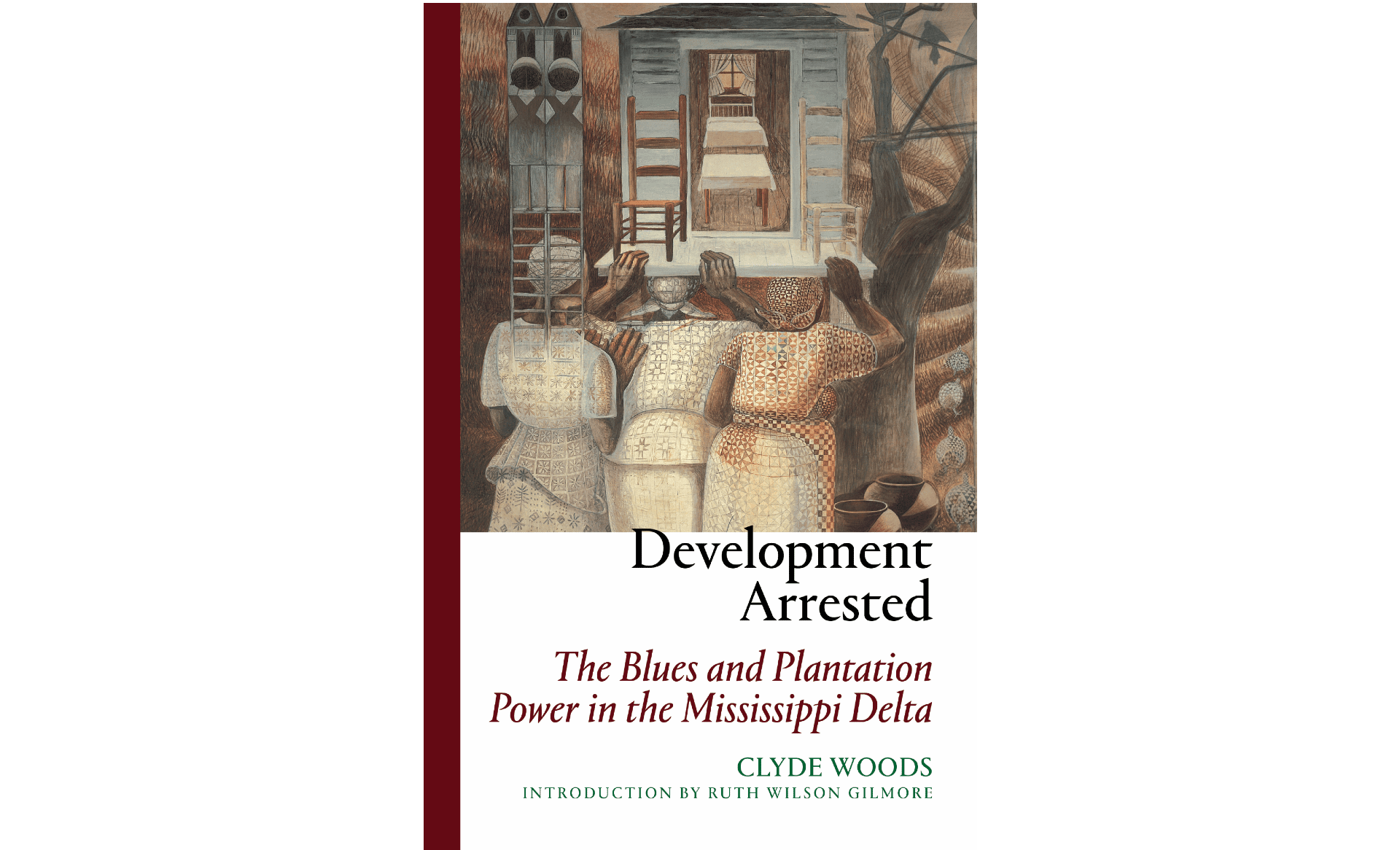
Figure 2. Development Arrested: The Blues and Plantation Power in the Mississippi Delta by Clyde Woods (1998), cover art by John Thomas Biggers (detail of “Family Unity,” 1974-1978, casein and acrylic on prepared plaster. 180 x 720 in., Student Life Center, Texas Southern University). (Reprinted with permission from Verso Books.)
This artwork is by John Thomas Biggers, a prominent 20th century African American artist who managed to forge a career as an “illustrator, draftsman, muralist, painter, sculptor, and lithographer during an era in which African American artists had almost no possibility of recognition” (Theisen 2006, 3). Known especially for his murals and for the teaching and mentorship he provided as founding chair and professor of art at Texas Southern University, Biggers used his talent to “describe[] the circumstances of the people in his world and to encourage them… to fight their inequitable conditions” (Theisen 2010, 13). Black women are featured prominently in many of his works, honoring their “deep spiritual beauty” and “enduring strength” (Short 1979, 137) in the sustaining of families and communities. The detail that appears on the cover of Woods’s book, is from a sixty-foot mural by Biggers titled “Family Unity.” The women it depicts,
“…bear the weight of home and family on their shoulders. Within the shotgun house are the supper table and birthing bed, sustaining the family. One of the women carries a ladder on her back, holding two children, that evolves into a rocket-life form… To the right of the house are an anvil, wash pot and rub board… A tree beside the house supports a swing in which the spirits of the elders rest. In the sky above are representations of heavenly bodies, signifying, for Biggers, the forces of creation” (Thiesen 2010, 76).
Biggers’s work, and Woods’s featuring of it, shed light on the multifaceted nature of summoning for Black women who ‘shoulder the weight’ on any given day, from the height of plantation power in the Mississippi delta, to contemporary social and political relations, and to the continued crafting of new realities grounded in freedom and justice. Yet the cover image simultaneously affirms creativity and artistic practice as key aspects of knowledge production and sharing, with the power to bridge between disunity and social repair. As George Lipsitz describes, drawing on the work of art historian Robert Farris Thompson (1995, 108), Biggers “made not only art, but in the Afro-diasporic world view, also medicine” (2018, 514-515). His murals, paintings, and other works are thus “entities designed to do meaningful work in the world, to heal and protect the community they depict” (515). Such work exists as an “alternative archive, a repository of collective memory… ready to be deployed” (516). As Lipsitz describes, through a related conceptualization of “conjuring,”
[A]rtistic projects turn places of containment and confinement into venues for envisioning and enacting new kinds of physical and psychological mobility. They counter the harsh realities in impoverished communities by honoring the deceased through performances that figuratively bring them back to life, honor departed ancestors and summon their spirits, and offer resilient love as an antidote to social death (2018, 497).
I thus situate the summoning work of Black women in New Orleans, creative practitioners of resilient love in their own right, as both transformative and oppositional. As Danielle and the other women in the support group picked up the pieces in the space of violence and death, they developed alternative forms and practices of relatedness, worked for healing, and advocated for social and political change. To further illustrate and explore the multiple dimensions of their work, I return to my own artistic practice, aligning the reinvigoration of the blues epistemology with the aesthetic and practice of collage to better see and understand how such knowledge is developed and deployed.
Clouds
Clouds were a special feature in practices of remembrance and restorative kinship for many of the women in the support group. For example, Danielle frequently found herself looking up at the sky as she mourned her son’s passing. She would even look for his form, pointing out the shape of a head or an arm to her grandchildren and others. The practice confirmed his eternal resting place, “absent from the body but now present with the Lord.” She drew additional inspiration from a religious pamphlet on the seasons that was put together by a fellow parishioner, sharing passages from a section entitled “Clouds” during support group gatherings and highlighting the connections she and the others sustained across earthly and heavenly realms.
Clouds were part of more formalized rituals too, such as the women’s marking of the birth and death anniversaries of lost loved ones. Danielle began this practice in response to her own experience of grief, especially on difficult days such as a birthday, holiday, or the anniversary of her son’s passing. As she told another member of the support group, at those times grief could be sudden and destabilizing. “You know at any moment when you want to do something and all of the sudden it hits you and you lose your composure?” she said. “And next thing you know it’s a different story.” It was thus essential for her, or anyone experiencing grief so profound, to be surrounded by people who understood and could help.
The women marked these occasions with prayer, fellowship, and testimony, recounting their own journeys of love, loss, and faith. On birthdays a cake, in honor of the deceased, was presented to the mother or other family member who blew out the candles as everyone sang. As they ate, they passed around photographs, the funeral program, and other keepsakes, stitching together memories and stories. After some time, Danielle would announce the closing ritual, a balloon release in honor of the deceased. Taking the balloons from the centerpiece on the table, the women went out to the parking lot. On Danielle’s count they released the balloons, watching solemnly as each one rose up, wafted in the air, and gradually faded from view. It was a moving enactment, of simultaneously holding and letting go of love’s physical form. When the last balloon had drifted out of sight, the women hugged their goodbyes and made their way to waiting cars, with promises to stay in touch until the next occasion.
These practices left a lasting impression, beyond what I could capture in fieldnotes or in the writing of my book. Revisiting interviews, photographs, and other materials, collage thus proved to be a useful medium for continued analysis. Tearing and layering bits of paper to depict the clouds in an unpredictable New Orleans sky, for example, I began to understand more deeply Danielle’s experience, the all-encompassing quality of mourning, the way grief settles around you, and the moments of change that allow light, or another indication of clearing, to filter through (Figure 3). While I certainly had a sense of this ecology from my own observations and experiences, collage enabled a closer study, expanding my sensory register enough to get a sense, for example, of what it was like for Danielle to sit on the porch with her young grandson charting weather patterns and feeling the presence of the departed close at hand.

Figure 3. Rebecca Louise Carter, Cloud Study, 2025. Paper collage.
I began to understand, therefore, from a different orientation and vantage point, the climate within which vulnerability, violence, death, and life itself persisted (Figure 4).
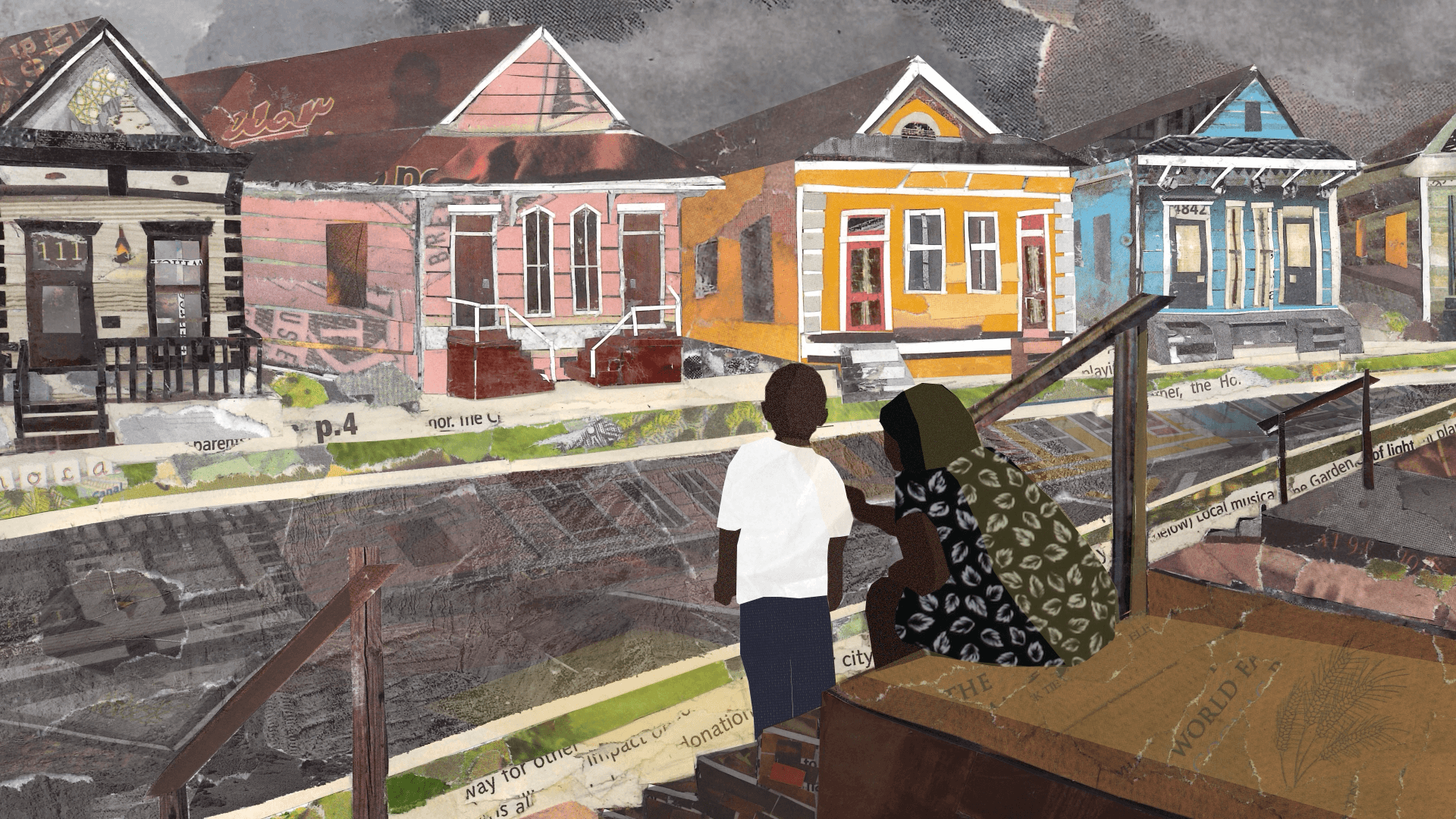
Figure 4. Rebecca Louise Carter, I Used to Always Look Up at the Clouds, 2025. Paper and digital collage.
Collage also enabled a consideration of time, from the passing of a storm to the deliberate slowness of its depiction. Balloon releases, for example, were significant in part due to their recurrence and they functioned as a continuous assertion of relatedness over days, months, and years, as different birthdays and death anniversaries came around. The routine scaffolded grief, with each gathering providing as much for the bereaved as it did for the other women in the room, who gave support and received it in turn when their own difficult days came around. The frequency with which the women gathered was thus critical, and the rituals they performed gave an important rhythm to relational modes of remembrance.
The deliberate slowness of collage and the suspension of disbelief it produces is further enhanced in the digital realm, where a scanned and animated collage permits the manipulation of multiple elements including scale, opacity, and time, to reveal how meaning takes shape, especially given rapidly changing conditions (Figure 5) This fluidity of remembrance stands out from more routinized commemorations of loss orchestrated by church and state alike, such as the yearly anniversary of Hurricane Katrina. While these occasions were important and meaningful to my interlocutors, they did not sustain social and spiritual relatedness beyond the day. The faithful anniversaries of Black women thus inspire a shift away from conventional understandings of commemoration, moving beyond expectations of progress or healing based on the passage of time to the collapsing of time itself through everyday rhythms of mourning, relatedness, and care.
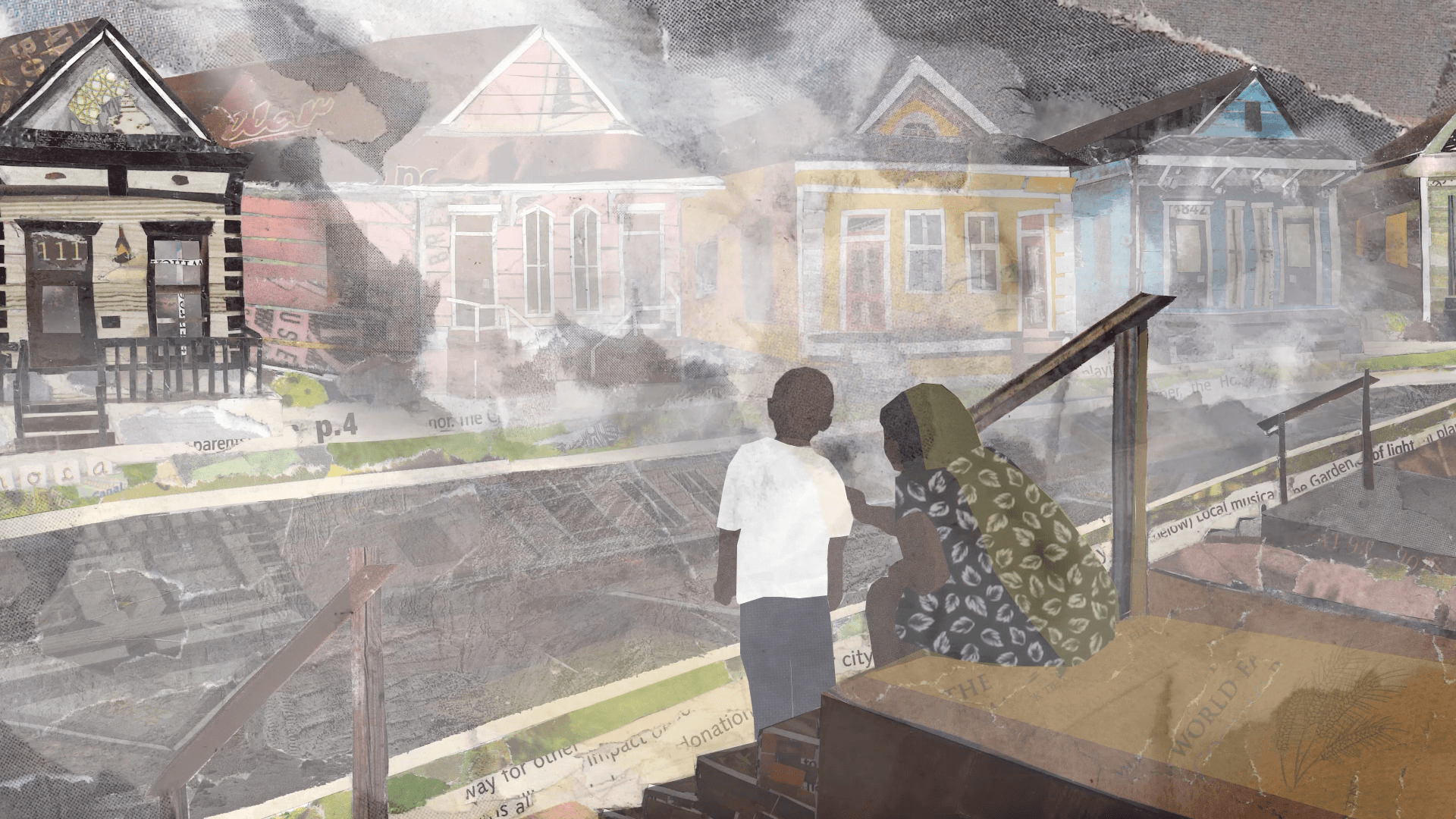
Figure 5. Rebecca Louise Carter, I Used to Always Look Up at the Clouds, 2025. Animation still.
A Bird Sang to Me
“…maybe you need to go to the cemetery, or you need to do something, and maybe you need one of us to help. You can’t quite get it done or something. And if so, let us know. You know? In honor of yourself.” - Sister Anne
Monica arrived at the support group meeting, on the first-year anniversary of her son Brian’s death, accompanied by her close friend, Sister Anne. After the welcome and singing, Danielle opened the floor so that each person could introduce themselves. The testimonies they gave, about the faithful management of grief, set the stage for the support that would be offered to Monica that evening, to help her to “walk through” the pain, as Danielle had put it. Once the room settled, Danielle turned the program over to Sister Anne, who took out a self-help book on grief that she had brought to the session. “It’s kind of a book on the first anniversary of your loss,” she said. “And the first thing it says… that you do so that you can finish healing or begin to heal, wherever you are, is to honor yourself” She turned to address Monica directly.
So, I think that’s one of the reasons that we’re here this evening is that we want to kind of emphasize to you Monica… that this is a milestone here for you to honor yourself. You may not see a reason why, but it says in here that you made it a year. And that’s worth honoring you for! You made it an entire year, you know? Tough as it’s been... So, we want you to think today of yourself. That you deserve the honor today.
The others in the room agreed, sharing their own accounts of what they had witnessed in Monica’s healing and reassuring her of how far she had come.
“One of the things they suggest on here, as a way of honoring yourself, is that maybe you have something you need or want. They say then you need to tell us…” Sister Anne said. She paused to share with everyone that over the past year she had the sense that Monica had wanted to go to the cemetery, more often than she had been able, to visit her son’s grave. Sister Anne wondered if perhaps she didn’t want to go by herself. “Let us know and we can go with you,” she encouraged. The suggestion gave Monica a useful starting point for mourning in good company, both within and outside of the church as she moved through the world.
To emphasize the point, Sister Anne shared a story, to make sure that Monica knew that she could rely on the group for whatever she needed. “I just want to say to you,” she began. “That nothing you want to do or suggest to us is going to sound ridiculous, you know?” As an example, she told the group about her cousin, who had also recently lost a son to violence. Overcome by grief on a similarly difficult day, her cousin had gone out to the cemetery to sit by his grave. “She just cried her eyes out,” Sister Anne said (Figure 6).
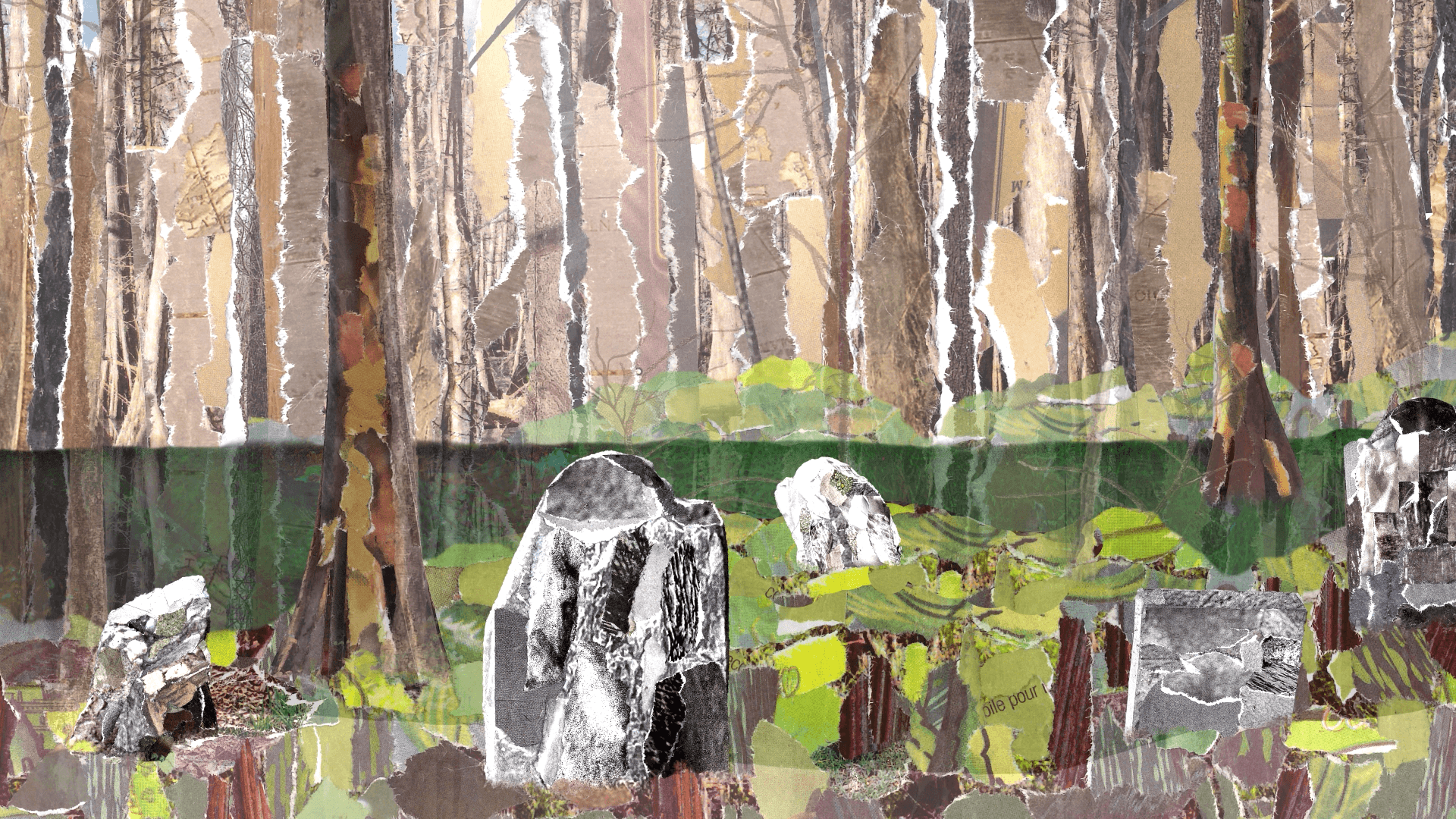
Figure 6. Rebecca Louise Carter, “A Bird Sang to Me,” 2025. Paper and digital collage.
And in the midst of it, she said a bird came and landed on the tombstone and began to sing. She said, and she stopped crying and was just looking at the bird. And so, the bird just sang and sang and sang. And she said she just stared at the bird. She said, and then the bird flew away.
Monica, and the other women around the table listened quietly, transfixed. “My, my,” Danielle said. “Wow, that’s awesome,” someone else added. “And she got on a call and went back to work,” Sister Anne continued. “She said, ‘Everybody said, “you back?”’ And she said, ‘Yeah, a bird sang to me.’” Laughter and praise filled the room. “Amen! Hallejuah,” the women said. “So look Monica,” Sister Anne concluded.
[W]hatever you got to do or want to tell me, it can’t be more than the bird sang to my cousin. So, you know, get it done. Get the job done. Heal yourself. Find the help you need, you know? If you got to go sit out there, and we go sit with you, or whatever you need to do. Just let us know.
Monica and the others took in this information with a sigh of collective release. Sister Anne’s story had brought them closer, not to grief but to the moment of its transformation through a shift in orientation produced by an encounter with a singing bird. Hoping to understand, indeed experience, such closeness, I used collage to immerse myself as much as possible in this shared story. Locating the scene on the patchy edge of a Louisiana swamp, I layered paper – scraps of old magazines and newspapers I collected in New Orleans -- to create trees and tombstones. The process rendered the landscape itself as a container of information, the small bits of paper/data comprising a hub or other repository of memory and meaning. I also sourced, printed, and collaged images of a songbird in various stages of flight, then used photography and stop motion animation to depict its arrival and display (Figure 7).
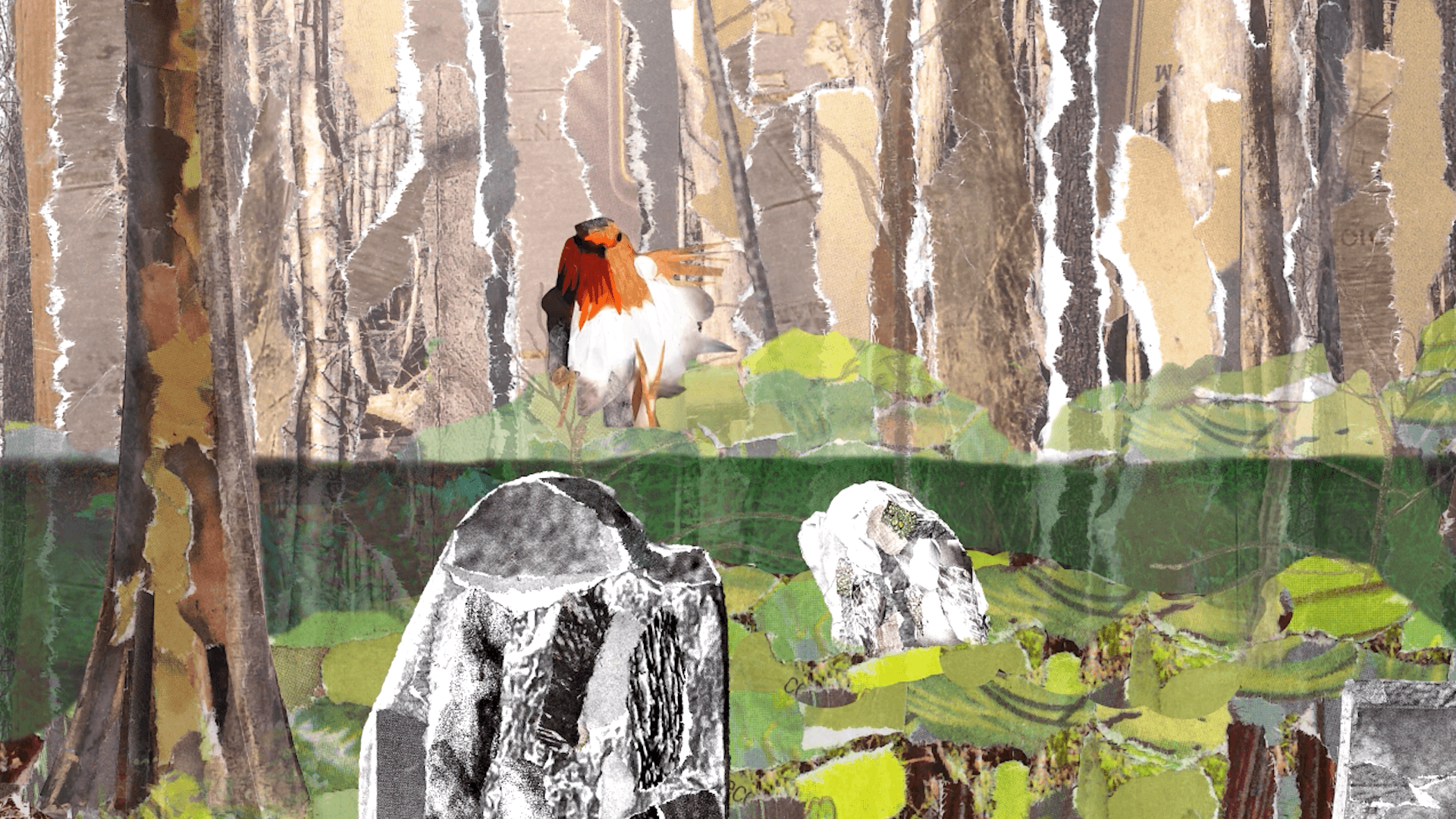
Figure 7. Rebecca Louise Carter, “A Bird Sang to Me,” 2025. Animation still.
While this process has enabled a slow and careful orientation to restorative kinship and the summoning of life in the context of death and mourning, my use of digital technology from compositing software to online platforms and publications, opens additional pathways for the transmission of Black know-how in the post-digital world. My hope is that the impact of stories like the one shared by Sister Anne, in audio-visual-sensory form (Favero 2020), might circulate far beyond New Orleans, supporting the development of both individual and collective engagements with living that are informed by the past but attuned to present and future time
Collage as Black Study
After Sister Anne finished her story, Danielle shifted the group’s attention to the balloon release, which would be the final ritual for the evening. She ushered Monica and the other women out to the parking lot. They watched them disappear with a lightness they did not seem to have before, a sense of comfort that came with the affirmation of one’s relations and place in the world, along with gratitude for support on a difficult day. They would return the following week with more balloons and stories.
I am indebted to these women for allowing me to witness their work. The knowledge and practices they shared were a great comfort as I dealt with losses of my own, and they continue to provide inspiration and direction for my ongoing scholarship, pedagogy, and creative work. My continued engagement with existing scholarship also remains essential, ensuring that I locate contemporary summoning practices within the legacy of Black social and political transformation in the Mississippi River Delta and elsewhere. As Clyde Woods reminds us, summoning has multiple functions – in the case of the blues it “inform[s] both thought and action, critique and celebration” (1998, 20). Thus, Woods’s aim “to bridge the gap between the blues as a widely recognized aesthetic tradition and the blues as a theory of social and economic development and change” (20) remains vital for my framing of collage as Black study in these distinctly challenging times.
In particular, the connection Woods maintains “between regional political economy, culture, and consciousness” (1998, 21) is an important refusal to separate resistance from everyday creative engagements. Ordinary, beautiful work is also not well captured by conventional modes of commemoration or study, prompting a rethinking of “anniversaries” themselves. What I hope I have shown, therefore, within a reinvigorated blues epistemology, is how powerful remembrance can be, especially when understood and experienced as a continuous and creative practice of relatedness in the context of unprecedented disaster. This “unhinging” of anniversaries frees them from their master narratives (Thomas and Masco 2023, 4), so that daily encounters and transformations, like a bird singing (the blues) in the cemetery, can come to the fore. Such moments, as Woods’s asserts in the identification of a Blues Renaissance, exist as systems of explanation, the aesthetic expressions of Black consciousness realized as resistance, and the summoning of “life, love, laughter, and much, much more” (1998, 17).
WORKS CITED
Alexander, Elizabeth. 2004. The Black Interior. Graywolf Press.
——— 2003. “The Genius of Romare Bearden.” In Something All Our Own: The Grant Hill Collection of African American Art. Duke University Press.
Arena, John. 2012. Driven from New Orleans. University of Minnesota Press.
Astacio, Patricia Alvarez. 2021. “Tactile Analytics: Touching as Collective Act.” In Experimenting with Ethnography: A Companion to Analysis, edited by Andrea Ballestero and Brit Ross Winthereik. Duke University Press.
Bauman, Zygmunt. 2006. Liquid Times: Living in an Age of Uncertainty. Cambridge: Polity Press.
Bateman, Anita N. 2023. “also also also and and and: Digital Stitches and the Collage as Glitch.” In Multiplicity: Blackness in Contemporary American Collage, edited by Kathryn E. Delmez. Frist Art Museum.
Benjamin, Ruha. 2019. Race After Technology: Abolitionist Tools for the New Jim Code. Cambridge: Polity Press.
Beliso-De Jesús, Aisha M. 2024. “Introduction: Empire and Disaster.” Transforming Anthropology, Special Issue: Empire and Disaster 32 (2): 68-69.
Bonilla, Yarimar. 2020. “The Coloniality of Disaster: Race, Empire, and the Temporal Logics of Emergency in Puerto Rico, USA.” Political Geography 78, April 2020.
Bonilla, Yarimar and Marisol LeBrón. 2019. Aftershocks of Disaster: Puerto Rico Before and After the Storm. Chicago: Haymarket Books.
Brown, Vincent. 2009. “Social Death and Political Life in the Study of Slavery.” American Historical Review 114 (5): 1231–49.
Campt, Tina. 2023. A Black Gaze: Artists Changing How We See. MIT Press.
Carter, Rebecca Louise. 2019. Prayers for the People: Homicide and Humanity in the Crescent City. University of Chicago Press.
Cassel-Oliver, Valerie. 2023. “Meditations of the Multivalence of Black Womanhood.” In Multiplicity: Blackness in Contemporary American Collage, edited by Kathryn E. Delmez. Frist Art Museum.
Cholodenko, Alan. 1991. The Illusion of Life: Essays on Animation. Power Publications, Australian Film Commission.
Clarke, Jennifer. 2024. “Parasitic Projects and the Politics of Research-Creation.” In The Trouble with Art: An Anthropology Beyond Philistinism, edited by Roger Sansi and Jonas Tinius. Routledge.
Cox, Aimee Meredith. 2015. Shapeshifters: Black Girls and the Choreography of Citizenship. Duke University Press.
Cramer, Florian. 2015. “What Is ‘Post-digital’?” In Postdigital Aesthetics: Art, Computation, and Design, edited by D. Berry and M. Dieter. Palgrave Macmillan.
Cramer, Lauren Mcleod and Alessandro Raengo. 2017. “Freeing Black Codes: liquid blackness Plays the Jazz Ensemble. The Black Scholar 47 (3): 8–21.
Crary, Jonathan. 2013. 24/7: Late Capitalism and the Ends of Sleep. Verso.
Dawney, Leila and Thomas Jellis. 2024. “Endurance, Exhaustion, and the Lure of Redemption.” Cultural Geographies 31 (2): 153-166.
Delmez, Kathryn. 2023. Multiplicity: Blackness in Contemporary American Collage. Nashville: Frist Art Museum. Published in conjunction with the exhibition Multiplicity: Blackness in Contemporary American Collage, organized by the Frist Art Museum, Nashville, TN, and curated by Senior Curator Kathryn E. Delmez.
Farebrother, Rachel. 2009. The Collage Aesthetic in the Harlem Renaissance. Routledge.
Favero, Paolo S.H. 2020. “Audio-visual-sensory Essays in Post-Digital Times: Communicating Anthropological Knowledge Across the Multimodal, Multisensory, Participatory, and More-than-human.” Anthrovision 8 (2): 1-18.
Gallon, Kim. 2016. “Making a Case for the Black Digital Humanities.” Debates in the Digital Humanities 2016.
Gilmore, Ruth Wilson. 2017. “Introduction.” In Development Arrested: The Blues and Plantation Power in the Mississippi Delta. Verso.
Gómez-Barris, Macarena. 2017. The Extractive Zone. Duke University Press.
Harney, Stefano and Fred Moten 2013. The Undercommons: Fugitive Planning & Black Study. Minor Compositions.
Hartman, Saidiya. 2007. Lose Your Mother: A Journey along the Atlantic Slave Route. Farrar, Straus and Giroux.
———. 2019. Wayward Lives, Beautiful Experiments: Intimate Histories of Social Upheaval. W.W. Norton & Company.
Johnson, Cedric, ed. 2011. The Neoliberal Deluge: Hurricane Katrina, Late Capitalism, and the Remaking of New Orleans. University of Minnesota Press.
Johnson, Jessica Marie. 2018. “Markup Bodies: Black [Life] Studies and Slavery [Death] Studies at the Digital Crossroads.” Social Text 36 (4): 57-79.
Judd, Bettina. 2023. Feelin: Creative Practice, Pleasure, and Black Feminist Thought. Northwestern University Press.
Klein, Naomi. 2007. The Shock Doctrine: The Rise of Disaster Capitalism. Picador.
———. 2023. Doppelganger: A Trip into the Mirror World. Farrar, Straus and Giroux.
Lipsitz, George. 2018. “Conjuring Sacred Space in Gulf Coast Cities.” Journal of the American Academy of Religion 86 (2): 497-525.
Masco, Joseph. 2017. “The Crisis in Crisis.” Current Anthropology 58 (15): S65-S76.
McKittrick, Katherine, and Clyde Woods. 2007. Black Geographies and the Politics of Place. Between the Lines Books.
Murphy, William. Praise Is What I Do. Sony Urban/Epic Records (US); Released August 16, 2005.
O’Meally, Robert G. 2022. Antagonistic Cooperation: Jazz, Collage, Fiction, and the Shaping of African American Culture. Columbia University Press.
Patterson, Orlando. 1982. Slavery and Social Death: A Comparative Study. Harvard University Press.
Powell, Richard J. 2023. “Hurston’s Law, or a Philosophy of Display.” In Multiplicity: Blackness in Contemporary American Collage, edited by Kathryn E. Delmez. Frist Art Museum.
Quashie, Kevin. 2021. Black Aliveness, Or A Poetics of Being. Duke University Press.
Regis, Helen A. 2001. “Blackness and the Politics of Memory in the New Orleans Second Line.” American Ethnologist 28 (4): 752–77.
Russell, Legacy. 2024. Black Meme: A History of the Images that Make Us. Verso.
Sharpe, Christina. 2016. In the Wake: On Blackness and Being. Duke University Press.
Short, Alvia Jean Wardlaw. 1979. “Strength, Tears, and Will: John Biggers’ ‘Contribution of the Negro Woman to American Life and Education’.” Callaloo 5 (Feb.): 135-43.
Taussig, Michael. 1987. Shamanism, Colonialism, and the Wild Man: A Study in Terror and Healing. University of Chicago Press.
Theisen, Olive Jensen. 2006. A Life on Paper: The Drawings and Lithographs of John Thomas Biggers. University of North Texas Press.
———. 2010. Walls That Speak: The Murals of John Thomas Biggers. University of North Texas Press.
Thomas, Deborah A. and Joseph Masco. 2023. “Feeling Unhinged.” In Unhinged: An Illustrated Primer for the Study of Present Intensities, Disavowals, and Temporal Derangements, edited by Joseph Masco and Deborah A. Thomas. Duke University Press.
Thompson, Robert Farris. 1995. “John Biggers’s Shotguns of 1987.” In The Art of John Biggers: View from the Upper Room, edited by Alvia J. Wardlaw. Harry N. Abrams.
Tilton, Lauren, David Mimno, and Jessica Marie Johnson. 2024. Computational Humanities. University of Minnesota Press.
Welcome, Leniqueca A. 2023. “Wading in the Thick: A Sovereign Encounter through Collage.” In Unhinged: An Illustrated Primer for the Study of Present Intensities, Disavowals, and Temporal Derangements, edited by Deborah A. Thomas and Joseph Masco. Duke University Press.
Woods, Clyde. 1998. Development Arrested: The Blues and Plantation Power in the Mississippi Delta. Verso.
———. 2017. Development Drowned and Reborn: The Blues and Bourbon Restorations in Post-Katrina New Orleans, edited by Jordan T. Camp and Laura Pulido. The University of Georgia Press.
Wynter, Sylvia. 2003. “Unsettling the Coloniality of Being/Power/Truth/Freedom: Towards the Human, After Man, Its Overrepresentation – An Argument.” CR: The New Centennial Review 3 (3): 257–337.
FOOTNOTES
1I use pseudonyms to protect the identities of my interlocutors, in accordance with approved research protocols by Brown University’s Institutional Review Board.
2Murphy, William. Praise Is What I Do. Sony Urban/Epic Records (US); Released August 16, 2005.
3Engaging initially with anthropological approaches to the study of disasters, I moved beyond conventional determinations of risk as well as formulated stages of impact and recovery. Such frameworks are conflated with the intent and mechanisms of disaster capitalism, which Hurricane Katrina brought into stark relief (Klein 2007, McKittrick and Woods 2007, Johnson 2011). Scholarship on social death and erasure proved more relevant (Patterson 1982, Arena 2012), for considering how residents in New Orleans, especially poor people of color in the city’s ‘back-of-town’ neighborhoods, were faring. I thus came to understand local conditions, both before and after the storm, as derived from a “coloniality of being,” founded upon hierarchical determinations of the human (Wynter 2003) and perpetuated by the corresponding establishment of so-called “surplus” populations in late or liquid modernity (Gómez-Barris 2017, Bauman 2006, see also Bonilla and LeBrón 2019 and Bonilla 2020).
4My consideration of social death thus expanded through a conceptualization of the “space of death” (Taussig 1987, 4-5), which allowed me to better appreciate how Black folks refashion the geographies of exclusion in which they are frequently placed (McKittrick and Woods 2007, 4), even making “a social world out of death itself” (Brown 2009, 1232-1233). Across New Orleans’ wards and neighborhoods, in homes and on porches, on the corner or processing down the street, residents “summon[ed] death to the stage of the living human body,” extending memory and belonging beyond the conventions of time and place (Regis 2001, 766). Black feminist theory understands such practices as powerful forms of worldmaking – the realization of Black being unfolding in the everyday afterlife of slavery (Hartman 2007, 6), through “shapeshifting” (Cox 2015), “wake work” (Sharpe 2016, 17), “waywardness” (Hartman 2019), or other process that allow us to “inhabit[] and rupture[] this episteme with our known lived and un/imaginable lives” (Sharpe 2016, 17-18).
5Welcome uses photography and collage to support the study of racialization, criminalization, and securitization in Trinidad. The practice allows for a slowed, embodied encounter, which goes beyond the passivity of looking or seeing (Campt 2023) and towards an experimental ethnographic practice that is “rooted in an ethics of care and mutual sovereign being” (Welcome 2023, 98-99).
6My recent training includes courses in drawing and portraiture at the Art Students League of New York (Yuka Imata), courses on collage and experimental animation at the Massachusetts College of Art and Design (Maya Erdelyi Perez and Rebecca Morrison), and convenings, screenings, and workshops at the Kolaj Institute in New Orleans, the London Arts-Based Research Centre, and the Royal Anthropological Institute, among other venues. I also incorporate and develop related techniques in my teaching through courses in experimental and multimodal ethnography.
7Woods conceptualizes the blues epistemology as “a longstanding African American tradition of explaining reality and change… a “popular consciousness… used to interpret both the continuous crisis in the Delta and African American attempts to create a new regional reality based on cultural freedom and economic and social justice” (1998, 25).
8Compositing software programs facilitate the layering of multiple elements including text, imagery, and sound, and adjustments to time, scale, and other aspects help suspend disbelief in ways that make it difficult to fully anchor what one observes and experiences as knowable, making it possible to push past inherited and expected frames of understanding into new territory (Cholodenko 1999).
9I draw inspiration from existing scholarship within Black digital humanities (Gallon 2016), that makes clear the relationship between emerging technologies and social inequality (Benjamin 2019), as well as scholarship and activism on digital humanism and Black memetics that reclaims data to (re)tell Black stories (Johnson 2018, Tilton et al. 2024, Russell 2024). Theorizations of Black coding, premised on the idea that Blackness already poses its own logic of digitality and connectivity and can write its own commands (Cramer and Raengo 2017), situate the circulation of Black know-how as algorithmic work, disruptive to the dominant programming of the world.
Past Editions
1.
“They didn’t come to save us after Katrina, but they are coming for us now”: Black men, Marronage, and the eco-fascist conjuncture
Justin Hosbey
2.
A Bird Sang (the Blues) to Me: Collage as Black Study
Rebecca Louise Carter
3.
An Ambivalent Zionism: Walter White, Black Internationalism, and the Politics of Partition
Amy Barenboim
4.
At the End of the World: On the Temporal Limits of Katrina Recovery
Alix Chapman
5.
Divestment and Its Terrain: Abolition, the State, and Racial Capitalism
Philip V. McHarris
6.
Eye of the Storm: Commemorating Katrina as Political Praxis
Shreya Subramani, Christien Tompkins & Kaya Williams
7.
On the Black International Gaze
Zachary Mondesire
8.
Pick Up This Book and Use It: Abolition, Anthropology, and the Archive in Tip of the Spear and Excited Delirium
Kaya Naomi Williams
9.
Review of The Petro-state Masquerade: Oil, Sovereignty, and Power in Trinidad and Tobago, by Ryan Cecil Jobson
Anna Feign
10.
Steps Leading to the Sky: June Jordan’s Black Feminist Frictions
Marina Magloire
11.
Unmaking Carceral Disasters: A Post-Katrina Timeline of Struggles Against the New Orleans Punishment Regime
Lydia Pelot-Hobbs
12.
Untitled (Introduction to SOULS Vol. 25)
Jafari Sinclaire Allen