

VOL. 4
And the Beat Goes On: Challenges Facing Black Intellectuals
Kathleen Neal Cleaver
Black intellectuals these days face assaults—some subtle, others dramatic—to their sense of purpose. The tumult that turned being Black into an admirable quality has subsided. The fervent sense of connection white supremacists used to impose on our community has cooled. Nearly one-third of African Americans now earn middle-class incomes, accelerating class fragmentation. An array of definitions for people simply called Black a generation ago have popped up, and either by our own choice or by unsympathetic observers, we are now called mainstream, afrocentric, incognegro oreo, biracial, conservative, radical, person of color, or member of the hip hop nation. Despite the economic and legal uplift of millions, stigmas rooted in slavery have not been eradicated, nor has racist terrorism ended. Scholars still have minimal input into the terms on which universities decide to include us; once we arrive, our presence is rarely lauded as a valuable intellectual addition.
The American glorification of personal autonomy, individual achievement, and private property gives Black intellectuals a hard row to hoe. Many of our families devised strategies for coping with the segregated outside world that emphasized spirituality, artistic or athletic ability, and communal solidarity. Thus, when we engage in the interpretive work our discipline demands, some African American intellectuals feel torn between competing value systems. Does inclusion require that we conform to alienating standards, or can adhering to ingrained community values aid the Black intellectual in carrying out his or her responsibilities?
We face a pattern of difficulties—some personal, some systemic—that resembles conflicts our mentors and colleagues suffered in the past. Typically, our parents or grandparents were barred from prestigious universities, but today public policy dictates that we be accepted, if not welcomed. For example, I frequently heard the late Judge Leon Higginbotham, for whom I clerked at the federal courthouse in Philadelphia, describe an indelibly painful incident. In the 1950s, after he’d won the Moot Court competition at Yale Law School—where he was one of the three Black students—he was pained to see the disdain a white judge showed his working-class Black parents, who had traveled from New Jersey to witness the ceremony honoring their son.
Today, such contempt may be less routine. Yet even while serving on the nation’s highest court, Supreme Court Justice Clarence Thomas has felt its sting: A white woman getting out of a taxi in front of a hotel entrance where he happened to be standing once asked him to pick up her luggage. And Alice Walker revealed her internal conflict when she wondered about a fancy university invitation she had received: If I come, can I bring my mother?
My own mother, who met my father when they were graduate students at the University of Michigan during the 1930s, had been active in radical protest movements against segregation. She had participated in the Southern Negro Youth Congress from its inception, and my father was engaged in the NAACP’s campaign to end the all-white primary election process in Texas, among other struggles. My parents created an intellectual environment at home that encouraged me to express myself and laid a foundation for my later demands that the larger community around us should respect our people’s extraordinary history of accomplishment and struggle. During the late 1940s and early 1950s, my father was a sociologist who directed the Rural Life Council at Tuskegee Institute. This meant I lived within a sheltered Black society molded by Booker T. Washington and George Washington Carver. Stacked on my father’s shelves at home were books such as The Marginal Man, The New Class, Das Kapital, and Pan-Africanism or Communism. Guests who visited us frequently were men and women who taught in college, worked for the NAACP, practiced medicine, designed buildings, or composed music. The novelist Albert Murray lived around the corner, although I only thought of him as “Mikey’s father.” Years later, I met the renowned historian John Hope Franklin, at the Afro-American Cultural Center when I was a student at Yale, and he surprised me when we were introduced. He shook my hand, smiled at me in his paternal way, and told me softly, “I’ve known you since you were a baby. Your father and I taught at North Carolina State together.”
Although such a childhood may sound atypical, it was by no means unique, particularly for that impatient generation of Black college students who initiated the direct action and Black consciousness movements in the Deep South. Emboldened by parents or teachers who had fought against legalized, race-based subjugation policies, we “radical” activists continued whacking out terrain where intellectuals who embodied our community’s values could operate more freely. Radical artists and writers who advocated a new Black consciousness during the era known as the Harlem Renaissance, the pathbreaking intellectual W. E. B. Du Bois, who laid the groundwork for our claims to self-determination, and Black freedom fighters all the way back to David Walker and his fugitive slave contemporaries—all were our antecedents.
Confronting Intellectual Distortions
Although we feel proud about such intellectual ancestors and stand ready to kick down walls that bar such scholarship from the paradigms recognized by our disciplines, enthusiasm alone is not sufficient. We face deeply ingrained convictions within authoritative circles that deny legitimacy—or even existence—to the work of these ancestors. Generation after generation of Black intellectuals have fought to replace official interpretations that undermine our integrity as a people—renovated versions of patently bogus claims such as “Africa has no history” or “Blacks are inferior to whites because their brains are smaller”—with more coherent accounts. The fracas over Charles Murray’s The Bell Curve demonstrates how such themes are still being recycled. Every one of us can describe some confrontation we’ve had with distorted scholarship or twisted intellectual conclusions that demean Blacks. Several years ago, I encountered such distortion at an innovative education seminar for judges in Alabama.
Dale Segrest, a respected circuit court judge deeply concerned with enhancing pluralism within a racist structure, invited me to join him in teaching a seminar. The weekend program he'd designed was based on a law and literature model and had received official support from the Alabama Judicial Council for satisfying the state’s licensing requirements. Judge Segrest, who is white, held the course at Tuskegee University, a college within his jurisdiction that he believed few white judges had ever visited. He assigned readings that introduced the works of W. E. B. Du Bois and Booker T. Washington, scholars he was certain they had not read. During one class discussion, Judge Segrest stunned me when he dismissed the prodigious intellectual work of Du Bois, asking me, “Booker T. Washington left this marvelous institution as his legacy, but what legacy did Du Bois leave?” The judge clearly recognized the material contribution that Washington had made to Black advancement, but his stunted appreciation for the intellectual contributions of one of the twentieth century's greatest scholars was amazing. I thought for a moment, then replied that the legacy Du Bois left was the Civil Rights Movement, which implemented ideas he had advocated decades earlier.
It took me literally decades to understand how growing up in Alabama was akin to being colonized
Yet, when I say Civil Rights Movement I know that a white Alabama judge scarcely fathoms what I want to convey. The term has now become widely synonymous with the nonviolent assimilation of Black people into American society. It glosses over, however, the complexity of that decades-long struggle, when radically divergent approaches and goals competed for allegiance. The words civil rights now have a misleading illusion of simplicity that conceals the alternative conceptions of social change that animated those who fought to end racial segregation during the 1960s.
One of the highly significant issues that gets overlooked is the debate that raged over the future direction of Black institutions, such as schools. Should they be strengthened? Should the segregationists’ attempts to provide so-called equal funding to maintain their separateness be encouraged? Or should we seek integration into white institutions to better serve our social and economic development?
The nature of movement leadership, particularly in local communities, is another area that is rarely considered. Instead of recognizing that powerful community upsurges were mobilized by lay people, women, schoolteachers, union organizers, veterans, and intellectuals, conventional scholars have consecrated Martin Luther King, Jr., as the commander in chief, portraying all others as his subordinates. In reality, civil rights campaigns were frequently led by ministers, who enjoyed financial independence from local whites; in my hometown, a sociology professor named Dr. Charles Gomillion defined the struggle. He formed the Tuskegee Improvement Association, which concentrated on achieving economic and political power for Black residents, deploying boycotts, lawsuits, and voter registration drives as the dominant means of attacking segregation. As a teenager, I identified with the nonviolent protests I witnessed, joined the boycotts, and walked door-to-door registering voters. But when I heard Stokely Carmichael explain that “integration was just a subterfuge for white supremacy,” I was instantly converted to Black Power. What could be more clear than his explanation that Black people needed the political power to determine our own destiny?
Using the term civil rights to represent the entire Black struggle against oppression usually minimizes the anti-imperialist liberation movement that erupted in the wake of the call for Black Power. Within weeks of Carmichael’s declaration during the summer of 1966, I joined the loosely woven organization he chaired called the Student Nonviolent Coordinating Committee. By then, SNCC was legendary. But, six years earlier, when James Forman, who would become the organization’s first executive director, was initially considering whether to work with them, he hesitated to cast his lot with such a disorderly bunch of students. Certain qualities he saw in them, however, swayed his decision to join them. He wrote that they possessed “the energy, the talent, the brain power, the determination and the courage to change certain values in this country. One of the most important values to be changed,” he said, “was that a person should work for money. These students were saying that they were more concerned with human rights than with money. They were not driven by the profit motive that dominates the society ... and they were willing to demonstrate this with their lives. I felt that if this idea could grow among young Black people, we would usher in revolutionary changeThat same quality, that potential for revolution, drew me into their ranks as well.
Further, the phrase civil rights almost always diminishes a fundamental truth that the liberation movement recognized: Winning the war for human dignity and political equality against white supremacists would not occur without widespread violence, both defensive and aggressive. I do not believe it is an accident that this simplistic conception of the modern civil rights struggle—which in Alabama and Georgia was initiated as a clear demand for human rights—has become entrenched. As George Orwell observed in his novel, 1984, when the past can be erased, the lie becomes truthAmerica’s racial oppression provides lush soil for the cultivation of lies that replace Black reality and continually inspires Black intellectuals to wrest control over the definition and articulation of our past and present.
Black Diluted
Back when Negro was the conventional designation for descendants of Africans, identifying as Black placed you in opposition to standard operating procedure within racist U.S.A. Black then conveyed a distinct commitment to political, cultural, and economic self-determination. We who sought Black liberation initiated or continued the push for academic recognition of our history and culture, brought about Black studies programs through radical protest actions, promoted the Black Arts Movement, insisted upon the values of our heritage, supported African independence struggles, and challenged American racist domination in political, economic, and military spheres, including refusing to fight in the Vietnam War. Writers like LeRoi Jones, who later became Amiri Baraka, Ed Bullins, Sonia Sanchez, Eldridge Cleaver, and Alice Walker gave voice to the emerging Black consciousness that led to the demise of Negro, fatally injured by the ideological beating delivered by Malcolm X. Those scholars, playwrights, artists, writers, and political leaders who were devoted to transforming the oppressive conditions we faced at the time began to call ourselves Black scholars, Black writers, and Black leaders.
It is not clear that the present understanding of Black includes a similar commitment to radical transformation. I think that any attempt to articulate the place of the Black intellectual in contemporary public life requires taking changed conditions into consideration. Social dislocations left in the wake of the Vietnam War and the upheavals of the 1960s have rearranged the nature of the Black/white separation and opened our communities to more sophisticated intervention by white institutions than segregation ever allowed. And although the United States is presently demographically turning into a multicultural society, ideologically it seems gripped by a reactionary return to Cold War hostility and witch hunts. Fundamentalist Christianity and neofascist mobilization resurfaced in mainstream politics, fueling high-visibility campaigns against affirmative action, immigration reform, and liberal policies of criminal justice years before the hysteria unleashed by the war on terrorism shaped public policies.
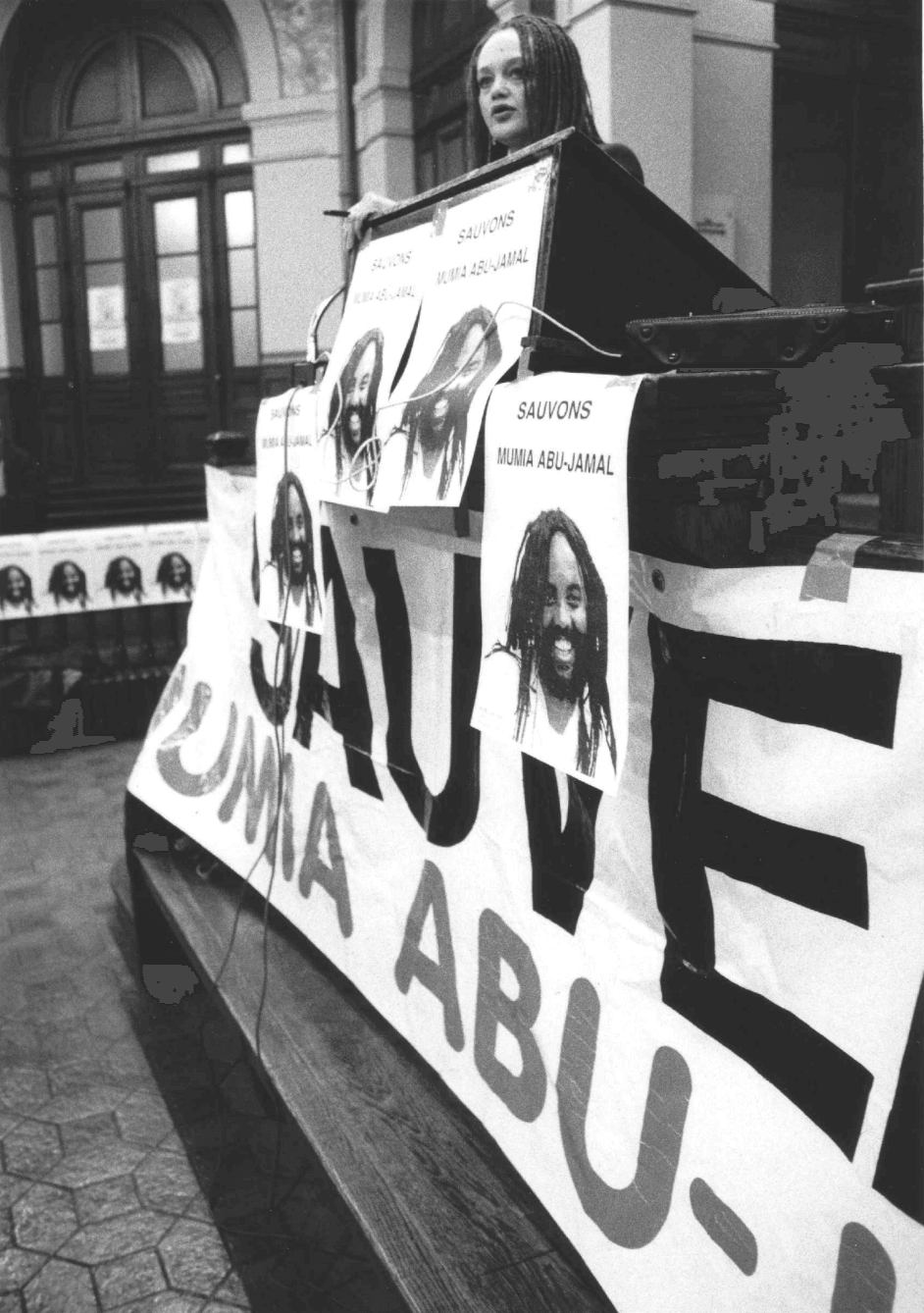
Kathleen Cleaver, Paris, November 1995. Copyright © St. Clair Bourne
A proliferation of African American scholars and writers has occurred during this period, and they have gained a level of visibility unthinkable merely three decades ago. But as Cornel West has noted, the “rightward intellectual drift” of American life has reconstituted a “hostile climate for the making of Black intellectuals,” accompanied as it has been by the “capitulation of a significant segment of former left-liberals to new-style conservatism and old-style imperialism It seems that the concomitant success of elite racial integration, or the selective inclusion of Blacks within dominant political, economic, cultural, and educational institutions, and the failure to strengthen independent Black institutions that formerly nourished our scholars and writers has an ironic consequence. Despite the increase in numbers, prestige, and financial security, the new Black intellectual appears to exert far less influence on public life than the old. Where are our Adam Clayton Powells, Martin Luther Kings, or Ida B. Wellses? Seeing a Black intellectual like Clarence Thomas co-opted to implement state policies that enhance racist domination makes it obvious that we can no longer equate Black with the commitment to our long-standing and still-relevant demand for self-determination it used to signal. The remark I heard veteran SNCC leader Courtland Cox make sums it up: “Blackness,” he said, “is necessary, but not sufficient.”
A truncated conception of intellectual work leaves most Black folk unaware of what relevance such endeavors have for their lives or for the world at large.
Joining SNCC led me directly to the Black Panther Party for Self-Defense, where in 1967 I helped organize the urgent campaign to prevent Huey Newton’s execution on charges of murdering an Oakland policeman. The revolutionaries I joined repudiated the liberal idea that our people were treated as so-called second-class citizens. Instead, Panthers asserted that the centuries of slavery and racial segregation we had endured were a form of domestic colonialism. We studied the ideological, psychological, political, and military methods of liberation young insurgents were deploying around the world and developed an analysis of how imperialism constrained our freedom. We saw clearly that our history, economic dependence, and race collided, and we did not fight to become “first class citizens.” Like Africans, Asians, and Latin Americans ejecting imperialists from their lands, we too sought liberation and self-determination. We too sought to transform racist domination into collective freedom.
Frantz Fanon’s seminal work The Wretched of the Earth, which examined Algeria’s war of independence from France, profoundly influenced us The resemblance between the colonized Africa Fanon wrote about and the conditions Blacks lived under in America was striking. “The colonial world,” he wrote, “is a world cut in two. ... The zone where the natives live is not complementary to the zone inhabited by the settlers. ... The settlers’ town ... is full of white people.” But the “town belonging to the colonial people, or at least the native town, the Negro village, ... the reservation, is a place of ill fame ... a hungry town ... wallowing in the mire Fanon explained that “the violence which has ruled over the ordering of the colonial world ... that same violence will be reclaimed and taken over by the native as he surges into forbidden quarters. To wreck the colonial world is henceforth ... a picture of action, which is ... clear, very easy to understand.... We easily identified with Fanon’s analysis of how violence and racism intertwined in the colonial scheme and with his psychological insight into the way revolutionary violence aided the colonized in reclaiming the dignity that white racism denied.
In America, the colonial status of Blacks is so obscured by the rhetoric of democracy, it took me literally decades to understand how growing up in Alabama was akin to being colonized. After suffering defeat in the Civil War, the former headquarters of the Confederacy turned into a virtual colony of the larger industrializing United States. The political and social conditions of my segregated Alabama childhood were like those in semirural colonial regions, where independence movements erupted during the 1960s just as they did in Alabama. Now, minus its bizarre apartheid, the state is integrated into modern, corporate America, and national government policy outlaws the formal aspects of institutionalized racism there and across the United States. Does that make Black people just like everybody else?
Did the abolition of segregation cancel the effects of how Black people obtained citizenship? Constitutional amendments that were passed after the Civil War conferred citizenship upon the descendants of Africans who, only a decade earlier, were deemed by the Supreme Court to have “no rights a white man was bound to respect.” Do these rights, which now have to be respected, give us full-fledged membership in the democratic society—or is our situation now more complex?
I see our current status as parallel to the ceremonial end of direct colonial rule in Africa, which was quickly replaced by indirect, or neocolonial, control. Formal independence was granted, the colony gained a new name and hoisted a new flag, but the old imperial master continued to dominate the people’s economic and military destiny. Similarly, the United States now tolerates Black identity—the post office has even issued a Kwanzaa stamp—and allows our participation in conventional politics to expand dramatically, but little economic or military self-determination is in evidence.
A Dual Responsibility
The intellectual in the contemporary African American community inherits, I think, a dual responsibility. Not only must we carry out the interpretive critical tasks for which years of training have prepared us, but we must also resist the insistent strategies that encourage Black people to serve the interests of the dominant society without any reciprocal concern for their well-being. I am fully aware that this politicized component of the intellectual project is not—or is no longer—routinely acknowledged as the Black intellectual’s concern. The current climate of reaction encourages all scholars connected with an educational institution to cultivate ignorance of the affairs of the everyday world if they want the university’s stamp of approval, a position the scholar Edward Said identifies as one of “non-interference This, he asserts, helps to conceal the interlocking hierarchies of power within government, corporations, and the academy, a fact further obscured by the rigid specialization and disciplinary separation maintained within universities. Instead of remaining silent on questions of social, economic, and foreign policy, Said calls for intellectuals to practice “interference”—to cross boundaries, confront obstacles, and break out of disciplinary ghettos Few Black students being molded into scholars at major universities during the current era of retreat from democracy hear such advice. Elite institutions have modified their practices of inclusion, seeking faculty and students whom they consider non-threatening to their status quo. Unlike the early years of pell-mell incorporation of Blacks, such institutions now carefully screen non-white applicants, choosing fewer American-born Blacks and more foreign-born and first-generation students of African descent, favoring those students who attended private schools over the graduates of public schools. These policies contribute to the low level of activism evident on campuses and further the decline in Black students’ political awareness. A new crop of Black intellectuals is being cultivated in places where students rarely identify with the aspirations of ordinary Black folk. More often than not, students quietly acquiesce in the elite standing the institution confers upon them, no longer giving voice to any collective demands to place the enormous resources such schools command at the service of their impoverished brothers and sisters.
The reality is that African Americans have so enriched the humanities, social sciences, and arts that our culture has given the United States its international signature
But to repudiate a social debt to the beleaguered community whose sacrifices and triumphs have shattered barriers to our individual advance leaves the intellectual, in my opinion, diminished and internally unbalanced. I think the frustration of sustaining that position ultimately weakens the authenticity of one’s critical work. The responsibility facing those who have chosen the profession of intellectual work is not merely personal, but arises from the cultural, historical, and ethical context in which we function, whether or not we acknowledge it.
I was fortunate to receive a superb education beginning in my earliest years. The first school I attended was Children’s House, an elementary school founded during the nineteenth century by Booker T. Washington the year after he established Tuskegee Institute. As a small child, I was taught by committed Black women who shared my tight-knit southern Black community and who steadfastly expected that their students would excel. Booker T. Washington succinctly expressed the purpose that animated that elementary school: “The object of all education, no matter what it is called, should be to fit the individual to articulate what he has learned in the schoolroom into the active everyday community in which he lives.” After having studied at the best universities in the United States, I find that concept continues to animate my conduct. I think that is because Washington’s idea draws upon the resilient force—the force of creativity—that enabled the descendants of African captives to transcend the beastly conditions they faced.
Our collective imagination has generated a vibrant culture interweaving old with new threads, coloring what we found in the New World with our African cultural palette. Our ancestors turned suffering into music, agony into stories, pain into dance, and setbacks into motivation. Writing about the dual status that has always plagued Blacks, Eldridge Cleaver pointed out that being “both slave and Christian, ... both free and segregated, ... both integrated and colonized, ... in the past has worked to our disadvantage As a revolutionary, however, Cleaver understood that the duality that used to keep us “running around in circles” would be turned “to our advantage, in the manner that we have turned Blackness from a disadvantage to a rallying point of advantage We have that brilliant legacy to encourage us.
Yet the practical conditions of existence that make Black intellectuals fortunate enough to secure university positions underscore the necessity to strike a balance between loyalty to the institution and loyalty to “the race.” Emphasizing the second at the expense of the first guarantees marginalization within what is an already marginalized professional life; but to displace one’s identity to better serve an institution is a prescription for emotional disaster. This predicament, according to Cornel West, is scarcely of the Black intellectual’s own choosing, but it arises from an objective condition that isolates from both the main currents of American society and the Black community the person who devotes his or her life to meticulous, critical mental tasks A truncated conception of intellectual work leaves most Black folk unaware of what relevance such endeavors have for their lives, or for the world at large, and reinforces the cultural stereotype of the intellectual as insignificant. West observes that this marginalization pushes most Black intellectuals into one of two camps: those he calls “successful,” usually distant from and condescending toward the Black community, dedicated to the prevailing bourgeois standards, or the “unsuccessful,” who remain trapped within the parochial discourse of African American life The committed few who transcend this predicament follow a different path and, in turn, they win respect from the Black community. Their fundamental engagement with African American political or cultural life, and their extraordinary talent, enables them to soar past limitations that hamper their contemporaries. To enable more to follow that path, intellectuals need to build a substantial network for each other where they can find support for their research and publication and establish means of remaining in close communication.
The reality is that African Americans have so enriched the humanities, social sciences, and arts that our culture has given the United States its international signature. Unforeseen consequences of the barbaric forced migration that dragged millions of Africans across the Atlantic now link Europe with Africa and the New World. The seeds of that diaspora flung across the continents have borne fruit and nourished a pivotal relationship of the African American intellectual to the emerging global civilization.
Clarifying the Intellectual’s Role
What role does the Black intellectual play in public life? What could that role become? I suggest three areas to be examined: 1) Who constitutes the intellectual’s constituency; 2) from where does he or she derive authority; and 3) what rewards can be expected for the creative or critical intellectual endeavor? The answers, of course, will not be uniform, but the range of answers will illuminate the variety of public roles Black intellectuals play and focus attention on ways to enhance the significance of our work in the twenty-first century.
Let me turn first to the question of constituency. This is a troubling one for many Black intellectuals who succumb to pressures to protect their institutional positions, but who divert their energies away from the concerns dearest to their hearts. My intellectual work did not start within the confines of the academy, but started when I was engaged in the fight for Black liberation, so I was not compelled to recognize any claims on what I wrote until much later in life. I published articles, delivered speeches, participated in debates, spoke at demonstrations, took part in political campaigns, and sought to free political prisoners long before I returned to college, where in 1984 I earned a B.A. in history. Once I concluded that the life of professor of history would be too tame, I abandoned the idea of graduate work and entered Yale Law School, fulfilling a long-delayed goal of becoming a politically radical lawyer. Nonetheless, four years after graduating, I longed for what I assumed would be the less-stressful life of a legal academic. When I began to write and speak as a legal scholar, however, it was not with the intention of abandoning the constituency with whom I grew up during my movement days. I did not stop agitating on behalf of political prisoners, speaking bluntly on political issues, or writing about the human rights struggle.
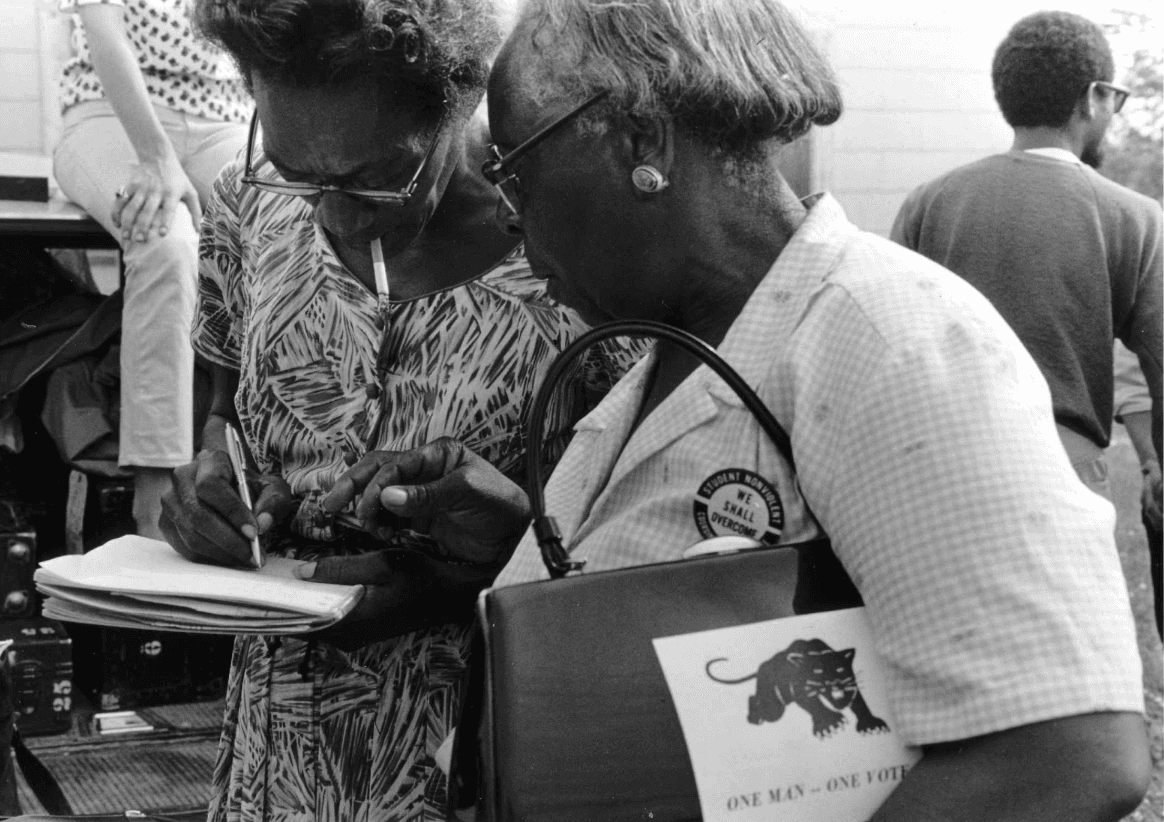
Mrs. Turner Signing Up Freedom Voters, Lowndes County, Alabama, 1966. Copyright © 1966, 1985, 2002 Bob Fletcher
Upon arriving as a new professor at Emory Law School in 1992, I became one of the two Blacks on a faculty that was torn by controversy over its long-standing lack of diversity. During my first semester, I organized a symposium titled “Diversity vs. Excellence,” taking the theme from the way the entrenched faculty members framed the problem. I invited prominent scholars and law professors to stimulate the faculty’s examination of this issue. After spending two years teaching law, I won a writing fellowship to the Bunting Institute in Cambridge, Mass. I had quickly recognized that the conservative members of the law school’s tenure committee were not the audience to whom I was directing my research and writing. When I asked for a leave of absence to accept the Harvard fellowship, one exasperated colleague of mine, a moderately conservative white legal scholar, told me I probably wasn’t cut out to be an academic. The grant enabled me to resume work on a complex personal narrative to which I had already devoted years of research and writing, a narrative that revisited the massive upsurges that challenged American racism.
I struck out on the less predictable path of finding visiting positions and fellowships that allowed me the freedom to continue writing what I believed was more meaningful than patiently seeking promotion within an academic hierarchy. I’ve given presentations drawn from my personal narrative and my scholarship at many forums and conferences, frequently directed toward the intellectual community at universities such as Yale, Harvard, and M.I.T. I’ve spoken on panels at scholarly meetings such as the Organization of American Historians, the Berkshire Conference of Women’s History, and the American Political Science Association, given numerous keynote speeches, and published chapters or articles in several books—none of which are likely to be assigned in law courses. So my constituency is a broad assemblage of progressive-minded folk, including scholars, activists, writers, students, lawyers, friends, and assorted intellectuals. Excluded are the institutional power brokers who might have advanced my career within the legal academy.
When I taught traditional law courses, such as professional ethics, torts, or litigation, I incorporated cases or readings that made students deal with concerns I believe are central to their legal training: sexism, illegal government wiretaps, police brutality, discrimination, and the way racial domination permeates our history and political institutions. I’ve created a seminar that examines cases, legal documents, historical accounts, slave narratives, and the Constitution to demonstrate how law impacts the struggle to abolish as well as to sustain human slavery. I assign the writings of scholars such as Leon Higginbotham, Herbert Aptheker, John Blassingame, and Nathan Huggins, whose work concentrates on the ramifications of the historical conflict between slavery and freedom. Students who have taken that seminar come away appreciating the intricate way the demands of a slave economy weave through the fundamental political development of America, a process rarely examined in the legal academy.
What is the source of my authority? In writing, teaching, and public speaking, I draw heavily upon our history of racial domination that I have fought for years. My personal involvement does not necessarily allow me to make critical assessments or evaluations of social policies, nor to advocate directions for action. Given the admiration that prestigious universities elicit, my scholarly credentials from Yale University and Emory Law School carry significant weight. They open doors and provide connections hard to get without such credentials. Therefore, my authentic movement experience has come out of the kiln of an elite university with a fine academic glaze. Although a degree from an elegant institution can stimulate recognition, it does not in itself provide a Black intellectual with the confidence to elaborate and deliver a nuanced social critique based upon a view of U.S. history that places slavery at the center. That confidence I gained from my work in the Black Panther Party. As a totally committed participant during the revolutionary phase of the liberation movement, I saw the party crushed by an awesome combination of law enforcement and intelligence agencies drawn from all over the United States. But our detractors never refuted our analyses.
Civil Rights Movement—the term has now become widely synonymous with the nonviolent assimilation of Black people into American society
What can I expect as the reward for this path I’ve chosen? Although I have no tenured university affiliation, I receive so many requests to give public lectures I can’t do them all. I am invited to write articles for various newspapers, journals, and books, and to occasionally appear in films or on television. Witnessing the resurgent interest in the Black Panther Party gives me great satisfaction, particularly now that I am in a position to make intellectual contributions to the emerging scholarship re-examining that era. These are not the kind of intellectual or financial rewards that continuing the practice of law would have brought. But I appreciate the freedom to formulate my writing, speaking, and teaching in relation to what I learned from that movement, lessons bought with blood, exile, imprisonment, and death. If I can give voice to the core beliefs of those whose lives were extinguished in the fight for Black liberation, it energizes me and enlightens my audiences. I have chosen to do what I love.
An International Space
I find it disheartening to see Black intellectuals increasingly distance themselves from our tradition of community solidarity and commitment to social change. Not only does that deprive the larger community of the benefit of their talent, but intellectuals attempting to navigate their internal divisions will drift in waters filled with racism’s toxic refuse. Far too many of the Euro-American formulations that supposedly formed the basis of intellectual excellence still promote white supremacy. Centuries-long African American confrontations with subjugation, exploitation, and discrimination have schooled us in problems that have no national boundaries. Although I am no fan of the globalization that spreads corporate monopoly across the world, such trends are inescapable political facts. Coupled with the innovative information technologies that reduce barriers to worldwide communication, the emerging internationalization of everything offers a stunning opportunity to expose the work of Black intellectuals. We stand at the threshold of a radical transformation in the means by which knowledge is transmitted. Collectively, we possess the energy, training, and brain power to reformulate the received conceptions of history, culture, and knowledge that for the past four centuries have grounded the institutions that sustain our oppression. Can we summon the courage and vision to seize this opportunity?
“Booker T. Washington left this marvelous institution as his legacy,” the white judge told me. “But what legacy did Du Bois leave?”
A few years ago, I heard an inspiring panel discussion of Black artists, including Danny Glover, Harry Belafonte, and Alfre Woodard, speak at New York University about the artist as advocate. Last, the renowned actor Ossie Davis took the podium. At eighty years old, he remains vigorous, handsome, and captivating. His commitment to our freedom struggle began before I was born and continues to this day. At the end of his remarks, he smiled at the audience and in his deep voice said, “It has taken five hundred years to win the struggle for freedom. Now take the next five hundred years to win equality.” The hall fell silent as the weight of his words sunk in. Yes, freedom does not necessarily bring about equality. This sounds a clear signal to the Black intellectual whose work is still committed to self-determination. We face an extraordinary opening—a realignment brought across the world by the end of the Vietnam War, the political revolution in Portugal that ensured the liberation of Angola, Mozambique, and Guinea Bissau, and the collapse of the Soviet Union. This global space is where African American thinkers can generate radical conceptions to animate the ongoing struggle for equality. The challenge remains to choose that path.
FOOTNOTES
1Slang term for someone who denies any affiliation with other Blacks.
2James Forman, The Making of Black Revolutionaries, illustrated ed. (Seattle and London: University of Washington Press, 1997), 236-237.
3George Orwell, 1984 (New York: Harcourt, Brace, 1949), 75.
4Cornel West, "The Dilemma of the Black Intellectual," in Cultural Critique (Fall 1985):111.
6Frantz Fanon, The Wretched of the Earth, trans. Constance Farrington (New York: Grove Press, 1968), 38-39.
55. For a detailed examination of this process, see Kathleen Neal Cleaver, “Back to Africa: The Evolution of the International Section of the Black Panther Party (1969–1972),” in Charles Jones, ed., *The Black Panther Party Reconsidered* (Baltimore: Black Classic Press, 1998).
7Ibid.
8Edward W. Said, “Opponents, Audiences, Constituencies, and Community,” in W. J. T. Mitchell, ed., *The Politics of Interpretation* (Chicago and London: University of Chicago Press, 1983), 28.
9Ibid., 30.
10Eldridge Cleaver, quoted in *The Black Panther Movement* (Ann Arbor, Mich.: Radical Education Project, 1969), 4.
11Ibid., 7.
13Ibid., 113.
12West, "The Dilemma of the Black Intellectual," 109.
Past Editions
1.
"A Son of Afro-America": Talking with Amiri Baraka
The Editors
2.
A Scholar in Struggle
Clayborne Carson
3.
And the Beat Goes On: Challenges Facing Black Intellectuals
Kathleen Neal Cleaver
4.
Beyond the "Real" World, or Why Black Radicals Need to Wake Up and Start Dreaming
Robin D. G. Kelley
5.
Black Intellectuals: The Perennial Question
James Jennings
6.
Black Thinkers at Sea: Ferdinand Smith and the Decline of African American Proletarian Intellectuals
Gerald Horne
8.
Def America: Russell Simmons
Manning Marable & Cheryll Greene
9.
Thinking Black
The Editors