

VOL. 4
Beyond the "Real" World, or Why Black Radicals Need to Wake Up and Start Dreaming
Robin D. G. Kelley
When history sleeps, it speaks in dreams: on the brow of the sleeping people, the poem is a constellation of blood. When History wakes, image becomes deed, the poem is achieved: poetry goes into action.
—Octavio Paz
When I talk to students about activism, they almost invariably reference the 1960s as their model, talking eloquently about the militancy of the Black Panther Party or the boldness of the Student Nonviolent Coordinating Committee. For them, the ’60s was the last great era of social movements, one that has been followed by a long night of apathy and narcissism. When I try to describe the intense political struggles in which I was involved in the 1980s, my students think I’m making it up. All they seem to know of the period is that Ronald Reagan and George Bush, Sr., were presidents, capitalism triumphed, the former Soviet Union collapsed, CEOs got richer, and a lot of people lost their jobs.
But the ’80s were a hot time, and Cedric Robinson’s stunning Black Marxism: The Making of the Black Radical Traditionwas both a product of that moment and a force that immeasurably shaped those of us attempting to alter the course of history. Robinson pointed out that the focus of Black revolt “was always on the structures of the mind. Its epistemology granted supremacy to metaphysics not the material Robinson and his contemporaries dared to dream of a new world, to plant seeds for a different way of seeing. Their ideas would indelibly shape me, providing an emancipation of thought that elevated my visions for a revolutionary future. And I believe their ideas can still offer critical guidance and inspiration to today’s young activists who are struggling to build new movements, new possibilities, new conceptions of liberation. For, really, what are today’s young activists dreaming about? We know what they are fighting against, but what are they fighting for?
A Political Education
The forgotten “80s were marked by intense domestic protests for jobs, peace, nuclear disarmament, and an end to U.S. intervention seemingly everywhere. Faced with a dramatic rise in racism, unemployment, and homelessness, followed by deep cuts in social programs, many left-leaning activists believed the time was ripe for revolution. The political possibilities seemed endless. Despite the setbacks of Reaganism, Black activists were buoyed by efforts to build the National Black Independent Political Party and the National Black United Front. We were convinced that the presidential campaigns of Jesse Jackson, Sr., not to mention the key mayoral victories of Harold Washington, Sr., in Chicago, David Dinkins in New York City, and others, could generate a truly independent progressive politics in the electoral sphere. Black nationalism was blossoming again following a decade in which an increasing number of Black radicals turned to Marxism-Leninism and Maoism as an alternative to liberal integrationism and so-called race-first capitalism. During the 1970s, Black radicals had taken factory jobs to reach the working classes, sought to free political prisoners and build prison movements, threw their energies behind building a socialist Africa, and continued the long tradition of community-based organizing; by the 1980s, the jobs had disappeared, the most progressive African nations were as unstable as ever, and the Black prison population was mushrooming thanks to mandatory sentencing policies for possession of crack cocaine. Meanwhile, Afrocentrism and cultural nationalism captured the imagination of various segments of the Black community across class lines. Independent Black schools flourished; kente cloth and red, black, and green medallions adorned brown bodies; Afrocentric literature finally found its market.
In those days, our activism extended far beyond the Black community or the campus or the particular neighborhoods from which we came. Our ‘hood was the world. As an eighteen-year-old freshman at California State University at Long Beach, my formative political experiences were shaped by anti-imperialism. By the time I graduated in 1983, I was deeply involved in solidarity organizations in support of revolutions in Namibia, South Africa, Zaire, El Salvador, Guatemala, and especially Grenada (which Reagan’s military had just invaded). Those struggles forced many of us to be increasingly critical of the U.S. government, ultimately moving us even further to the left I became active in a variety of Black nationalist and anti-imperialist organizations, including the Black Student Union, the (California) state-wide Third World Alliance, and—for a brief time—the All-African People’s Revolutionary Party (AAPRP).
Our activism extended far beyond the “Black community” or the campus or the particular neighborhoods from which we came. Our ’hood was the world
Led by Kwame Ture (the former Stokely Carmichael), veteran of the civil rights, Black Power, and pan-Africanist movements, the AAPRP was relatively small in actual numbers but its organizers were everywhere. In the spring of 1981—my freshman year—I was recruited into an AAPRP study group by a slightly older brother named Shabaka, who reminded me of Walter Rodney (the brilliant Guyanese scholar-revolutionary, author of How Europe Underdeveloped Africa and other works, who was murdered by political assassins at the age of 38 in 1980) whom I’d seen only in pictures—bespectacled, with an Afro, always reading, always serious, always teaching. Shabaka spoke humbly about his own trips to Libya and his dealings with revolutionaries around the world as if it were all just part of the struggle. He set a high standard for revolutionary commitment. I worked very hard under his tutelage; we read works by revolutionary thinkers including C. L. R. James, Kwame Nkrumah, Kwame Ture, Walter Rodney, Lenin, Mao, and many others. As a movement that devoted a good deal of time to study, the AAPRP was always vulnerable to campus critics who accused us of being all theory and no action, but I never took the criticisms seriously. Shabaka gave me something more valuable than anything I could have culled from distributing leaflets and marching around with picket signs. Brother Shabaka gave me a political education; I learned more from our little reading group than I learned in the classroom.
Similarly, the Black Student Union (BSU) study group, whose Black nationalist and Afrocentric outlook contrasted sharply with the AAPRP’s Marxism, was another source for my intellectual awakening. I decided to become a historian because comrades in the BSU (in tandem with the Black Studies Program) introduced me to works by Chancellor Williams, Cheikh Anta Diop, George E. M. James, as well as Frantz Fanon, W. E. B. Du Bois, Angela Davis, Manning Marable, and Chinweizu. We used our newfound knowledge to wage war in the classrooms, debating our professors and classmates over critical issues having to do with race, class, and power. Our goal was liberation, and the most important subject was the future of Africans throughout the world.
The best activists are knowledge workers. They investigate, they collect data, they listen to people’s stories, formulate analyses, and then develop tactics and strategies
In graduate school, I served as president of UCLA’s African Activists Association and joined the Communist Workers Party and its political study group, which became the primary site for my intellectual development. The members, almost entirely working-class south Los Angeles activists, humbled me. I went to my first meeting thinking I was the intellectual, the hotshot UCLA graduate student who owned forty volumes of Marx and Engels’s collected works, twelve volumes of Lenin, and three or four shelves of miscellaneous Marxist literature from around the world. Yet, I could hardly keep up with folks who worked in factories eight hours a day and organized in their spare time! They were so much better read than I was, and their understanding of theory and history gave me a new appreciation for the word remedial. Once again, a group of committed revolutionaries became my teachers; they walked me through Mao and modern Chinese history, introduced me to the story of the African Liberation Support Committee and earlier solidarity movements with Southern Africa; critiqued my hodgepodge Afrocentrism; taught me how to make my ideas clear and to think dialectically; and schooled me on a whole host of issues, from police repression to the relationship between local plant closings and the movement of international capital (now called globalization). They gave me an invaluable gift born of their activism and real-life struggles: the space to imagine a liberated future.
I drew inspiration from these freedom fighters because I had inherited my mother’s belief that the map to a new world is in the imagination rather than in the desolation that surrounds us. Looking back, the kind of politics to which I’ve been drawn has more to do with imagining a different future than being pissed off about the present. Not that I haven’t been angry, frustrated, and critical of the misery created by race, gender, and class oppression—past and present. That goes without saying. But my dream of a new world was the catalyst for my political engagement. I came to Black nationalism filled with idealistic dreams of a communal society free of all oppressions, a world where we owned the land and shared the wealth, and white folks were out of sight and out of mind. Sure, I was naive, but my imaginary portrait, derived from the writings of the greatest revolutionary thinkers, gave me a sense of hope and possibility about what Africa could look like after we won.
Movements Transform Thinking
My early activism illustrates that movements for social change often are incubators for new knowledge, new dreams of the future. They are often the most exciting and vibrant centers of intellectual work. Although this might seem obvious, I am increasingly surrounded by students who want to be activists but avoid doing intellectual work. They often position activism and intellectual work as inherently incompatible. They speak of the “real” world as some concrete wilderness overrun with violence and despair, and of the university as some sanitized sanctuary distant from actual people’s lives and struggles. I also have had students argue that the problems facing so-called real people today can be solved by merely bridging the gap between our superior knowledge and those outside the academy who simply do not have access. Unwitting advocates of a kind of talented tenth ideology of racial uplift, their stated goal is to reach the people with more accessible knowledge, to carry back to the ‘hood the information folks need to liberate themselves. Although it is heartening to see young people excited about learning and cognizant of the political implications of knowledge, it worries me when they believe that simply, as they put it, “droppin’ science” on everyday people will generate new, liberatory social movements.
I am convinced that the opposite is true: Social movements generate new knowledge, new theories, new questions. The most radical ideas often grow out of the problems and frustrations of aggrieved populations confronting systems of oppression. For example, the academic study of race has always been inextricably intertwined with political struggles. Just as imperialism, colonialism, and post-Reconstruction redemption politics created the intellectual ground for Social Darwinism and other manifestations of scientific racism, the struggle against racism generated cultural relativist and social constructionist scholarship on race: The great works by W. E. B. Du Bois, Franz Boas, Oliver Cox, and many others, were invariably shaped by social movements as well as social crises (e.g., the proliferation of lynching and the rise of fascism)
Even the so-called new studies of whiteness grew out of Black liberation struggles, mainly in the late 1960s and 1970s. Several of the activists-turned-scholars who launched much of this work—notably the late George Rawick, Alexander Saxton, David Roediger, Noel Ignatiev, Theodore Allen, George Lipsitz, David Wellman, Michael Goldfield, Howard Winant, to name a few—wanted to know why the white working class failed to see the Black freedom movement as crucial to their own emancipation. They were not armchair activists; they came to this question through radical political organizing in factories and communities, through left-wing study groups and political debates. The pamphlets and position papers they produced, as Marxist-Leninists, as Trotskyists, as Maoists, or as just plain labor militants, contain the seeds of the last six years of scholarship
Similarly, gender analysis was brought to us by the feminist movement, not simply by the individual genius of the Grimké sisters or Anna Julia Cooper, Simone de Beauvoir, or Audre Lorde. Thinking on gender evolved largely in relationship to social struggle. Through feminism, we learned that there is nothing natural or inevitable about gender roles, male dominance, the overrepresentation of men in positions of power, or the tendency of men to use violence as a means to resolve conflict.
The same can be said about so-called queer theory, brought to us by gay and lesbian rights movements, which has begun to profoundly shape new scholarship and has the potential to alter our very lives. This intellectual movement recognizes the degree to which sexuality is a vital part of human existence and that how sexual identities get defined (and policed) has to do with social relations of power, the role of the state, public institutions, and social movements. Queer, in other words, is a challenge to all claims of normativity. It may be the only conceptual space we have to construct a politics of desire and to open our imagination to new ways of living and seeing
These may seem like obvious points, especially to those sympathetic to the intellectual contributions of women’s and gay and lesbian studies. Many students, however, take for granted or are unaware of how these ideas entered the academy in the first place. They often presume that these ideas result from smart scholars correcting our collective ignorance. Knowledge is thought of as cumulative, new insights from new research adding to our slow but always progressive march toward enlightenment. Once we step outside the academy, however, the ways in which social movements produce new knowledge, which in turn shapes the direction of social movements, becomes unmistakably evident. Julia C. Sudbury’s recent book, Other Kinds of Dreams: Black Women’s Organizations and the Politics of Transformation, provides a brilliant example of how activists produce new knowledge and open new vistas for inquiry.
Knowledge Work
Sudbury, a professor of Ethnic Studies at Mills College in Oakland, California, details how Black, Asian, and Arab women, through their work, study, and discussion in British organizations came to see how racism is gendered, sexism is racialized, and class differences are reproduced by capitalism and patriarchy. Through personal narratives, local interventions, and research into the impact of specific policies negatively affecting their respective communities, they developed analyses of the problems facing women of color and formulated strategies and tactics for change. For example, Black Women for Wages for Housework challenged existing academic and policy-oriented knowledge about who makes up the working class by arguing that children, women, and Black men constitute “the most comprehensive working class struggle.” Recognition and reparations for women’s unpaid labor, then, is seen as the primary site of the international struggle against capitalism and imperialism. They argue: “Counting Black and Third World people’s contribution to every economy—starting by counting women’s unwaged work—is a way of refusing racism, claiming the wealth back from military budgets, and establishing our entitlement to benefits, wages, services, housing, healthcare, an end to military-industrial pollution—not as charity but as rights and reparations owed many times
Many of the women in Sudbury’s study were immigrants, a fact that helps her further demonstrate how seemingly local struggles have international implications. Working across cultural and ethnic lines introduced many different kinds of struggles as well as more expansive solidarities. Groups like Akina Mama wa Afrika have applied their analysis of structural adjustment programs to West African women in prisons in England, while Southall Black Sisters have raised their voices against the confinement of women associated with the rise of Islamic fundamentalism on a global scale.
They also published and circulated their ideas in various independent forums that fell outside of, and yet profoundly shaped, academic discourse. During the 1970s and 1980s, these activists founded the Black/Brown Women’s Liberation Newsletter, Outwrite, Mukti (Asian feminist magazine), Zami (Black feminist bimonthly), and We Are Here (short-lived Black feminist newsletter). They also established publishing cooperatives and grassroots intellectual centers, such as Black Womentalk and the Afro-Caribbean Educational Project Women’s Centre
Sudbury’s work beautifully illumines that the best activists are knowledge workers. They investigate, they collect data, they listen to people’s stories, they formulate analyses, and then develop tactics and strategies. And they do this work in organizations whose members often (though not always) believe their opinions and stories count for something.
Unleashing Imagination
We see this process so clearly in the all-too-familiar story of the Montgomery bus boycott. Long before Rosa Parks’s famous refusal, the Black community had already possessed knowledge of how they were collectively treated on public transportation, and their stories and opinions were discussed in the churches, in the streets, on the buses, and in the meetings of the Women’s Political Council. Their knowledge was experiential, circulating in texts and stories and by bearing witness to day-to-day encounters with bus drivers, police, and white passengers. The strategy proposed by community leaders—to find a symbolic case around which to mobilize—worked precisely because the conditions on buses did not have to be explained. Their demands were modest at first: The Women’s Political Council and the Montgomery Improvement Association called for a more equitable division of space, the hiring of Black bus drivers, more bus stops in Black neighborhoods, and an end to the policy of forcing Black riders to pay at the front of the bus but enter through the back. As paying customers in Montgomery and elsewhere, African American passengers fought for space to which they felt entitled. The very conditions of struggle, however, and the nature of the opposition exposed the limits of their tactics and led to a rethinking of the strategies and goals of the movement. The demands for an improved Jim Crow gave way to the elimination of Jim Crow altogether.
For Dr. Martin Luther King, Jr., in particular, sustained involvement in the movement during the next ten years transformed his thinking. He shifted from calling for reform to demanding outright revolution, and the revolutions he increasingly identified with were led by the colonized and the poor. In 1967, he announced that America was “on the wrong side of a world revolution. He became ever-critical of U.S. foreign policy everywhere, especially in Vietnam, and his movement’s failed efforts in the urban north gave him a new perspective on race and poverty in America. In other words, just as activism had transformed the Montgomery bus struggle, the women Sudbury writes about, and countless others—myself included—the movement educated King and his colleagues, unleashing his imagination and generating new strategies, tactics, and visions.
Even King’s views on public transportation shifted in the decade after Montgomery, and his analysis informs contemporary social movements like the Los Angeles Bus Riders Union (and it anticipates current social science literature on the problems facing the urban labor market). King wrote sometime in 1968:
Urban transit systems in most American cities ... have become a genuine civil rights issue—and a valid one—because the layout of rapid-transit systems determines the accessibility of jobs to the Black community. If transportation systems in American cities could be laid out so as to provide an opportunity for poor people to get meaningful employment, then they could begin to move into the mainstream of American life
I could go on with more examples, but the purpose of this essay is not simply to demonstrate that social movements produce new and critical knowledge. I'm interested in exploring a particular kind of knowledge that erupts from social movements—a knowledge that stems from an imagination inspired by the possibility of a new order, a new world, freedom. Progressive social movements do not simply produce statistics and narratives of oppression; rather, the best ones do what great poetry does: transports us to another place, compels us to relive the horrors and, more important, enables us to imagine a new society. As the above examples and my own political development illustrate, social movements are important, not merely as forces for reform, or self-defense; they are incubators of self-transformation—democratic forums for the articulation of new ideas, new visions.
A Different Way of Seeing
We must remember that the conditions and the very existence of social movements enable participants to imagine something different, to realize that things need not always be this way. It is that imagination, that effort to see the future in the present, to dramatically shift the question—from “What do we want from the bus company?” to “How do we want to live our lives?”—that I shall call poetry, or poetic knowledge. I take my lead from Aimé Césaire’s great essay “Poetry and Knowledge,” first published in 1945. Opening with the simple but provocative proposition that “poetic knowledge is born in the great silence of scientific knowledge,” he then attempts to demonstrate why poetry is the only way to achieve the kind of knowledge we need to move beyond the world’s crises. “What presides over the poem,” he writes, “is not the most lucid intelligence, the sharpest sensibility or the subtlest feelings, but experience as a whole.” This means everything, every history, every future, every dream, every life form from plant to animal, every creative impulse—plumbed from the depths of the unconscious. Poetry, therefore, is not merely the poem itself, but is also a revolt: a scream in the night, an emancipation of language and old ways of thinking. Consider Césaire’s third proposition regarding poetic knowledge: “Poetic knowledge is that in which man spatters the object with all of his mobilized riches.”
I am increasingly surrounded by students who want to be activists but exhibit some anxiety about doing intellectual work
Thus it is in the poetics of struggle and lived experience, in the utterances of ordinary folks, in the cultural products of social movements, in the reflections of activists, that we discover the many different cognitive maps of the future, of the world not yet born.
Why don’t we dream of this world? Because recovering the poetry of social movements, particularly the poetry that dreams of the new world, is not such an easy task. Even the most visionary elements of the modern Black freedom movement, the artists and various cultural workers, tend to place greater emphasis on the overwhelming conditions of oppression—current and historical—than on constructing utopian visions of the future, or what musician Sun Ra called an “alter-destiny.” For obvious reasons, what we are against tends to take precedence over what we are for, which is always a more complicated and ambiguous matter. Even the majority of the freedom songs from the Civil Rights movement emphasized faith, will, and the need to stay strong in the face of adversity. It is a reflection of the powerful legacies of oppression that opposition is so frequently stamped out, or that efforts to find “free spaces” for realizing or even articulating our dreams are so marginalized. George Lipsitz helps explain the problem when he writes, “The desire to work through existing contradictions rather than stand outside them represents not so much a preference for melioristic reform over revolutionary change, but rather a recognition of the impossibility of standing outside totalitarian systems of domination. Besides, even if we could gather together our dreams of a new world, how do we figure them out in a culture dominated by the marketplace? How have social movements actually reshaped the desires and dreams of the participants?
Another problem, of course, is that such dreaming is often suppressed and policed not only by our enemies, but by leaders of social movements themselves. The utopian visions of male nationalists or so-called socialists often depend on the suppression of women, of youth, of gays and lesbians, persons of color. Desire can be crushed by revolutionary ideology. More times than I can recall, I have heard self-proclaimed leftists talk of universalizing so-called working class culture, focusing only on what they think is uplifting and politically correct but never paying attention to, say, the ecstatic—a celebration of life and love and freedom. I remember attending a conference in Vermont about the future of socialism, where a bunch of us participants got into a fight with some '50’s- and '60’s-generation white leftists who proposed replacing retrograde “pop” music with the revolutionary “working-class” music of Phil Ochs, Woody Guthrie, pre-electric Bob Dylan, and songs from the Spanish Civil War. And there I was, comically screaming at the top of my lungs, “Y’all crazy! After the revolution, we still want Bootsy! That's right, we want Bootsy! We need the funk!”
Sometimes I think the conditions of everyday oppressions, of survival, render so much of our imagination inert. We are constantly putting out fires and, finding temporary refuge, which makes it difficult to see anything beyond the present. As the great poet Willie Kgositsile put it, “When the clouds clear/We shall know the colour of the sky. When movements have been unable to clear the clouds, it has been the poets—no matter the medium—who have succeeded in imagining the color of the sky, in rendering the kinds of dreams and futures social movements are capable of producing. Knowing the color of the sky is far more important than counting clouds. To put it another way, the most radical art is not protest art, but works that take us to another place, allowing us to envision a different way of seeing, perhaps a different way of feeling. This is what poet Askia Muhammad Toure meant when, in a 1964 article in Liberator Magazine, he called Black R&B artists “poet philosophers” and described their music as a “potent weapon in the Black freedom struggle. For Toure, the movement was more than sit-ins at lunch counters, voter registration campaigns, freedom rides; it was about self-transformation, changing the way we think, live, love, and handle pain. While the music frequently negatively mirrored the larger culture, it nonetheless helped generate community pride and challenged racial self-hatred. It created a world of pleasure, not just to escape the everyday brutalities of capitalism, patriarchy, and white supremacy, but to establish fellowship, to play and laugh, and plant seeds for a different way of living. For Amiri Baraka, Black music has the potential to usher in a new future based on love. “The change to Love. The freedom to (of) Love.
Keeping It (Sur)Real
Freedom and love may be the most revolutionary ideas available to us, and yet as academicians we have failed miserably to grapple with their political and analytical importance. Despite having spent a decade-and-a-half writing about radical social movements and activists, am only just beginning to see what motivated and knitted together these gatherings of aggrieved folks. I have come to realize that once we strip radical social movements down to their bare essence and understand the collective desires of people in motion, freedom and love lay at the very heart of the matter. Indeed, I would go so far as to say that freedom and love constitute the foundation for spirituality, another elusive and intangible force with which few scholars of social movements have come to terms. These insights were always there in the movements I've studied, but I was unable to see them. Studying Marxism brought me to the struggles of aggrieved populations and helped me understand the dynamics of social movements, but it ultimately proved inadequate for getting at the question of collective desire, the animating dreams that fuel desire, the very sources of poetry itself: love and freedom
Freedom and love may be the most revolutionary ideas available to us, yet as academics we have failed miserably to grapple with their political and analytical importance
There are very few contemporary political spaces where the energies of love and imagination are understood and respected as powerful social forces. The socialists, utopian and scientific, had little to say about this, so my search for an even more elaborate, complete dream of freedom forced me to take a more imaginative turn. I discovered surrealism.
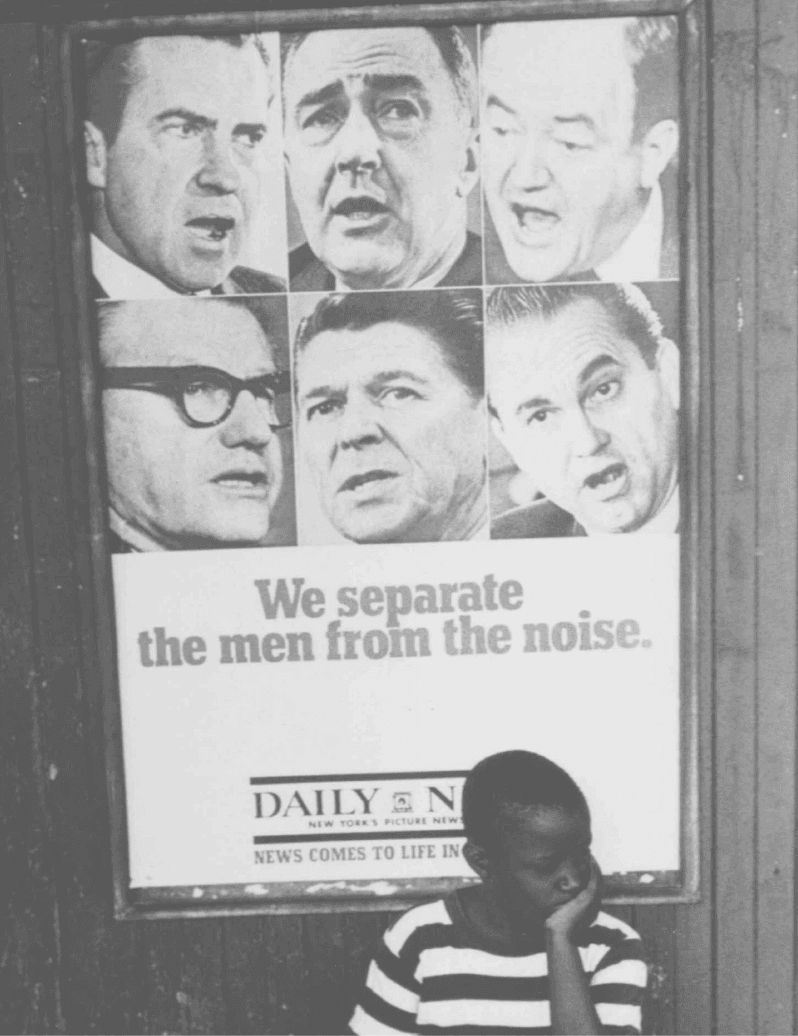
The Old World Order. Photo by LeRoy Henderson
I found it under my nose, so to speak, buried under the rich, Black soil of Afro-diasporic culture, its literature and revolutionary activism. In it I found a most miraculous weapon with no birthdate, no expiration date, no trademark. I traced it from the ancient practices of Maroon societies and shamanism back to the future, in the metropoles of Europe, and forward into the colonial world. I came to surrealism not through André Breton or Arthur Rimbaud but through Aimé and Suzanne Césaire, Richard Wright, Ted Joans, Jayne Cortez, Wifredo Lam, Cecil Taylor, Thelonious Monk, and my mother, who taught me to appreciate a curbside rainbow created by the alchemy of motor oil and water from an open hydrant. The surrealists have also given us some of the most imaginative, expansive, and playful dreams of a new world I have ever known. What is surrealism? Contrary to popular belief, it is not an aesthetic doctrine, but an international revolutionary movement concerned with the emancipation of thought. According to the Chicago Surrealist Group, founded in 1966 with the help of the Surrealist Group in Paris and today run by Franklin and Penelope Rosemont, Paul and Beth Garon, and others, “Surrealism is the exaltation of freedom, revolt, imagination and love. . . . [It] is above all a revolutionary movement. Its basic aim is to lessen and eventually to completely resolve the contradiction between everyday life and our wildest dreams. By definition subversive, surrealist thought and action are intended not only to discredit and destroy the forces of repression, but also to emancipate desire and supply it with new poetic weapons. . . . Beginning with the abolition of imaginative slavery, it advances to the creation of a free society in which everyone will be a poet—a society in which everyone will be able to develop his or her potentialities fully and freely.
Surrealists talk of a total transformation of society, not just granting aggrieved populations greater political and economic power. They are speaking of new social relationships, new ways of living and interacting, new attitudes toward work and leisure and community.
For obvious reasons, what we are against tends to take precedence over what we are for, which is always a more complicated and ambiguous matter
In some respects, the distance between surrealism and the kind of Marxist analysis that has substantially shaped radical Black studies is not so great. After all, surrealists have consistently opposed capitalism, promoted internationalism, and have been strongly influenced by Marx and Freud in their efforts to bridge the gap between dream and action. In other respects, surrealism is night to Marxism’s day: It breaks the chains of social realism and rationality, turning to poetry as a revolutionary mode of thought and practice. Ironically, it has much in common with aspects of Afrodiasporic vernacular culture, including an embrace of magic, spirituality, and the ecstatic—elements Marxism has never been able to effectively address. The Afro-Chinese Cuban painter, Wifredo Lam, says he was drawn to surrealism because, having grown up in the Africanized spirit world of Santería, he already knew the power of the unconscious. The great Martiniquan writer and political activist Aimé Césaire insists that surrealism merely brought him back to African culture. In a 1967 interview he explained, “Surrealism provided me with what I had been confusedly searching for. I have accepted it joyfully because in it I have found more of a confirmation than a revelation.” Surrealism, he explained, helped him to summon up powerful unconscious forces. “This, for me, was a call to Africa. I said to myself: it’s true that superficially we are French, we bear the marks of French customs; we have been branded by Cartesian philosophy, by French rhetoric; but if we break with all that, if we plumb the depths, then what we will find is fundamentally Black.” Likewise, Richard Wright, who began studying surrealist writings in the late 1930s, discussed its impact on his thinking in his unpublished essay titled “Memories of my Grandmother.” Surrealism, Wright claimed, helped him clarify the “mystery” of his grandmother, and by extension, the character and strengths of African American folk culture. He gained a new appreciation for the metaphysical as well as for cultural forms that do not follow the logic of Western rationality.
Really, what are today’s young activists dreaming about? We know what they are fighting against, but what are they fighting for?
I believe the time is right for radical intellectuals, whether they are working in the area of Black Studies or not, to embrace the marvelous, to infuse our work with the rich analytical insights surrealism has to offer. It is certainly no panacea, nor does it provide answers to the many questions and issues with which we are confronted. Yet, it can help us break the constraints of social realism and take us to places where Marxism and other -isms in the name of revolution have yet to fully tread. It recognizes the decadence of western civilization but doesn’t fall into the trap of cynicism. Moreover, surrealism has long embraced an epistemology central to Black conceptions of liberation: that the real revolution is in the mind. This is precisely what I mean by a “poetry of social movements”—an unleashing of the mind’s most creative capacities, catalyzed by participation in struggles for change. Paul Garon’s brilliant study of blues music put it best: “Human freedom depends not only on the destruction and restructuring of the economic system, but on the restructuring of the mind. New modes of poetic action, new networks of analogy, new possibilities of expression all help formulate the nature of the supersession of reality, the transformation of everyday life as it encumbers us today, the unfolding and eventual triumph of the marvelous.
Surrealism, in other words, is not an ideology but a state of mind, a “permanent readiness for the Marvelous,” as the late Suzanne Césaire (Aimé’s wife) once put it. To embrace surrealism is not a simple matter of reading a manifesto and signing a card; it requires a freeing of the mind, a willingness to enter “the domain of the strange, the marvelous and the fantastic, a domain scorned by people of certain inclinations. Here is the freed image, dazzling and beautiful, with a beauty that could not be more unexpected and overwhelming. Here are the poet, the painter and the artist, presiding over the metamorphoses and the inversions of the world... .
My mother also inverted her children’s world. Although she raised us in a battered New York City tenement amid drug dealers and social workers, rusty tap water and rodents, she would not let us live as victims. Instead, we were a family of caretakers who inherited this earth. My mother taught us that the marvelous was free—in the patterns of a stray bird feather and in the view from our fire escape. She wanted us to see life as possibility, to see the richness of our daily lives. She wanted us to visualize a more expansive, fluid definition of Blackness, to teach us that we are not merely inheritors of a culture but its makers.
Freeing our imaginations from slavery may be the most difficult struggle we have ever faced. Although we must continue responding to crises, protesting, writing op-eds about police brutality and the need for a living wage, conducting research on the impact of oppressive structures, recovering lost heroes for future generations, we also must do the complicated intellectual work of dreaming and imagining. (And we have to do it in an era when our most important spaces for visionary scholarship and interdisciplinary thinking inside of the academy—namely programs in Black, ethnic, women’s, and gay and lesbian studies—are under attack and threatened with extinction.) We need to consider love and poetry and the imagination as powerful political forces, not to replace marches and sit-ins, strikes and slow downs, rallies and protest graffiti. We must recognize that any revolution must begin with thought, with how we imagine a new world, with how we reconstruct our relationships with one another, with unleashing our desire and building a new future on the basis of creativity rather than rationality (note that the same word is used for improving capitalist production and limiting people’s needs—rationalize/ration, etc.) There is no doubt that we need more bread, better homes, better schools, more time, better air to breathe and land on which to live. That goes without saying. But to stop there, to accept an easy kind of pragmatism as our only option, to not even delve into the question of freedom seems so defeating.
I do not write this essay for those traditional leftists who have traded their dreams for orthodoxy and sectarianism. They will dismiss me as utopian and idealistic. Instead, I write for anyone bold enough to still dream, especially young people who are growing up in what critic Henry Giroux perceptively calls “the culture of cynicism”—young people whose dreams have been utterly co-opted by the marketplace.
I am urging a revolution of the mind. This is no mere academic exercise. It is an injunction, a proposition, perhaps even a declaration of war.
FOOTNOTES
2Ibid., 244.
1The impact of Cedric Robinson’s book, Black Marxism: The Making of the Black Radical Tradition (London: Zed Books, 1983) is discussed extensively in my foreword to the 2000 reprint of the book.
3Both Noam Chomsky and Manning Marable acknowledge the importance of these movements and this period on radical politics. Chomsky even suggests that they were “completely unprecedented in the history of imperialism. . . . They were far more extensive then the protests of the ’60s and also much more deeply rooted in the mainstream of society.” See South End Press Collective, ed., Talking About a Revolution: Interviews with Michael Albert et al. (Cambridge, Mass.: South End Press, 1998), 14, 87-89.
4See Lee D. Baker, From Savage to Negro: Anthropology and the Construction of Race, 1896-1954 (Los Angeles and Berkeley: University of California Press, 1998); Robin D. G. Kelley, “‘But a Local Phase of a World Problem’: Black History’s Global Vision, 1883-1950,” Journal of American History 86, no. 3 (December 1999): 1045-1077; and various essays in Wahneema Lubiano, ed., The House that Race Built (New York: Random House, 1997).
5Theodore W. Allen, The Invention of the White Race; Volume One: Racist Oppression and Social Control (New York and London: Verso, 1994); Theodore W. Allen, Can White Workers (Radicals) Be Radicalized? (Ann Arbor, Mich.: Radical Education Project, 1968 [pamphlet]); David Roediger, The Wages of Whiteness and Toward the Abolition of Whiteness: Essays on Race, Politics, and Working Class History (London and New York: Verso, 1994); Alexander Saxton, The Rise and Fall of the White Republic: Class Politics and Mass Culture in Nineteenth Century America (London and New York: Verso, 1990); Noel Ignatiev, How the Irish Became White (New York and London: Routledge, 1995); Neil Foley, The White Scourge: Mexicans, Blacks and Poor Whites in the Cotton Culture of Central Texas (Los Angeles and Berkeley: University of California Press, 1997); George Lipsitz, The Possessive Investment in Whiteness (Philadelphia: Temple University Press, 1998); Eric Lott, Love and Theft: Blackface Minstrelsy and the American Working Class (New York: Oxford University Press, 1993); Matthew Frye Jacobson, Whiteness of a Different Color: European Immigrants and the Alchemy of Race (Cambridge, Mass.: Harvard University Press, 1998); David Wellman, Portraits of White Racism (New York: Cambridge University Press, 1993, 2nd ed.); Michael Goldfield, The Color of Politics: Race and the Mainsprings of American Politics (New York: The New Press, 1997).
6See, for example, Patricia Hill Collins, Fighting Words: Black Women and the Search for Justice (Minneapolis, Minn.: University of Minnesota Press, 1998); Joy James, Shadowboxing: Representations of Black Feminist Politics (New York: St. Martin’s Press, 1999); Stanlie M. James and Abena P. A. Busia, eds., Theorizing Black Feminisms: The Visionary Pragmatism of Black Women (New York: Routledge, 1993); Lisa Duggan, “Queering the State,” Social Text 39 (Summer 1994): 1-14; Diana Fuss, “Lesbian and Gay Theory: The Question of Identity Politics,” in her Essentially Speaking: Feminism, Nature and Difference (New York: Routledge, 1989), 97-112; Philip Brian Harper, Are We Not Men? Masculine Anxiety and the Problem of African-American Identity (New York: Oxford University Press, 1996); Michael Warner, ed., Fear of a Queer Planet: Queer Politics and Social Theory (Minneapolis, Minn.: University of Minnesota Press, 1993); Sally Munt, ed., New Lesbian Criticism (New York: Columbia University Press, 1992).
7Quoted in Julia C. Sudbury, “‘Other Kinds of Dreams’: Black Women’s Organizations and the Politics of Transformation* (London and New York: Routledge, 1998), 165.
8Ibid., 236-37, 246-56.
9Martin Luther King, Jr., “A Time to Break Silence,” in A Testament of Hope: The Essential Writings and Speeches of Martin Luther King, Jr., ed. James Melvin Washington (New York: HarperCollins, 1991), 240.
10King, A Testament of Hope, ibid., 325.
11George Lipsitz, Dangerous Crossroads: Popular Music, Postmodernism and the Poetics of Place (New York and London: Verso, 1994), 34-35.
12Keorapetse Kgositsile, When the Clouds Clear (Cape Town, South Africa: Congress of South African Writers, 1990), 24.
13Roland Snellings, Liberator; also quoted in Brian Ward, Just My Soul Responding: Rhythm and Blues, Black Consciousness, and Race Relations (Los Angeles and Berkeley: University of California Press, 1998), 289.
14LeRoi Jones, Black Music (New York: Quill, 1967), 200.
15The scholarly works on the Black freedom movement that perhaps come closest to grappling with love and freedom as essential political forces include Vincent Harding, There Is a River: The Struggle for Black Freedom in America (New York: Random House, 1983); Cedric Robinson, Black Marxism; and W. E. B. Du Bois, Black Reconstruction in America: An Essay Toward a History of the Part Which Black Folk Played in the Attempt to Reconstruct Democracy, 1860-1880 (New York: Harcourt, Brace, 1935).
16Quoted in “Surrealism and Blues,” Living Blues 25 (Jan.-Feb. 1976): 19.
1717. Max-Pol Fouchet, Wifredo Lam, 2nd ed. (Barcelona, Spain: Ediciones Polgrafa, S.A., 1989), 38, 192, 196; Aimé Césaire, Discourse on Colonialism, trans. Joan Pinkham (New York: Monthly Review Press, 2000, 2nd ed.), 67; Eugene E. Miller, Voice of a Native Son: The Poetics of Richard Wright (Jackson, Miss.: University Press of Mississippi, 1990), 78-85; see also Cheikh Tidiane Sylla, “Surrealism and Black African Art,” Arsenal: Surrealist Subversion 4 (Chicago: Black Swan Press, 1989), 128-29.
18Paul Garon, Blues and the Poetic Spirit (San Francisco: City Lights, 1996, orig. 1975), 188.
19Quote from Penelope Rosemont, ed., Surrealist Women: An International Anthology (Austin, Tex.: University of Texas Press, 1998), 137; Franklin Rosemont, “Suzanne Césaire: In the Light of Surrealism” (unpublished paper in author’s possession).
Past Editions
1.
"A Son of Afro-America": Talking with Amiri Baraka
The Editors
2.
A Scholar in Struggle
Clayborne Carson
3.
And the Beat Goes On: Challenges Facing Black Intellectuals
Kathleen Neal Cleaver
4.
Beyond the "Real" World, or Why Black Radicals Need to Wake Up and Start Dreaming
Robin D. G. Kelley
5.
Black Intellectuals: The Perennial Question
James Jennings
6.
Black Thinkers at Sea: Ferdinand Smith and the Decline of African American Proletarian Intellectuals
Gerald Horne
8.
Def America: Russell Simmons
Manning Marable & Cheryll Greene
9.
Thinking Black
The Editors