Foundations, Research, and the Construction of "Race Neutrality"
Alice O'Connor
By supporting research, foundations have sought to elevate themselves above the fray of racial prejudice, politics, and ideology, claiming instead the high road of unbiased, rational inquiry and scientific enlightenment. It is through research that foundations have felt safe to engage in racial politics and ideology—whether by supporting the ongoing social scientific crusade against biological racism, opening up research opportunities for nonwhite scholars, recognizing and lending legitimacy to various ways of framing “the race issue,” or influencing public policy. Far more than a pursuit of knowledge, then, foundation-supported research is a form of philanthropic intervention into America’s racial problems and controversies. It is an intervention through which—pointing with pride at such prominent examples as W. E. B. Du Bois’s The Philadelphia Negro (underwritten by local philanthropists associated with the settlement house movement and published in 1899) and Gunnar Myrdal’s An American Dilemma (funded by the Carnegie Corporation and published in 1944)—progressive-era and liberal foundations have aligned themselves with the cause of racial uplift and, however tentatively and gradually, with the struggle for racial equality.
And yet, even a cursory look at the history of philanthropic support for research on the “race question” reveals how tortured and problematic the philanthropic encounter with race has been. This is especially so in the case of liberal foundations. Racially conservative philanthropies have been fairly steadfast and decidedly unapologetic in their support for eugenics, cultural and biological essentialism, and the starkly individualistic credo of self-help. Carnegie and other liberal foundations came to their more egalitarian, environmentalist sensibility only after having underwritten substantial programs of eugenics research and explicitly Anglo-Saxonist thinking for much of the 1910s and 1920s Nor, for at least two decades after Myrdal and a host of other foundation-supported social scientists put white racism at the heart of America’s racial “dilemma,” were most major foundations willing to confront racism as a public issue—or within their own ranks. Ever mindful of scrutiny from elected officials, the general public, and from their heavily establishment boards of trustees, professional grant makers respectedthe unspoken and thus extrapowerful taboo against pursuing programs that would openly threaten the racial status quo. The taboo also prevented foundations from scrutinizing how their own internal policies and practices—including the highly segregated nature of their staffs, boards, and research/program networks—replicated and reinforced existing racial hierarchies.
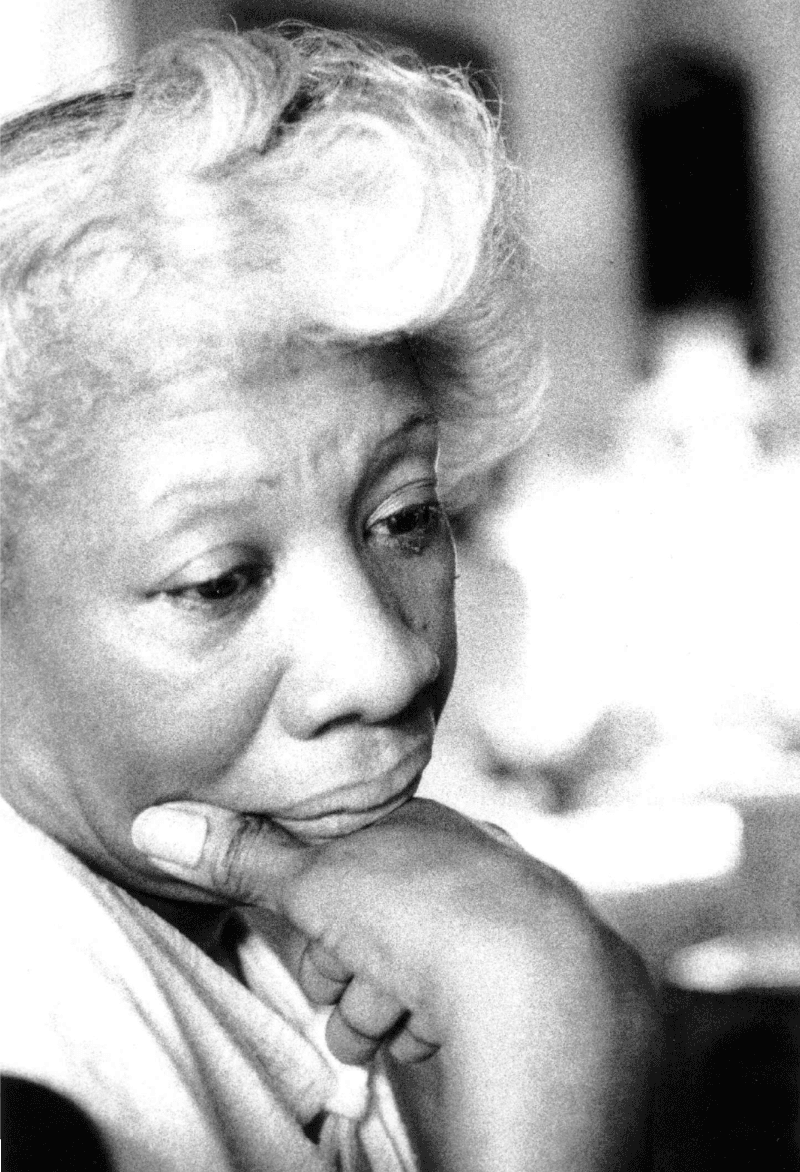
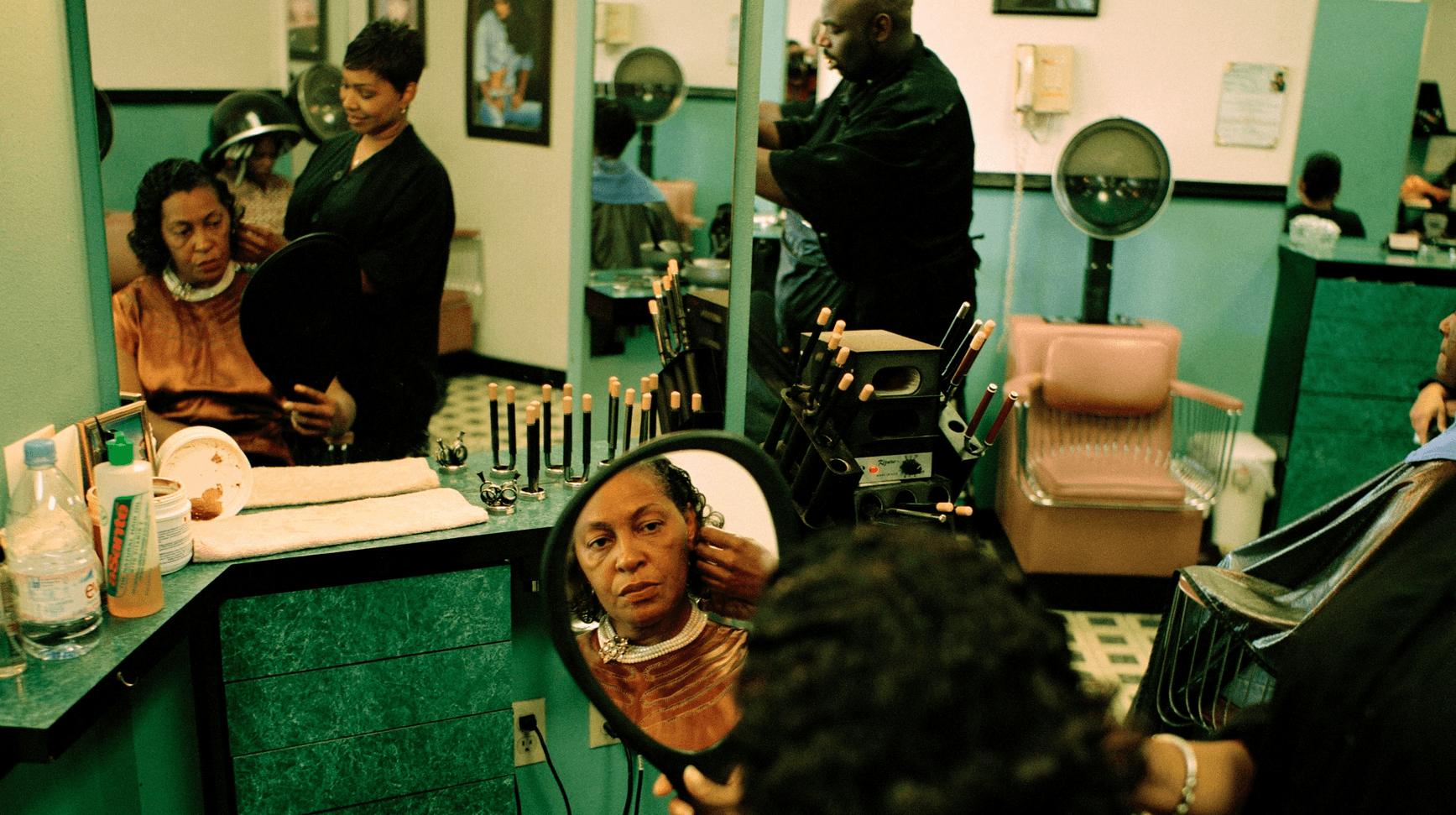
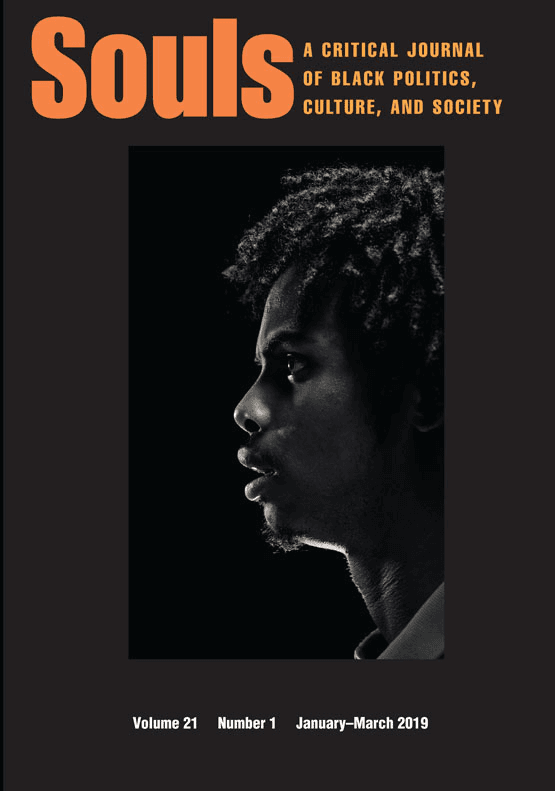
Troubled Times. Photo by Philippe Cheng
Neutralizing Race
But most tortured and problematic of all has been the relationship between liberal foundations and race- and class-segregated communities of color. For it is there, in America’s ghettos and barrios, that research has proved a most powerful and lasting form of philanthropic intervention. There, in studies of ghettoized neighborhoods, that the intersecting inequities of race, class, gender, and power separating community residents from investigating agents are most starkly revealed; there, that foundation-supported research has created a heavily racialized vocabulary of social and cultural pathology that is every bit as distorted and dehumanizing as the biological determinism it came to replace. And it is there, in the “dark ghetto,” the “underclass neighborhood,” even the antiseptically labeled “area of concentrated poverty,” that liberal philanthropy has most effectively used detached, “scientific” research to pursue an ideological agenda that has had profound political consequences.
Race became the thing that everyone knew was there, but nobody wanted to talk about; as the thing not talked about, it became more “significant” than ever.
The overall thrust of that philanthropic agenda has been to neutralize race as a political and economic as well as a social and cultural issue. This has been accomplished by various interventions that diminish the significance of racism as a source of inequality; that obscure the roots of racial inequality in political economy and in “mainstream” society and culture; and that treat racism as principally a problem of individual-level attitudes and discriminatory actions, rather than as a structurally rooted and perpetuated phenomenon. The effect of these interventions has been to make “the race problem” safe for philanthropy. The aim, if not always explicit, is to carve out a circumscribed space for ameliorative, politically uncontroversial programs of social and economic rehabilitation in poor, segregated neighborhoods, and to stay away from race-based political organizing and action. As an integral component of philanthropic intervention in communities of color, social science research has and continues to contribute to race neutralization in several ways.
Pathologizing the Ghetto
One way is to pathologize communities of color, especially poor and working-class communities of color, through the use of distorted imagery of rampant behavioral deviance that plays into racial stereotypes—even when the subject is supposedly poverty, not race. Invoked through the well-worn conceptual apparatus of “social disorganization,” “social isolation,” the “culture of poverty,” and the “tangle of pathology”—the phrase Daniel P. Moynihan borrowed from social psychologist Kenneth Clark for use in his now-infamous 1965 report The Negro Family: The Case for National Action. This imagery has provided ample ammunition for conservative backlash against welfare, civil rights, and government intervention of any sort.
But the “tangle of pathology” has also been invoked to make the case for liberal intervention, as it was by Moynihan in the 1960s and once again by William Julius Wilson and others starting in the 1980s And here, I would argue, the concept of social pathology neutralizes race in an especially pernicious way. For while acknowledging that the poverty, joblessness, family instability, physical neglect, crime, and welfare “dependence” in ghetto or “underclass” neighborhoods are rooted in a history of racial oppression, it also treats them in the present as part of a self-perpetuating “cycle” (or “vicious circle”) that has survived and reproduces itself in the absence of active racial oppression. Ghettoized blacks, sociologist Lee Rainwater wrote in his 1960s study of the Pruitt-Igoe housing project in St. Louis, no longer needed whites “to do the dirty work of caste victimization”; they had internalized the effects of racism in their own behavior, culture, and personalities Twenty years later, William Julius Wilson argued that so-called underclass pathologies had survived and perpetuated themselves despite what amounted, in his analysis, to the virtual cessation of institutionalized racism in the 1970s or thereabouts.
In race-neutral coalition politics, people of color become the “special interests” who must suppress and sanitize their political voices and legitimate demands.
Although both Rainwater and Wilson called for steps to combat the structural roots of ghetto poverty, their analyses suggested something far more limited for liberal philanthropists and government officials alike. As a rallying cry for liberal antipoverty programs in the 1960s, “breaking the cycle” meant intensified investments in education, training, and other socially rehabilitative programs, aimed principally at changing poor people rather than confronting underlying structural inequities. And for neoliberal welfare reformers in the 1980s and 1990s, breaking the cycle meant ending not poverty but welfare “dependency” and, eventually, “welfare as we know it.” Far from making the case for national action against ghetto joblessness that even Moynihan had in mind, the self-perpetuating “tangle of pathology” made behavior and culture the issue and deflected attention away from the structural roots of racial inequality.
Treating Racism as a Pathology
A second way social science neutralizes race in research on communities of color is by using them as a symbol of the pathology of white racist attitudes and practices within an otherwise democratic society. Racism, in this rendering, is pathological. It strays from mainstream social norms, from “color blind” laws and policies, even from the laws of supply and demand in market capitalism. It is, as Gunnar Myrdal and many others in his wake put it, a violation of the “American Creed”—a violation so egregious as to have given rise to all sorts of elaborate, essentially irrational justifications and institutional mechanisms for maintaining white supremacy.
Myrdal treated the black ghetto as a massive crisis of white conscience and social psychology, a “pathological condition of the general American culture,” as well as an unnatural impediment to the more naturally progressive unfolding of American democracy Here, then, we have a slightly different version of pathology breeding pathology. While recognizing the persistence of racism, this version also sees a self-perpetuating vicious circle at work. And yet, for Myrdal and for others working in this widely influential tradition, the very thing that made racism pathological also meant that it could be remedied without recourse to major social structural or political and economic changes. Racism, that is, was the aberration, not a part of the normal operations of American society and culture. The vicious circle could be broken through enlightened appeals to the American conscience. The doors would then be open for full-scale assimilation—of the Negro, into the established, white social and cultural mainstream.
Deracializing the Ghetto
A third way social science neutralizes race is through analyses that diminish, obfuscate, or actively deny the importance of racism in the creation and impoverishment of race- and class-segregated communities. They point instead to such presumably nonracial factors as differences in education or human capital; family structure, social networks or other forms of social and cultural capital; migration, settlement, and assimilation patterns; and economic restructuring as explanations for enduring racial disparities.
Such nonracial explanations have had an enduring appeal in organized liberal philanthropy in at least some instances because they offer frameworks for doing race work indirectly and without bringing the “race issue” to the surface. Such was the case with the Ford Foundation’s Gray Areas program, developed in the late 1950s and early 1960s. It is widely recognized as a prototype for both Community Action in the War on Poverty and for the wide array of community development and revitalization initiatives that have subsequently become a major part of philanthropic practice in communities of color. Paul Ylvisaker, who was then heading up Ford’s Public Affairs program, felt caught between the unavoidable facts of intensifying urban segregation and racial tension, on the one hand, and the racial embargo enforced by Ford’s risk-averse board of trustees, on the other (they were concerned, among other things, about groups threatening to boycott Ford car dealerships in the South). Ylvisaker used the Gray Areas concept quite literally to blur the color lines. The program would avoid direct confrontation with racial discrimination in jobs, housing, education, and social policy by focusing instead on rehabilitating the new migrants—black, brown, white Appalachian—who were stuck in these “transitional” urban neighborhoods, aiming through coordinated social services to smooth their assimilation into the urban mainstream
Nonracial explanations have had an enduring appeal in organized liberal philanthropy, in at least some instances because they offer frameworks for doing race work indirectly and without bringing the “race issue” to the surface.
As the “neutral” ground upon which the Ford Foundation addressed racial problems, however, Gray Areas was shaky at best. For one, it did not provide especially effective cover—especially not for local officials and residents who recognized the infusion of outside dollars as a potential threat to the racial status quo. More important, pleased as they were at having come upon a “neutral” frame, foundation officials were not at all prepared for the racial politics their programs did get caught up in: racial conflict within local projects, political mobilization among minority groups, and, closer to home, tensions over the rarely broached lines of color and class separating philanthropic benefactors from community residents
As seen in the emergence and enduring influence of the underclass concept, however, the more recent turn to “nonracial” analysis has been more a way of denying than providing cover for a kind of hidden agenda of race-targeted philanthropic funding. As noted above, William Julius Wilson’s highly influential social-scientific concept of an urban underclass (in contrast to the more popularized, journalistic version) was premised on what he had earlier dubbed the “declining significance of race” as a source of ghetto poverty Wilson’s nonracial explanation focused instead on the combination of urban deindustrialization, male joblessness, middle-class suburbanization, and the consequent “concentration effects” of rising poverty rates in the Black and Latino inner city. In effect, he argued that these developments could be understood outside the context of racial stratification.
Enthusiastically embraced by several major foundations, that framework in turn generated a cottage industry of research in which race barely registered as a category of analysis—except, that is, when it came to describing the demographics of so-called underclass neighborhoods. Even then, the fact that these “high-poverty” neighborhoods were overwhelmingly Black and brown was treated as some kind of coincidence or historical artifact rather than as a reflection of ongoing discrimination and racially biased policies. The ghetto itself was deracialized in the underclass literature: redefined as an area of concentrated poverty rather than as an area restricted by race Of course, such redefinitions hardly stripped underclass terminology of its racial associations: in social-scientific as in popular usage, it was shorthand for the Black urban poor. In this sense, neutralizing race by denying or ignoring its relevance had just the opposite effect. Race became the thing that everyone knew was there, but nobody wanted to talk about; as the thing not talked about, it became more “significant” than ever.
Decontextualizing the Ghetto
One outcome of the boom in underclass research during the 1980s and 1990s was to bring economic models and analytic techniques to research on communities of color. This, in turn, highlights a fourth way that social science neutralizes race: by reducing it to a series of individual-level variables while ignoring society’s active and ongoing role in constructing racial hierarchies through politics, policies, market relations, legal institutions, stereotypes, and cultural practices. One problem is that such structural and institutional factors do not readily lend themselves to measurement in conventional economic models—especially when those models rely so heavily on data gathered from individuals and households. This is a model of the world without context, where everything gets reduced to individual decisions and attributes, and where race comes into play as an explanation for social and economic disparities only after other variables have been taken into account. As a result, the race gap in employment and earnings is really a skills gap, a “mismatch” between where people live and where the jobs are, a gap in the “quality” of social networks that can be addressed without dealing with the structural and political underpinnings of the racial divide.
Constructing the “Race-Neutral” Idea
There are two features of the research frameworks that help to explain their appeal to liberal philanthropy. One is that they continually steer the categories of analysis away from political economy and toward some aspect of individual or group behavior and culture—toward things, that is, that foundations are willing to create programs to “fix.” This is the case even when the analysis is ostensibly about political economy, as the underclass emphasis on urban deindustrialization would suggest, or even when it is about institutionalized racism, as some analyses of ghetto “pathology” would claim. In reality, however, these literatures focus their actual analyses on what they see as the effects of these broader political, economic, and social forces. The structural and institutional context is taken as a given; the question of how things got to be this way and why they stay this way do not come in for critical analysis—nor as a target for change.
Second, and related, is that the frameworks not only lack, but actually resist political analysis, ignoring not only the politics, policy decisions, and sheer political energy that it takes to create and maintain racial hierarchies, but also the agents of activism, organizing, and governance within communities of color In this way, research reassures foundations that they can address problems of race and poverty without getting political. But the absence of political analysis can also be understood as itself an exercise of political power: a way of channeling reformism away from political organizing and activism, particularly around issues of race.
Liberal philanthropy has most effectively used detached, "scientific" research to pursue an ideological agenda that has had profound political consequences.
This leads me to what I see as in some ways the culmination of these various approaches to race neutralization in social science research. That is the construction and advocacy of a “race-neutral” framework for overcoming racial inequality. Most fully articulated in the work of William Julius Wilson but actively embraced by many others, the race-neutrality principle calls for addressing what are acknowledged to be heavily racialized patterns of social and economic inequality through policies that avoid race-targeting and that instead rely on more “universalistic” measures that can garner appeal across racial lines It also calls for coalition building and political organizing more along class lines, with an emphasis on the polarization of income, wealth, and political power separating “haves” from “have nots.” And while drawing on a much older tradition of research, and certainly on a longstanding tendency within philanthropy, its explicit embrace and actual language of “neutrality” distinguishes it as very much a phenomenon of the 1980s and 1990s—with a decidedly post–civil-rights consciousness that is reflected in three of its most problematic premises.
One is that the struggle for civil rights for racial minorities is over and, for all intents and purposes, has been won. We need look no farther than Florida or any number of other states with huge racial disparities in voting procedures and access to the franchise to see that even the most basic of rights are still not secure. Related to that is the idea that the real problem is poverty, not racism—suggesting not only that the two can be disconnected, but that the struggles for racial and economic justice can somehow run on separate tracks.
Another premise that needs challenging is that groups organized around racial identity or the rights of disadvantaged racial minorities are narrow, divisive, and particularistic. Bringing up “the race problem,” in this thinking, amounts to special pleading and as such is a threat to coalition politics. Issues of racial justice, if on the agenda at all, should be addressed indirectly, specifically by pushing for policies that will improve economic conditions for all working- and middle-class families. In race-neutral coalition politics, then, people of color become the “special interests” who must suppress and sanitize their political voices and legitimate demands.
A third premise open to challenge is that truly race-neutral policies are possible—so long as race remains the basis for the distribution of power and privilege, income and wealth, and access to the benefits of citizenship and work. Not even our most treasured universalistic policies are universal in their effects. The benefits of full employment trickle down to the most “disadvantaged”—and particularly African-American—workers only after exhausting other, more “desirable” labor pools. Social Security, although an enormously important source of income for the nonwhite elderly, still results in a greater payroll tax burden, provides lower benefits, and excludes persons of color in a higher proportion than whites. One can argue that this is a reflection of racial disparities in the broader economy, rather than something inherent in the program, but that is precisely the point. We will not have truly universal policies without addressing those racial disparities explicitly, and head on. Indeed, without policies that target race directly, “universal” strategies replicate racial disparities.
Race and the Philanthropic Agenda
Fortunately, not all philanthropy—and not all of social science—embraces a race-neutralizing agenda. And indeed, progressive scholars and activists have been able to get funding from mainstream foundations for their racial justice and antiracism work—albeit often under cover of more innocuous program categories. But if the philanthropic mainstream is to become a force for progressive change rather than neutralization, scholars and activists will need to work more proactively to shift the prevailing race-neutral frame. Beyond challenging its premises, this means developing an alternative analysis, a conceptual framework as well as a vocabulary for recognizing that inequality is so profoundly “racialized” because race remains a central category of social and economic stratification in the twenty-first-century United States.
FOOTNOTES
1Ellen Condliffe Lagemann, *The Politics of Knowledge: The Carnegie Corporation, Philanthropy, and Public Policy* (Chicago: University of Chicago Press, 1989), 123–146; John H. Stanfield, *Philanthropy and Jim Crow in American Social Science* (Westport,
2William Julius Wilson, The Truly Disadvantaged: The Inner City, the Underclass, and Public Policy (Chicago: University of Chicago Press, 1987)
3Lee Rainwater, "Crucible of Identity: The Negro Lower-Class Family," Daedalus 95 (Winter 1966): 176-216.
4Gunnar Myrdal, An American Dilemma: The Negro Problem and Modern Democracy (New York: Harper and Row, 1944, rev. ed. 1962), 928-929.
5Alice O’Connor, “Community Action, Urban Reform, and the Fight Against Poverty: The Ford Ford Foundation’s Gray Areas Program,” Journal of Urban History 26 (July 1996): 586–625.
6Alice O'Connor, Poverty Knowledge: Social Science, Social Policy, and the Poor in Twentieth Century U.S. History (Princeton, N.J.: Princeton University Press, 2001), 132-136.
7William Julius Wilson, *The Declining Significance of Race: Blacks and Changing American Institutions* (Chicago: University of Chicago Press, 1980). For a fuller discussion of the underclass literature, see O’Connor, *Poverty Knowledge*, 265–283; Herbert J. Gans, *The War Against the Poor* (New York: Basic Books, 1995); Michael B. Katz, ed., *The “Underclass” Debate: Views from History* (Princeton: Princeton University Press, 1993), Introduction.
8See, for example, the definition used in Paul A. Jargowsky and Mary Jo Bane, “Ghetto Poverty in the United States, 1970–1980,” in Christopher Jencks and Paul E. Peterson, eds., The Urban Underclass (Washington, D.C.: Brookings Institution, 1991), 235–273.
9For a recent example of research that does recognize the considerable range and extent of political activity within ghetto communities, see Sudhir Alladi Venkatesh, *American Project: The Rise and Fall of a Modern Ghetto* (Cambridge, Mass.: Harvard University Press, 2000).
10William Julius Wilson, “Race-Neutral Politics and the Democratic Coalition,” The American Prospect 1 (Spring 1990): 82–129; and The Bridge Over the Racial Divide: Rising Inequality and Coalition Politics (Berkeley and Los Angeles: University of California Press, 1999).