Taking on Empires: Reparations, the Right of Return, and the People of Diego Garcia
David Vine
‘‘We are the descendants of slaves. Our skin is black. We don’t have blue eyes,’’ said Louis Olivier Bancoult, elected leader of the exiled people of the Chagos Archipelago in the Indian Ocean. ‘‘Whether we are black, whether we are white, whether we are yellow, we all must have the same treatment. That, that is the treatment that the Chagossian commu- nity is asking for. . . . Stop all the injustices that have been committed against us.’’ [1]
The Chagossian community is a little-known part of the African diaspora, originally living halfway between continental Africa and Indonesia, where they were the indigenous inhabitants of the Chagos islands. The people are the descendants of enslaved Africans, mostly from Madagascar and the southwestern Mozambique coast, and, to a lesser extent, indentured Indians, brought to the previously uninhabited islands in the late 18 century and half a century later with the abolition of slavery in the British empire. By the mid-20 century this diverse group had become a distinct people of around 2,000, with a vibrant society and generations of ancestors buried on islands described by many as idyllic.
Between 1968 and 1973, the Chagossians were forcibly removed from their homeland by the governments of the United States and the United Kingdom as part of the creation of the U.S. military base on Chagos’ largest island, Diego Garcia. They were deported and left on docks 1,200 miles away on the western Indian Ocean islands of Mauritius and the Seychelles. Receiving no resettlement assistance, the islanders quickly became impoverished. [2] The base meanwhile has become one of the most important overseas U.S. military installations in the world, playing major roles in the wars in Iraq and Afghanistan and serving as a focal point for U.S. military plans to control the globe in the 21 century.
For more than 30 years Chagossians have petitioned, protested, and held hunger strikes to gain the right of return and proper compensation for their expulsion. ‘‘We, the inhabitants of Chagos Islands—Diego Garcia, Peros Banhos, Salomon—have been uprooted from those islands,’’ the islanders wrote in 1975. ‘‘Our ancestors were slaves on those islands, but we know that we are the heirs of those islands.’’ [3]
In recent years, the islanders have sued both the U.K. and U.S. governments for orchestrating and carrying out the expulsion. In Britain, Chagossians have challenged the legality of their removal and sued the British government for damages. In the United States, they charged the U.S. government, former government employees including Robert McNamara and Donald Rumsfeld, and base construction contractors, including the Halliburton Corporation, with harms including forced relocation, cruel, inhuman, and degrading treatment, and genocide. [4]
‘‘The great powers, they who control the world, they who make so many noble declarations [about human rights],’’ said Bancoult, president of the Chagos Refugees Group (CRG) in Mauritius, they must ‘‘correct this error that they made with the Chagossian community, who were a people that was living in prosperity, a people that was living in a state of well being, a people that had its own culture and that had its own traditions, a people that had a full life like everyone else.’’
Since 2000, Chagossians have won three High Court decisions that found the expulsion to be illegal under U.K. law, although they have enjoyed less success in U.S. courts. While major obstacles remain, including a British government appeal before the House of Lords, the question of who will fund the reconstruction of society in Chagos, and fierce U.S. opposition to resettlement on ‘‘national security’’ grounds, the people are closer to a return than at any point since their removal.
This article traces the history of the Chagossians’ struggle—what they call in their French- laden and Bantu-structured Kreol, lalit chagossien. [5] Drawing on more than four years of ethnographic research conducted with Chagossians in Mauritius and the Seychelles and extensive archival research in the United Kingdom and the United States, this article examines the broader issues at stake in their claims. Although a relatively tiny group, now numbering around 5,000, the islanders’ claims raise larger questions relevant to others in the African diaspora and around the world about responsibility, culpability, and reparation for past injustices, ranging from slavery to the effects of Anglo–American foreign policy.
Ultimately the Chagossians’ struggle challenges some of the foundations of the modern world system and its racialized construction by confronting the legality and legitimacy of displacement and dispossession, by calling to account the powerful governments and officials responsible for human rights abuses, by insisting on proper reparation and compensation for past harms, by challenging historical and ongoing forms of racism and insisting on equal treatment as human beings even if they are the ‘‘descendants of slaves,’’ and by demanding control of their land and its resources as the rightful ‘‘heirs to those islands.’’
The Development of an Island Society: Slavery and Imperialism
Around 1783, a boatload of 22 enslaved people landed on Diego Garcia. Brought by a Franco–Mauritian plantation owner to create a coconut estate, the group established the first permanent settlement in the Chagos Archipelago. [6] More plantations followed on Diego Garcia, Peros Banhos, Salomon, and other islands in Chagos as the colonial government in Mauritius granted jouissances, or land concessions, to other Franco–Mauritian elites. Each estate was structured around the use of enslaved labor to turn coconuts into coconut oil. By 1808 there were 100 enslaved people working on the largest of four major plantations on Diego Garcia, and by 1813, approximately the same number of enslaved Africans worked in Peros Banhos. [7]
As the initial settlement suggests, the history of Chagos is tied to that of Mauritius and the other islands of the western Indian Ocean, as well as to the imperial powers that have dominated the ocean. After an initial (and failed) 16 century Dutch settlement in Mauritius, France seized most of the islands in the western Indian Ocean as strategic military bases to control shipping routes to India. [8] After occupying Réunion Island (originally called Iˆle Bourbon by French settlers) in 1642, the French founded a successful permanent settlement on Mauritius (renamed Île de France) in 1721, later settling nearby Rodrigues and, by 1742, the Seychelles. [9]
As in the Caribbean, France soon shifted its focus from military to commercial interests. Particularly in Mauritius, French settlers focused on the cultivation of sugar cane, which was, for a time, hugely profitable. Chagos and other small islands became known as the Oil Islands, for their production of coconut oil, which (literally and figuratively) fueled the Mauritian market.
The societies and economies built by the French were dependent upon enslaved labor. Indian Ocean historian Larry Bowman writes that French settlement in Mauritius produced ‘‘a sharply differentiated society with extremes of wealth and poverty and an elite deeply committed to and dependent upon slavery.’’ [10] At first, the French Company of the Indies tried to import enslaved people to the islands of the Indian Ocean from the same West African sources supplying the Caribbean colonies. Soon, though, the Company developed a new slaving trade, bringing laborers from Madagascar and the area of Africa known then as Mozambique (a larger stretch of the southeast African coast than the current nation). [11]
While most of the enslaved in Chagos arrived from Mauritius, some may have arrived from the Seychelles [12] and perhaps even on slaving ships directly from Madagascar and the Mozambique coast. [13] Some enslaved people would have been born in Mauritius and per- haps the Seychelles, but most—like most enslaved people in Mauritius—were probably born in Madagascar and continental Africa. [14]
A letter from 1828 granting permission to transport enslaved people to, from, and within Chagos reveals the slave names and origins of some of the early inhabitants of Chagos. The letter lists: Pierre Louis, Creole of Mauritius; Prosper Jean, Malagasy; Marie Jeannie, Mozambican; Michel Levillain, Mozambican and his wife, Prudence Levillain, Malagasy; Theophile Le Leger, Creole of Mauritius. [15] Some of the surnames are significant in that, while common, they are shared by some of today’s Chagossians. [16]
The Transfer to British Rule
With the fall of Napoleon and the 1814 Treaty of Paris, France ceded Mauritius and most of its islands in the Indian Ocean to Great Britain. Britain assumed control of Chagos, governing it, like the French before them, as one of the dependencies of Mauritius.
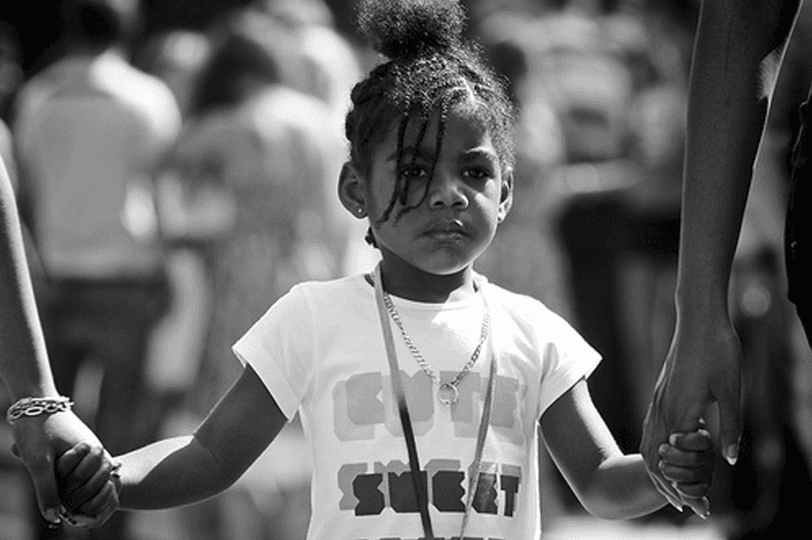
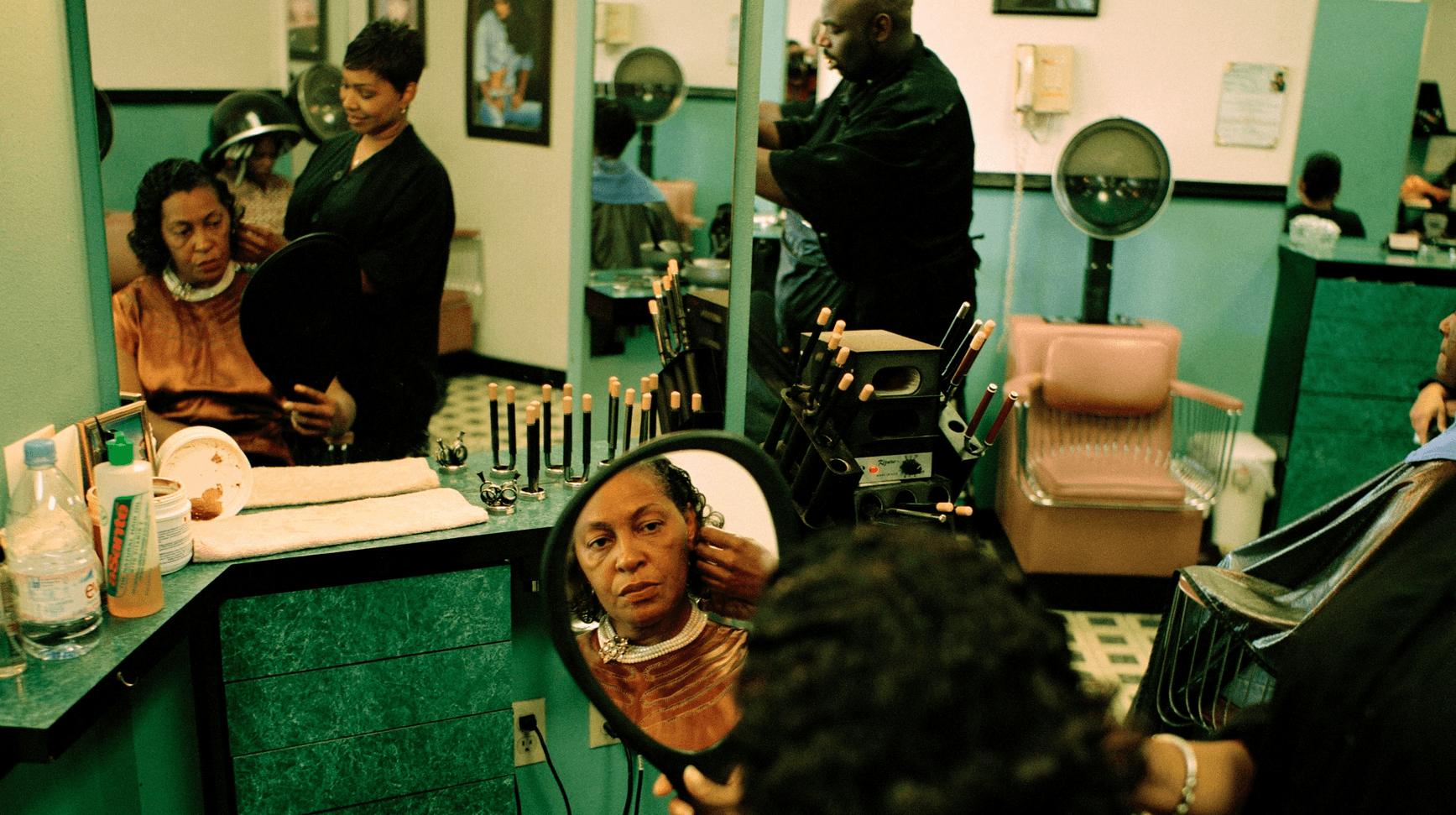
‘‘Hand in Hand’’ September, 2008 © Carlo Nicora.
Life in Chagos changed little under the British. Slavery remained the defining feature of the settlements until its abolition in Mauritius in 1835: In 1826, as much as 94 percent of the island populations was enslaved. [17] Around the time of emancipation, still-ruling Franco–Mauritian plantation owners started importing indentured laborers from India, although on a significantly smaller scale than in Mauritius. [18]
Following emancipation, over the course of the 19 and 20 centuries, this diverse work- force developed into a distinct society and a people known initially as the Ilois—the Islanders. [19] The people, who continued to make up most of Chagos’ inhabitants, built the archipelago’s infrastructure and produced its wealth (in coconut oil). A distinct Chagos Kreol emerged as well as what many referred to as a culture desîles—a culture of the islands. [20] The people built their own houses, inhabited land passed down from generation to generation, and kept vegetable gardens and farm animals, including chickens and ducks, pigs, goats, sheep, and cows. In the early 1960s, Mauritian colonial governor Robert Scott remarked that Diego Garcia’s capital, East Point, had the ‘‘look of a French coastal village miraculously transferred whole to this shore (and perhaps idealized in the process).’’ [21]
As a result of the isolation of the islands and the vast numerical superiority of the plantation laborers to the management staff (who were, for the most part, of French ancestry), Chagossians struck what, for a plantation society, was a relatively good work bargain. By the mid-20 century, while far from luxurious and still very much a plantation society, the islands provided a secure life, generally free of want, and featuring universal employment and numerous social benefits, including regular if small salaries in cash and food, land, free housing, education, pensions, burial services, and basic health care.
The Creation of a Base
The beginning of the end of this life came in the 1950 s, when members of the U.S. national security bureaucracy grew increasingly worried about rising anti-Western feelings in the ‘‘Third World’’ and the loss of U.S. bases in newly independent nations. To ready the United States for anticipated military action in these regions, the U.S. Navy started scouring maps for alternate base sites on strategically located and sparsely populated colonial islands. In the Indian Ocean, the Navy targeted Britain’s Diego Garcia and its huge natural harbor for future operations. The Defense Department described the population of over 1,000 in the atoll and the rest of Chagos as ‘‘negligible.’’ [22]
In 1960, the Chief of Naval Operations, Admiral Arleigh Burke, initiated private conversations with the British government about acquiring Diego Garcia. Over the next two years, Kennedy administration officials, including Robert McNamara and Paul Nitze, convinced the British to detach Chagos from colonial Mauritius and other islands from the colonial Seychelles to create a new colony solely for military use. They called it the British Indian Ocean Territory (BIOT) and carried out the plan despite United Nations declarations prohibiting the dismantling of colonies during the decolonization process.
During final Mauritian independence negotiations in 1965, the U.K. government pressured Mauritius’ pre-independence leader and future first prime minister, Dr. Seewoosagur Ramgoolam, to give up Chagos. British Prime Minister Harold Wilson offered Ramgoolam little choice: Accept the detachment of Chagos from Mauritius and £3 million or there would be no independence. Ramgoolam chose independence. [23] In exchange for its islands, the Seychelles won construction of an international airport that transformed the Seychelles economy from one described as a ‘‘rundown plantation’’ [24] into a tourism-based economy that has become the wealthiest per capita in sub-Saharan Africa. [25]
On December 30, 1966, the U.S. and British governments confirmed the arrangements for the base with an Exchange of Notes. By doing so, they avoided signing a treaty requiring Congressional and Parliamentary oversight. According to the Notes, published months later, the United States would gain use of the new colony ‘‘without charge.’’ [26] In confidential agreements accompanying the Notes, however, the United States agreed to secretly pay the British $14 million. The money was, as other documents show, to be used to establish the territory, to pay off Mauritius and Seychelles ‘‘generously’’ to avoid ‘‘agitation in the colonies,‘‘ [27] and to take ‘‘those administrative measures’’ necessary to remove the islands’ inhabitants. [28]
Those administrative measures meant that beginning in 1967, Chagossians leaving Chagos for medical treatment or periodic vacations in Mauritius were barred from returning and marooned 1,200 miles from their homes. The British soon began restricting supplies for Chagos, and by the turn of the decade more Chagossians were leaving as food and medicines dwindled. British authorities, who referred to the Chagossians as ‘‘Tarzans’’ and ‘‘man Fridays,’’ [29] designed a public relations plan aimed at, as one official put it, ‘‘maintaining the fiction’’ that the Chagossians were transient contract workers rather than people with roots in Chagos for more than five generations. [30]
In 1971, the U.S. Navy began construction on Diego Garcia and ordered the British to complete the expulsion. When U.S. officers raised concerns about removing the people, the Navy’s highest ranking admiral, Elmo Zumwalt, sent a three-word reply: ‘‘Absolutely must go.’’ [31]
British agents and U.S. soldiers on Diego Garcia began by herding up the Chagossians’ pet dogs and gassing and burning them in front of their traumatized owners. Over the next two years, the U.K. government forced the islanders to board overcrowded cargo ships and left them on the docks in Mauritius and the Seychelles. Chagossians arrived there without jobs, land, or homes, and with little money in rapidly transforming societies dramatically different from their own. Their skills were ill-suited to the local economies, and many of their new neighbors considered them uncivilized ‘‘savages,’’ leaving them victims of frequent discrimination.
By late 1972 the U.K. government had paid the newly independent and highly unstable government of now Prime Minister Ramgoolam £650,000 to resettle the Chagossians. British officials realized that the sum was far too little for an adequate resettlement, but were happy to have struck such a deal. When State Department officials in Washington, DC asked its embassy officials in Port Louis if they thought the resettlement plan would work, the embassy noted, ‘‘We doubt it,’’ given the already ‘‘disgraceful lassitude’’ in any efforts to compensate the Chagossians. [32] The plan was never implemented, and Chagossians received no resettlement assistance.
Lalit Chagossien
In May 1973 a haggard and hungry group of 126 refugees refused to disembark from a British government–owned cargo ship that brought them to Mauritius. For five days, the people resisted all entreaties to get off the boat, living and sleeping on a deck designed for less than half their numbers and in the ship’s dark hold, in what a local newspaper called ‘‘deplorable conditions.’’ The refugees demanded that they either be returned to their islands or receive compensation and housing in this ‘‘foreign country’’ where they had ‘‘no housing, no money, no work.’’ [33]
After days of negotiations, the Mauritian government finally convinced the last boat-load of deportees to disembark. They paid the people a handful of Mauritian rupees each and gave 19 families what turned out to be dilapidated apartments, amid pigs, cows, and other farm animals, in the slums of the Mauritian capital, Port Louis. Twelve other families found their own housing, crowding into the shacks of relatives and friends. [34]
‘‘ ‘72, I was deported,’’ said Aurelie Lisette Talate, one of the last to go. ‘‘I left Diego’’ [in 1971 when a group of Chagossians were sent to Peros Banhos,’’ she explained. ‘‘’72, I left Peros. I went via Seychelles...[and] came to Mauritius with 6 children and my mother. . . . I arrived in Mauritius in November. November ’72, we [got] our house near the Bois Marchand cemetery, but the house didn’t have a door, didn’t have running water, didn’t have electricity.’’
A stick-thin woman in her sixties, Talate eats little, smokes a lot, and speaks with an energy and directness that earned her the nickname ti piman—little chili pepper—because in Mauritius the littlest chilies are the hottest and the fiercest. ‘‘The way we were treated wasn’t the treatment that people need to be able to live. And then my children and I began to suffer. All my children started getting sick.’’
Within two months of arriving in Mauritius, two of Talate’s children died. The second was buried in an unmarked grave because she lacked the money to pay for a burial. ‘‘We didn’t have any more money. The government buried him, and to this day, I don’t know where he’s buried.’’
In the first years in exile, most of the islanders’ anger was directed at the Mauritian government and Prime Minister Ramgoolam, who were understood to have ‘‘sold’’ Chagos and the Chagossians to Britain in exchange for Mauritian independence. Mauritians ‘‘committed more than a crime,’’ said Talate, now the CRG’s vice president. They ‘‘deracinated us. [They] sold Diego so that Mauritius could get its independence. We lived there. We lost our houses, and [suddenly in Mauritius] we had none. We were living like animals. Land? We had none.... Work? We had none. Our children weren’t going to school. . . . I say to everyone, I say to them, ‘Yes, the English deceived me.’ ’’
A tradition of resistance among Chagossians—lalit chagossien—started in 1968 when some of the first islanders prevented from returning to their homes protested to the Mauritian gov- ernment, demanding that they be returned to Chagos. In 1971, when the administrator of the BIOT announced that Diego Garcia would be closed and all its inhabitants displaced, others protested against leaving ‘‘their ‘own country.’ ’’ [35] After the last boatload was convinced to disembark in 1973, protests continued because Chagossians still had not received any of their promised resettlement assistance from the £650,000 the Mauritian government received.
In 1975, when conditions had worsened, a group petitioned the U.K. and U.S. governments for aid and the right to go back to their islands. ‘‘Although we were poor [in Chagos],’’ they wrote, ‘‘we were not dying of hunger. We were living free.’’[36]
‘‘Here in Mauritius, everything has to be bought and everything is expensive. We don’t have money and we don’t have work.’’ Owing to ‘‘sorrow, poverty, and lack of food and care,’’ they said, ‘‘we have at least 40 persons who have died’’ in exile. [37] The petition and numerous other pleas to the governments of Britain, the United States, Mauritius, and the Seychelles, went unheeded. In September 1975 the Washington Post broke the story of the expulsion in the Western press, describing Chagossians in Mauritius as living in ‘‘abject poverty.’’ [38] This was followed by a day of Congressional hearings in which a U.S. Department of State official declared that the United States had ‘‘no legal responsibility’’ for the islanders. [39] The following year, a British official found the islanders ‘‘living in deplorable conditions.’’ Both governments did nothing. [40]
In 1978, after years of protests and pressure, the government of Mauritius finally paid compensation to some of the islanders. Although a majority requested that this compensation come in the form of housing, eligible Chagossians instead received cash payments of around $3,500 (in 2004 dollars) and between $462 and $694 for children 18 and younger. [41]
The money proved ‘‘hopelessly inadequate,’’ as one observer put it. [42] It paid off some of the debts many had incurred since their arrival, but generally was too little to purchase land or a house, let alone to provide full restitution.
Six months later, a group of eight Chagossian women went on what would be the first of five hunger strikes that they staged over four years to protest their conditions. They had been living with their families under tarpaulin sheets for two months following a cyclone’s destruction of their rented shacks, and their subsequent eviction from emergency housing by the Mauritian government. The protesters demanded proper housing: ‘‘Give us a house; if not, return us to our country, Diego,’’ proclaimed one of their flyers. [43] The hunger strike lasted 21 days and was held in an office of the Mauritian Militant Party (MMM), a leftist opposition party whose leaders had assisted the struggle since the first arrivals in 1968. Later that year, four Chagossians were jailed for resisting the police when Mauritian authorities tore down their shacks. [44] Both protests yielded few concrete results, but added to mounting political momentum for the islanders.
In 1979, with MMM assistance, some of the islanders engaged a British lawyer, Bernard Sheridan, to negotiate with the British government about providing additional compensation. Sheridan was already suing the United Kingdom on behalf of Michel Vincatassin, a Chagossian who charged that he had been forcibly removed from his and his ancestors’ homeland. British officials reportedly offered £1.25 million in additional compensation to the group on the condition that Vincatassin drop his case and Chagossians sign deeds ‘‘in full and final settlement,’’ waiving future suits and ‘‘all our claims and rights (if any) of whatsoever nature to return to the British Indian Ocean Territory.’’ [45]
Sheridan came to Mauritius offering the money in exchange for the renunciation deeds. Initially many impoverished Chagossians signed them—more precisely, given near universal adult illiteracy, most provided thumbprints on deeds written in English. When Chagossian and MMM leaders heard the terms of the deal, they halted the process and sent Sheridan back to London. A support group wrote to Sheridan to explain that those who had ‘‘signed’’ the forms had done so without ‘‘alternative legal advice,’’ and ‘‘as a mere formality’’ to obtain desperately needed money, rather than out of agreement with its conditions. No compensation was disbursed.
Rann Nu Diego!
Before long Chagossians were back in the streets of Mauritius, launching more hunger strikes and their largest protests yet in 1980 and 1981. Led by women who repeatedly faced police intimidation, violence, and arrest, hundreds marched on the British High Commission, protested in front of government offices, and slept on the streets of the Mauritian capital. The islanders again demanded the right to return to Chagos as well as immediate compensation, decent housing, and jobs. ‘‘We yelled, ‘Give us back Diego! Give us back Diego that you stole, Ramgoolam, that you sold Ramgoolam!’ We went and we yelled in the streets,’’ Talate recounted. ‘‘‘Ramgoolam sold Diego! Ramgoolam, give us back Diego! Get a boat to take us to Diego!’’’
For the first time, a broad coalition of Mauritian political groups and unions supported the people, all with the rallying cry Rann Nu Diego—Give Us Back Diego. The slogan served to unite the Chagossians’ struggle with the demands of many Mauritians to return Chagos to Mauritian sovereignty and to close the base. [46] Ambiguity in the Kreol phrase, however, also obscured key disagreements between the groups still visible today in what are at times difficult alliances: Does rann nu mean ‘‘give us back’’ or ‘‘return us to’’? Does ‘‘us’’ mean the Chagossians or Mauritius and the Mauritian people? And does ‘‘giving back’’ Diego mean evicting the base or only a reversion of control over the island with the base allowed to stay?
During this brief moment of unity, though, the coalition quickly won results. Follow- ing violent clashes and the arrest of six Chagossian women and two Mauritian supporters during another 18-day hunger strike, Mauritian Prime Minister Seewoosagur Ramgoolam left for London to meet British Prime Minister Margaret Thatcher. The two governments agreed to hold talks on compensation with Chagossian representatives. After two rounds of negotiations, the British government agreed to provide £4 million in compensation, with the Mauritian government contributing land it valued at £1 million. In exchange, most Chagossians signed or thumbprinted so-called ‘‘renunciation forms’’ to protect the U.K. government from further claims for compensation and the right to return.
Many Chagossians later disputed the legality of these forms and their knowledge of their content, again written in English and provided to them without translation. ‘‘The British government committed a crime,’’ Olivier Bancoult said. ‘‘The British government committed a crime when it made Chagossians sign a renunciation form and profited from a moment of [impoverished] weakness for the Chagossian community. Because the majority of Chagossians did not have any education. And more than this, you can’t forget, anyone who signs something needs to have someone who translates the form—you can’t have a form in English without explaining its contents to people.’’ A deeply impoverished people, Bancoult continued, were told ‘‘you won’t get any money unless you sign it. People made their thumbprint. People signed it. No one knew its contents.’’
Switching into English (one of the few members of the community able to speak the language), he continued, no matter what the forms said, ‘‘we will never give up our right’’ to return. ‘‘We will still [be] recognized as a Chagossian. . . . We will not back down on this. We will not forgive. We will not give up our right. Our right will be our right. Will remain our right.’’
Chagossians Take Charge
In the wake of the compensation agreement, many felt that their interests had not been well represented by some of their Mauritian allies and spokespeople. Several people, including Talate and other prominent Chagossian leaders, created the first solely Chagossian support organization, the Chagos Refugees Group. They asked then 18-year-old Olivier Bancoult to join them because, as he recalled, ‘‘they needed a Chagossian who had some education.’’ They asked Bancoult to join the leadership because he was one of the few community members who had gone to secondary school and was literate, and because they felt their lack of literacy had allowed the community’s manipulation in the past. During the 1980s and 1990s, the CRG repeatedly pressed the U.K. and U.S. governments for the right to return and additional compensation, but showed little progress and gradually lost support among the islanders.
Another organization, the Chagossian Social Committee (CSC), eventually assumed a leadership role, pursuing out-of-court negotiations with the U.K., U.S., and Mauritian governments for compensation and the right to return. While the CSC also had little success, the group gained recognition for Chagossians as an indigenous people before the United Nations. A CSC leaflet showing the CSC’s leader, Fernand Mandarin, participating in a session at the UN Working Group on Indigenous Populations proclaims, ‘‘To live on our land of origin: A sacred right, wherever our origin may be!’’ [47]
New Approaches
In 1997 two Chagossian women approached Mauritian attorney Sivakumaren Mardemootoo about bringing a new lawsuit against the British government, challenging the legality of the expulsion. Mardemootoo discussed the matter with British solicitor Richard Gifford and together they applied for and gained British legal aid to pursue the suit. To expand the plaintiff class, Mardemootoo asked CSC leaders to join the case. He says he heard no response, and on the day he made his inquiry, the two women instructed him to stop working on their behalf. Gifford and Mardemootoo then turned to the CRG, whose leaders had explored bringing a suit against the British since the 1980 s. Working closely with Bancoult, by now the CRG’s president, the lawyers filed a lawsuit at the High Court in London in 1998.
In Mauritius, the CRG (which by then was only representing a handful of Chagossians) initially faced considerable opposition from the CSC’s leadership and Mauritians alike. After Britain detached Chagos from Mauritius to create the BIOT in 1965, Mauritian political parties and citizens alike criticized the separation as illegal under the rules of decolonization and brought their campaign for the island’s reversion to Mauritian sovereignty to the UN and other international forums. Many believe that suing the United Kingdom implicitly recognizes Britain’s possession of Chagos and damages the nation’s sovereignty claim. Although Mauritian governments and political parties have at times offered various forms of high- and low-profile support to the Chagossians, they have gen- erally remained noncommittal on the issue of the suits. The government has likewise rejected recognition of the Chagossians as an indigenous people or as refugees, concerned about undermining Mauritius’ sovereignty claim.
Even with little support in Mauritius and great skepticism both there and abroad about the chances of their suit, the CRG and its lawyers pressed onward. On November 3, 2000, Olivier Bancoult left the British High Court in London with his hands outstretched above his head, making the sign of ‘‘V’’ for victory. The court had ruled in favor of the Chagossians, finding their expulsion illegal under U.K. law.48 On that day, Bancoult recalled, ‘‘the Chagossian community won a victory, winning its right that had been deliberately scorned years before by British authorities, winning what was a great acknowledgement from a hugely important institution in England recognizing our—Chagossians’ rights. . . . When I went outside the court,’’ Bancoult said, ‘‘I was making a ‘V.’ It was a ‘V’ for vic- tory. It was a ‘V’—it was a day that for me, I say, David finally defeated Goliath. David, the people, the people succeeded over that great Goliath, that great power, the British Government.’’
Almost immediately British Foreign Secretary Robin Cook (who had been one of the Chagossians’ few supporters in Parliament since the 1970s) announced that the government would not appeal the judgment. ‘‘This government has not defended what was done or said thirty years ago,’’ Cook said. Shortly thereafter, the government changed the laws of the BIOT to allow Chagossians to return to all of Chagos, except Diego Garcia. [49]
Lacking the means to charter boats to visit Chagos, let alone to resettle and reconstruct their shattered societies, Chagossians filed a second suit against the Crown for compensation and finances for return and reconstruction. They were joined in the suit for the first time by Chagossians in the Seychelles, newly organized as the Chagos Social Committee (Seychelles). [50]
Across the Atlantic, Bancoult, the CRG, and Chagossians in the Seychelles enlisted the legal assistance of prominent U.S. litigator Michael Tigar, known for representing clients from Angela Y. Davis to Oklahoma City bomber Terry Nichols. Tigar filed a class action lawsuit in Federal District Court against the U.S. government, government officials who participated in the expulsion, and companies that assisted in the base construction. The suit accused the defendants of harms including forced relocation; cruel, inhuman, and degrading treatment; and genocide. They asked the Court to grant the right of return, award compensation, and order an end to employment discrimination that prevented Chagossians from working on the base, where non-U.S. and U.K. citizens have worked as civilian contractors since the 1980s. [51]
Citizenship and Defeat
As they waited for the results of their U.K. compensation suit, the islanders won a new victory in 2002, when most gained the right to full U.K. citizenship and passports. In May, the British government was in the process of changing its citizenship laws to extend full citizenship and passports to citizens of its few remaining colonies, known as the U.K. Overseas Territories (Bermuda, the Falkland Islands, and Montserrat among them). Initially the government had not intended to include Chagossians in the law. With the help of a few Parliamentary supporters, however, a special clause incorporated the people into the British Overseas Territories Act of 2002, on the grounds that their current residency outside a British territory was the result of their involuntary removal by the U.K. government. [52] The change made most native-born Chagossians and their first generation offspring eligible for the same citizenship rights as British nationals (including, most significantly, residential rights in Britain). [53]
The following year, the tide of victories turned. In October 2003, the British High Court denied the islanders’ claim for compensation. Though the judge in the case admitted that Chagossians had been ‘‘treated shamefully by successive UK governments,’’ he found against them on every major issue, ruling that there was no arguable tort of unlawful exile, that the statute of limitations had run out, and that officials had not been reckless in carrying out the removal, despite its unlawfulness. [54] An appeal was similarly rejected. [55] A year later, in December 2004, the Federal District Court for the District of Columbia dismissed the U.S. suit, finding no wrongdoing on the part of the government, its officials, or contractors, for what the judge described as the ‘‘improper misplacement of the plaintiffs.’’ [56]
Undeterred, Chagossians filed suit against the U.K. government in the European Court of Human Rights. They charged violations of their rights on grounds that the European Convention on Human Rights prohibits forced displacement, that international treaties like the UN Charter prohibit Britain from violating the right to self-determination, and that common law prohibits Britain from violating people’s fundamental rights. Before receiving a European hearing, however, the British government made a stunning announcement. In the name of Her Majesty the Queen, the British government enacted two royal Orders in Council barring any return to Chagos. In effect, without parliamentary approval or debate, the British government used the Queen’s archaic power of royal decree to overturn the November 2000 High Court ruling and the Chagossians’ briefly held right of return. There are signs that the Orders were the result of ‘‘intense U.S. pressure.’’ [57]
Confronting the Power of Empire
The series of defeats in the U.S. suit, the U.K. compensation case, and the Orders in Council point to some of the major obstacles facing the Chagossians in confronting Anglo–American power. The structure and mainstream interpretation of U.S. law has made the legal battle in the United States particularly difficult given the islanders’ position as non-U.S. citizens trying to hold the U.S. government, its officials, and contractors accountable for actions taken by the U.S. military outside the United States. In suing the U.S. government, the suit failed to overcome the ‘‘political question’’ doctrine, a principle in U.S. law giving near complete authority over matters of foreign and military policy to the executive and legislative branches. Although the Chagossians’ lawyers argued that they were not challenging ‘‘the decision to establish a military base on Diego Garcia,’’ the court found that because the case concerned an international treaty and other issues of foreign and military policy, the judiciary had no authority to intervene in an area reserved for the President and Congress. [58]
In their claims against specific U.S. officials involved in the expulsion (like McNamara and Rumsfeld), the islanders were likewise unable to overcome the strictures of the Westfall Act. As Christian Nauvel’s recent legal review explains, the Act is a ‘‘practically impenetrable shield’’ providing broad immunity to government employees for any ‘‘negligent or wrongful act[s] or omission[s],’’ as long as one is acting within the scope of one’s employment. [59] With the Attorney General of the United States certifying that the named individuals had acted within the scope of their employment, the judge in the case ruled against the Chagossians. They also failed in their attempts to use, as other non-citizens have, the Alien Torts Claims Act, the Federal Torts Claims Act, and international law to challenge abuses committed outside the United States.
Far from being the result of the particular interpretation of a judge or conservative judicial activism, the defeat in this case demonstrates how, as Nauvel says, ‘‘the deck is (almost impossibly) stacked against foreign parties wishing to obtain relief against either the U.S. or its employees.’’ Considering the larger implications of the case, he concludes, ‘‘What is truly troubling . . . is the way that U.S. laws and jurisprudence combine to allow the federal government to escape its responsibilities in the face of clear human rights violations.’’ [60] An appeals court upheld the initial ruling in 2006, and in early 2007 the U.S. Supreme Court denied a petition for further appeal.
Likewise, in the United Kingdom, despite the 2000 ruling on the illegality of the expulsion, U.K. courts shielded the British government from all financial liability. Even the 2000 ruling extended extreme deference to residual royal and colonial authority, tipping in the islanders’ favor on something of a technicality. The case might have gone the other way, Nauvel writes, had British officials ‘‘been more explicit in terms of the absolute power’’ they had intended to give the appointed Commissioner of Britain’s last created colony, the BIOT. In essence, the case only ‘‘reaffirmed the ability of colonial governments to ignore the rights guaranteed by either ‘the common law or English traditions of fair treatment,’’’ as well as Britain’s international treaty obligations and UN declarations on human rights. [61]
The not-so-hidden remnants of royal and colonial power—which really means the executive power of the prime minister given that the Queen is now a figurehead—were of course on full display when British officials issued the 2004 Orders in Council. There the prime minister’s government used its power of extra-parliamentary decree, issued in the name of the Queen, to overrule the judiciary and reverse the government’s earlier acceptance of the 2000 ruling. That this crude exercise of power and shift in British policy was likely the result of U.S. pressure suggests something not only about the ability of the United States to shape U.K. policy, but also about the importance of Diego Garcia to U.S. power.
What’s at Stake in Diego Garcia
Since the expulsion, Diego Garcia has grown into what many consider to be the most important U.S. military installation outside the United States. While the island is far from almost everywhere, it lies 6,000 nautical miles closer to the Persian Gulf than the East Coast of the United States and within striking distance of everything from Africa and the Middle East to South Asia and Russia, Southeast Asia and China. After the Iranian revolution and the Soviet invasion of Afghanistan in 1979, the base was at the center of the first large-scale thrust of U.S. military strength into the Middle East. To respond to any future threats to the oil supply, Presidents Carter and Reagan developed a ‘‘Rapid Deployment Force’’ at bases in the region, particularly by rapidly enlarging Diego Garcia. [62] The base enjoyed the ‘‘most dramatic build-up of any location since the Vietnam War,’’ with more than $500 million invested by 1986. [63] By now the total tally on investment in the military installation runs into the billions.
During the build-up to the invasion of Iraq (and the first Gulf War), prepositioned weaponry and supplies stored on skyscraper-sized ships in Diego Garcia’s lagoon were among the first to arrive at staging areas near Iraq’s borders. During the invasion of Afghanistan, B-1, B-2, and B-52 bombers flying from the atoll dropped more weapons on the country than any others in the war. The Council of Europe recently confirmed that, along with sites in Poland and Romania, the atoll has been a secret CIA detention center for captured terrorist suspects. [64] Currently the base appears readied for an attack on Iran.
Diego Garcia has been a major tool for ensuring control over Persian Gulf and Central Asian oil and natural gas supplies, and with them the maintenance of U.S. global dominance. Since the fall of the Soviet Union, the base has become a pivot point of U.S. strategy for the control of regions from Africa to the Middle East and East Asia. The dream of many in the military is now, as John Pike, director of the military analysis website Global- Security.org explained, ‘‘to run the planet from Guam and Diego Garcia by 2015, even if the entire Eastern Hemisphere has drop-kicked us’’ from every other base on their lands. [65]
In the eyes of U.S. officials, the Chagossians’ suits and their desire to return to Chagos represent direct threats to a crucial component of U.S. power. For almost 40 years, the military has had free reign over Diego Garcia and the archipelago. When in the 1980 s officials found it cheaper and easier to employ non-U.S. citizens to wash laundry, cook meals, and perform other menial tasks on the base, they began importing (eminently deportable) temporary contract workers from the Philippines, Singapore, Mauritius, and elsewhere. Agreeing to Chagossian resettlement would mean having to negotiate these relationships and would ultimately raise the prospect of the Chagossians gaining the right to self-determination and, with it, the ability to evict the base. For U.S. officials, agreeing to any of the islanders’ demands would likewise make them open to future liability for other foreign policy abuses and human rights violations, from which U.S. law now generally provides protection. So too, paying compensation might offer another precedent, legal and otherwise, that could bolster reparations claims by the descendants of enslaved peoples everywhere.
Challenging the Modern World System
Given this history, the Chagossians’ struggle represents a challenge not only to U.S. imperial power, but also to the foundations of the modern world system and its racialized construction. The islanders’ struggle is one built on at least two grave injustices, two forms of displacement and dispossession that have been hallmarks of the racialized world system for the past five centuries: that of enslavement (and to a lesser extent indenture), [66] and that of expulsion, in this case for a military base. [67]
In their 1975 petition, they proclaimed, ‘‘our ancestors were slaves on those islands, but we know that we are the heirs of those islands.’’ The Chagossians argue that their labor and the labor of their ancestors built the islands, created societies on the islands, and produced the islands’ wealth, and when they were torn from the islands, they were deeply wronged. Now they demand that they share in their island’s wealth and, to the extent that it is possible, be made whole by gaining the right to return to Chagos and proper compensation for what they have suffered. No matter the intricacies of the U.K. and U.S. legal and political systems, no matter the chicanery of the governments, they say, Chagossians must have justice.
‘‘We are reclaiming our rights, our rights like every other human being who lives on the Earth has rights,’’ Bancoult has said. ‘‘A right to liberty, a right—I was born on that land, my umbilical cord is buried on that land, I have a right to live on that land. It cannot be that a foreigner profits from all my wealth, profits from my sea, profits from my beaches, profits from my coconuts, profits from it all, while I’m left with nothing.’’
‘‘Chagossians are not asking for charity,’’ he explained further. ‘‘Chagossians are asking for our due for what has happened since we were deracinated. . . . For all the damages that we’ve suffered, to recognize, to give reparation. To give reparation for all the suffering that we have experienced during these years: Since then, we’ve lacked education, we’ve lacked housing, we’ve lacked work, we’ve lacked familial ties—health problems, all of it.’’ But, he added, ‘‘We are not only asking for money. We are asking for money, compensation for our suffering, but we are also asking for our islands, our fundamental rights, and our dignity.’’
The Chagossians’ struggle is one that challenges contemporary and historical forms of racism and discrimination. They argue that although their ancestors were enslaved and indentured, although they may have been poor plantation workers, although they are Black, they are full human beings worthy of and demanding equal treatment and equal rights as human beings.
Moreover, the Chagossians’ struggle calls into account and exposes the powerful governments and individuals responsible for causing dispossession and human rights abuses. ‘‘I condemn the attitude of the British and American governments,’’ declared Bancoult, ‘‘They have not assumed their responsibility. When they tore us from there, they didn’t make a plan to relocate us in Mauritius. They didn’t do anything. How they took us and threw us away. . . . I consider that a genocide because they took a people in its, in all its well being and threw them away.’’
A Return?
Despite the setbacks in the U.S. and U.K. suits and the issuing of the Orders in Council reinstating their exile, the Chagossians have continued their legal and political struggle, building international attention and support. In December 2005 they returned to the High Court to challenge the Queen’s decree. While they waited for a ruling, CRG leaders convinced the British government to accede to a decades-old request to allow a contingent to visit Chagos to care for and pay respects to their ancestors’ graves. [67] On March 30, 2006, after numerous postponements and repeated negotiations, British authorities finally allowed about 100 Chagossians to travel to Chagos for a 10-day ‘‘humanitarian’’ voyage to visit each of their islands (though not to stay overnight) and to tend to the cemeteries. The trip was widely seen as a concession by the U.K. government and generated widespread international media coverage.
Upon arriving back in Mauritius, Bancoult and a few others rushed to London to hear the ruling in their case challenging the Orders in Council. For the second time, the High Court of Justice ruled their expulsion illegal. The Orders in Council were overturned. ‘‘The suggestion,’’ two judges wrote, ‘‘that a minister can, through the means of an Order in Council, exile a whole population from a British Overseas Territory and claim that he is doing so for the ‘peace, order and good government’ of the territory is, to us, repugnant.’’ [68] Outside the court, Bancoult said, ‘‘We always believed in our struggle. We always believed that what was done to us was unlawful. It is not possible to banish our rights. . . . We will go back to our native land. It is now very clear that we have the right to do so.’’ [69]
When the government appealed the decision, the islanders returned again to the Court of Appeal. And again, in May 2007 two judges ruled for the Chagossians in a decision calling the 2004 Orders in Council an ‘‘abuse of power.’’ [70] After a second and final government appeal, the case was heard in June by the Law Lords of the House of Lords, the highest court in the United Kingdom. A ruling is expected shortly. [71]
No matter the appeal’s outcome, the Chagossians will move on to an upcoming case before the European Court of Human Rights that will ask for compensation if they win in the House of Lords, and serve as an effective appeal if they lose. Within days of the close of the case, Chagossians received encouraging news that the House of Commons Foreign Affairs Committee had issued a rebuke of the Government’s position, concluding that ‘‘There is a strong moral case for the UK permitting and supporting a return.’’ [72]
Both governments continue to be adamantly opposed to any return to Chagos. U.K. officials claim that the price of resettlement would be too expensive, citing a budget that would require a £5 million initial investment and £3–5 million contributed on a yearly basis until the islands reach self-sufficiency. [73] U.S. officials say they are opposed on security grounds. ‘‘The use of the facilities on Diego Garcia in major military operations since September 11, 2001, has reinforced the United States’ interest in maintaining secure long-term access to them,’’ wrote Assistant Secretary of State for Political-Military Affairs Lincoln P. Bloomfield in a letter sent to British officials, ‘‘We believe that an attempt to resettle any of the islands on the Chagos Archipelago would severely compromise Diego Garcia’s unparalleled security and have a deleterious impact on our military operations, and we appreciate the steps taken by Her Majesty’s Government to prevent such resettlement.’’ [74]
In response to the arguments of both governments, Bancoult has pointed out that the British government already collects sizable fees for BIOT commercial fishing licenses for use of the waters of Chagos. ‘‘The British government has the ability to rebuild—to put in place all the infrastructure, to work for the welfare of the Chagossian community. . . . But we ask where are the rights of the Chagossians [so far]?’’ Pointing out that the British have also spent millions of pounds on its other remaining colonies, Bancoult remarked, ‘‘The money that they spend to buy arms, to destroy humanity—is it too expensive to resettle the Chagossians in our natal land?’’
WORKS CITED
1. Unless otherwise cited, all quotations are from ethnographic interviews conducted during more than seven months of research with Chagossians in Mauritius and the Seychelles over four trips between December 2001 and September 2004.
2. Out of a population of more than 5,000, about 600 Chagossians live in the Seychelles.
3. Rosemond Saminaden, Fleury Vencatassen, and Christian Ramdass, petition to British Government, English translation, Port Louis, Mauritius, 1975.
4. I began my research on the Chagossians after being asked to serve as an expert witness for the people. The U.S. legal team paid for some of my research expenses in 2001–2002 and in 2004.
5. Parts of the research reported in this article also appears in David Vine and Laura Jeffery, ‘‘‘Give Us Back Diego Garcia’: Unity and Division among Activists in the Indian Ocean,’’ in Undermining the Bases of Empire: Social Movements against U.S. Overseas Military Installations, ed. Catherine A. Lutz (Ithaca, NY: Cornell University Press, n.d.), David Vine, ‘‘Empire’s Footprint: Expulsion and the Military Base on Diego Garcia,’’ Ph.D. dissertation, Graduate Center, City University of New York, October 2006, and David Vine, Island of Shame: The Secret History of the U.S. Military Base on Diego Garcia (Princeton, NJ: Princeton University Press, 2009).
6. H. Ly-Tio-Fane and S. Rajabalee, ‘‘An Account of Diego Garcia and its People,’’ Journal of Mauritian Studies 1(2) (1986), 91–92; Iain B. Walker, The Complete Guide to the Southwest Indian Ocean (Argele`s sur Mer, France: Cornelius Books, 1993), 563; Iain B. Walker, Zaffer Pe Sanze: Ethnic Identity and Social Change among the Ilois in Mauritius (Vacoas, Mauritius: KMLI, 1986); Robert Scott, Limuria: The Lesser Dependencies of Mauritius (Westport, CT: Greenwood Press, 1976[1961]), 20.
7. Walker, The Complete Guide, 563.
8. Scott, Limuria, 42–3, 48–50; Vijayalakshmi Teelock, Mauritian History: From its Beginnings to Modern Times (Moka, Mauritius: Mahatma Gandhi Institute, 2001), 16–17.
9. Deryck Scarr, Seychelles since 1770: History of a Slave and Post-Slavery Society (Trenton, NJ: Africa World Press, 1999), 5.
10. Larry Bowman, Mauritius: Democracy and Development in the Indian Ocean (Boulder, CO: Westview Press, 1991), 13.
11. Teelock, Mauritian History, 104–105; Robert L. Stein, The French Slave Trade in the Eighteenth Century: An Old Regime Business (Madison: University of Wisconsin Press, 1979), 119.
12. Scott, Limuria, 112, 119.
13. Dulary Peerthum and Satyendra Peerthum, ‘‘‘By the Sweat of Their Brow’: A Study of Free and Unfree Labourers in the Chagos Archipelago, c. 1783–1880,’’ preliminary paper abstract, Mauritius, 2002.
14. Scott, Limuria, 2.
15. Permits to Slave Holders to Transport Slaves between Islands, 1828, Mauritius Archives, Cormandel, Mauritius, IA 32.
16. On naming practices during slavery reflecting the maintenance of kinship ties among African Americans. Cf. Herbert G. Gutman, The Black Family in Slavery and Freedom, 1750–1925 (New York: Vintage, 1976), 185–201.
17. Parliament Papers of 1826, in H. Labouchere, letter to Governor Higginson, 20 August 1857. Mauritius Archives, Cormandel, Mauritius, SA 59/19. See Vine, Island of Shame.
18. See Vine, Island of Shame.
19. The name has fallen out of favor as it has acquired pejorative connotations for many.
20. Ly-Tio-Fane and Rajabalee, ‘‘An Account of Diego Garcia and its People,’’ 105.
21. Scott, Limuria, 242.
22. R. S. Leddick, Memorandum for the Record, 11 November 1969. Naval Historical Center, Operational Archives 00 Files, 1969, Box 98, 11000.
23. See Henri Marimootoo, ‘‘Diego Files,’’ Week End [Mauritius], serial, May–September 1997.
24. Marion Benedict and Burton Benedict, Men, Women and Money in Seychelles, (Berkeley: University of California Press, 1982), 161.
25. The Seychelles and the other islands of the western Indian Ocean, including Mauritius, are politically and geographically considered part of Africa. Seychellois leaders later negotiated the return of their islands when they gained independence from the United Kingdom in 1976.
26. United Kingdom of Great Britain and Northern Ireland, ‘‘Availability of Certain Indian Ocean Islands for Defense Purposes,’’ exchange of notes, 30 December 1966, 1–2.
27. E. H. Peck, ‘‘Defence Facilities in the Indian Ocean,’’ memorandum, 7 May 1965, U.K. Public Records Office.
28. Chalfont, letter to David K. E. Bruce, 30 December 1966, U.S. National Archives and Records Administration, RG 59/150/64-65, Subject-Numeric Files 1964–1966, Box 1552.
29. Regina (on the application of Bancoult) v. Secretary of State for the Foreign and Commonwealth Office [2006] EWHC 1038 Admin. 4093, para. 27
30. Regina v. Secretary of State for the Foreign and Commonwealth Office, ex parte Bancoult, [2000], para. 18.
31. E. L. Cochrane, Jr., attachment to memorandum for the Deputy Chief of Naval Operations (Plans and Policy), 24 March 1971, Naval Historical Center, Operational Archives Branch, 00 Files, 1971, Box 174, 11000.
32. Precht U.S. Embassy Port Louis], airgram to Department of State, 2 May 1972, U.S. National Archives and Records Administration, RG 59/150/67/1/5, Subject-Numeric Files 1970–1973, Box 1715, 2.
33. Le Mauricien, ‘‘150 ‘Ilois’ expulsés refusent de débarquer à Port-Louis,’’ 4 May 1973, 4.
34. L’Express, ‘‘L’accueil aux Ilois: Le PM donne des precisions,’’ 10 May 1973, 1.
35. John R. Todd, letter to Allan F. Knight, February 17 1971, U.K. Public Records Office, T317=1625.
36. Saminaden, Vencatassen, and Ramdass, Petition to British Government.
37. Ibid.
38. David Ottaway, ‘‘Islanders Were Evicted for U.S. Base,’’ Washington Post, September 9, 1975, A1.
39. U.S. Congress, House, ‘‘Diego Garcia, 1975: The Debate over the Base and the Island’s Former Inhabi- tants,’’ Special Subcommittee on Investigations, Committee on International Relations, 5 June and 4 November, 94th Cong., 1st sess. (Washington, DC: U.S. Government Printing Office, 1975).
40. A. R. G. Prosser, ‘‘Visit to Mauritius, From 24 January to 2 February: Mauritius-Resettlement of Persons Transferred from Chagos Archipelago,’’ report, Port Louis, Mauritius, September 1976, 6.
41. Mauritius Legislative Assembly, ‘‘Report of the Select Committee on the Excision of the Chagos Archipelago,’’ report, Port Louis, Mauritius, June 1983, 3–5.
42. John Madeley, ‘‘Diego Garcia: A Contrast to the Falklands,’’ The Minority Rights Group Report 54 (London: Minority Rights Group Ltd., 1985), 7.
43. Le Mauricien, ‘‘Trois des sept grévistes de la faim admiser à l’hôpital Civil,’’ 21 September 1978, 4.
44. Madeley, ‘‘Diego Garcia,’’ 7.
45. Ibid., 6, 8, 15.
46. Le Mauricien, ‘‘Nouvelle Manifestation des Ilois, Hier: Épreuve de Force avec La Police,’’ 17 March 1981, 1, 4; Lalit, Diego Garcia in Times of Globalization (Port Louis, Mauritius: Ledikasyon pu Travayer, 2002), 113–117.
47. Comité Social des Chagossiens, pamphlet, Port Louis, Mauritius, 1997.
48. Regina [2000].
49. Regina [2006].
50. The group later changed its name to the Chagossians Committee Seychelles.
51. This last aspect of the suit has highlighted divisions in the community over the legitimacy of the base, although the issue has always remained subsidiary to near unified support for the right of return and compensa- tion. Many still oppose the base on the grounds that it was the cause of their expulsion. Some are more tolerant or even proud of the role Diego Garcia plays militarily. Chagossian feelings about the base must be understood within the context of their struggle to return and gain compensation. Many (mostly men) have been interested in working on the base—and thus finding one way to return to their homeland—since the base began employing non-U.S. or U.K. support personnel. Because discriminatory policies have barred Chagossians from working on the island, the CRG’s U.S. suit has made an end to this discrimination one of its claims. Others see the base as essential to any resettlement effort, both as a source of employment and, given the only runways in the archipe- lago, as a regular air link with the outside world. The intricacies of U.S. law also have played a role in shaping Chagossians’ feelings about the base. Because U.S. law, under the ‘‘political question’’ doctrine (discussed below), broadly prohibits suits against the U.S. Government that challenge the foreign policy-making power of the U.S. executive and legislative branches, the CRG and its lawyers have had to distance themselves from positions appearing to oppose the legiti- macy of the base. Instead, they make clear that they are only challenging the legality of the removals. Bancoult et al. v. McNamara et al., 360 F.Supp. 2d (D.D.C. 2004).
52. See Vine and Jeffery, ‘‘ ‘Give Us Back Diego Garcia.’ ’’
53. Under its independence agreement with Britain, Mauritius granted Chagossians Mauritian citizenship in 1968. Those in the Seychelles were not granted automatic citizenship, leaving many there without citizenship and passports for years. In the 1980s, CRG members realized that most Chagossians were still BIOT citizens, carrying with it, as a British Dependent Territory, the right to a British Dependent Territories passport, although not resi- dential rights in Britain (nor, of course, in the BIOT). Claiming citizenship in 2002 again led to criticism from some Mauritians fearing the implications for the nation’s efforts to regain sovereignty over Chagos. Some were angered when CRG members publicly celebrated their new citizenship by waving the Union Jack and pictures of the Queen.
54. Chagos Islanders v. The Attorney General, Her Majesty’s British Indian Ocean Territory Commissioner, [2003] EWHC 2222. For a discussion of all the major suits, see Christian Nauvel, ‘‘A Return from Exile in Sight? The Chagossians and Their Struggle,’’ Northwestern Journal of International Human Rights 5(1): 111.
55. Chagos Islanders v. The Attorney General, her Majesty’s British Indian Ocean Territory Commissioner, [2003] EWHC 222.
56. Bancoult et al. v. McNamara et al.
57. Neil Tweedle, ‘‘Britain Shamed as Exiles of the Chagos Islands Win the Right to Go Home,’’ Daily Telegraph, 11 May 2006.
58. Christian Nauvel, ‘‘A Return in Sight? The Chagossians and Their Struggle,’’ Northwestern Journal of International Human Rights, 5(1) (2006), 119.
59. Ibid., 117, n.156.
60. Ibid., 120.
61. Ibid., 106–108. At the same time, Nauvel argues that the 2000 ruling ‘‘can be used as an international precedent against forced relocation.’’ See 110.
62. See Vytautas B. Bandjunis, Diego Garcia: Creation of the Indian Ocean Base (San Jose, CA: Writer’s Showcase 2001).
63. GlobalSecurity.org, ‘‘Diego Garcia ‘Camp Justice,’’’ http://www.globalsecurity.org /military/facility/ diego-garcia.htm, last accessed 2005.
64. Council of Europe, Parliamentary Assembly, ‘‘Secret Detentions and Illegal Transfers of Detainees Involving Council of Europe Member States: Second Report,’’ explanatory memorandum, 7 June 2007, Strasbourg, 13.
65. See Vine, Island of Shame.
66. I do not mean to equate slavery and indenture as phenomena or as forms of oppression and injustice.
67. Indeed, the people’s story of having been displaced and impoverished twice—once as enslaved people and indentured laborers taken to work on Chagos by the British and French empires and once expelled from Chagos at the behest of the U.S. Empire—captures essential dynamics of how the world system has been fundamentally built on repeated forms of displacement and ‘‘accumulation by dispossession’’ primarily affecting Black peoples and other peoples of color and carried out by peoples of European descent, initially in the age of colonialism through the seizure of lands, resources, and labor, and again, by various, admittedly, more complicated means in the post-colonial age, including war and military displacement, displacement due to large-sale infrastructure projects, and gentrification. For a discussion of ‘‘accumulation by dispossession,’’ see David Harvey, The New Imperialism (New York: Oxford University Press, 2004); for a discussion of how ‘‘racism works through modes of dispossession,’’ turning ‘‘perceived differences, generally regarded as indelible and unchangeable, into inequality’’ see Leith Mullings, ‘‘Interrogating Racism: Toward an Antiracist Anthropology,’’ Annual Review of Anthropology 34 (2005): 684. Bancoult and others see parallels between their plight and the enslavement of their ancestors and other Africans. ‘‘What we are asking of the British Government [is] like people who are the des- cendants of those who suffered under slavery who are now claiming [reparations] despite the passage of more than 160 years. But ours is a case in which 30, 35 years have passed, after which we have not won our rights.’’
68. In 2000, the British Government allowed Olivier Bancoult and two other Chagossian leaders to briefly visit the islands.
69. Regina [2006], para. 142.
70. Paul Majendie, ‘‘Chagos Islanders Win Right to Go Home,’’ Reuters, 11 May 2006.
71. Secretary of State for the Foreign and Commonwealth Office v. Regina (Bancoult) [2007].
72. For news about the ruling and other information about the Chagossians, go to www.letthemreturn.com.
73. House of Commons Foreign Affairs Committee, ‘‘Overseas Territories,’’ Seventh Report of Session 2007– 2008, London, 6 July 2008. See David Vine, ‘‘Decolonizing Britain in the 21st Century: The Chagos Islanders Confront the Crown,‘‘Anthropology Today 24(3) (2008), 26–28.
74. Bill Rammell, Parliamentary Answer, 12 July 2004, http://domain1164221.sites.fasthosts.com/ parliamentary% 20questions.htm, last accessed 6 August 2007.
75. Regina [2006], para. 96.