The Future of Philanthropy
Stephen Viederman
Without wishing to be glib, I want to posit that the future of philanthropy will look in many ways like the past—more of the same. As with any institution where power is in the hands of the few, philanthropic institutions tend to be self-satisfying with little or no impetus for change.
Philanthropy Today
Boards are self-perpetuating. The replacements for departing members are from the same race, class, or occupational group as those who had served before. Take, for example, large nonprofit groups, colleges, and universities that want corporate CEOs on their boards—they believe they need corporate contributions to operate on the scale they have become accustomed to. But do larger foundations need these kinds of members, often in significant multiples, on one board? Robert Monks, a successful investor and an official in the U.S. Department of Labor during the Ronald Reagan administration, observed that “there is a world of ‘top people’” who serve on one another’s boards, thus ensuring both prestige and compliance. The foundations and the universities would not dream of offending “the great and the good.” He then goes on to note, with reference to their willingness to exercise their responsibilities as institutional shareholders, “They would rather vote with management on proxy issues than side with activists (or act themselves) even if the action is in the interests of their fund owners With overgenerous salaries and compensation packages, corporate leaders are more likely to have perspectives on processes of change, democracy, and social and environmental needs in this society and the world that veer in the same direction—toward the status quo.
Similarly, foundations are not subject to public scrutiny—they are not publicly accountable. Their annual reports describe what they have funded—not how they operate. Beyond the need to meet specific Internal Revenue Service requirements concerning the amount that they must pay out and limitations on certain activities, such as lobbying, foundations are quite free to do as they please.
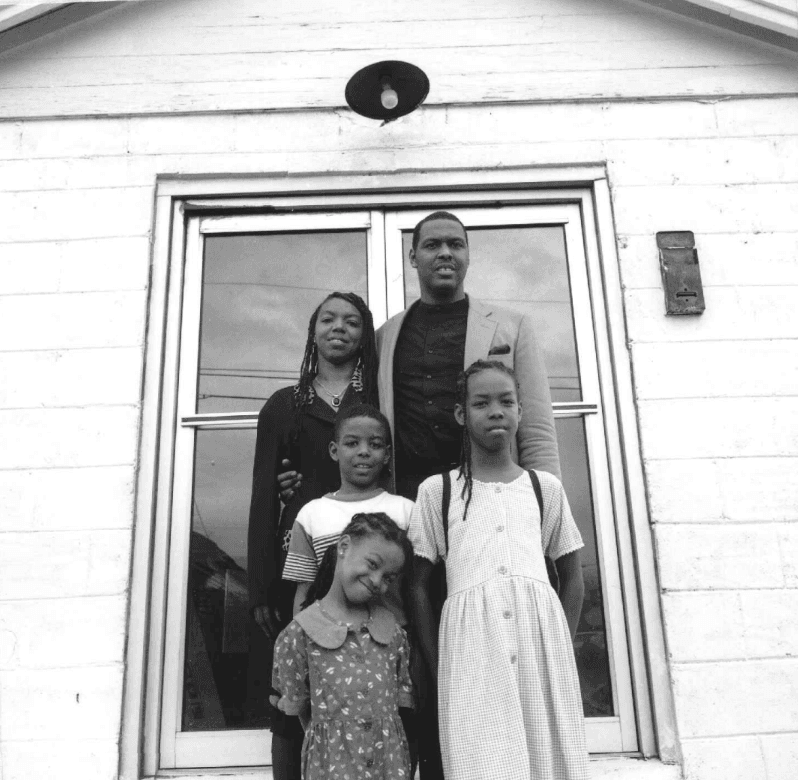
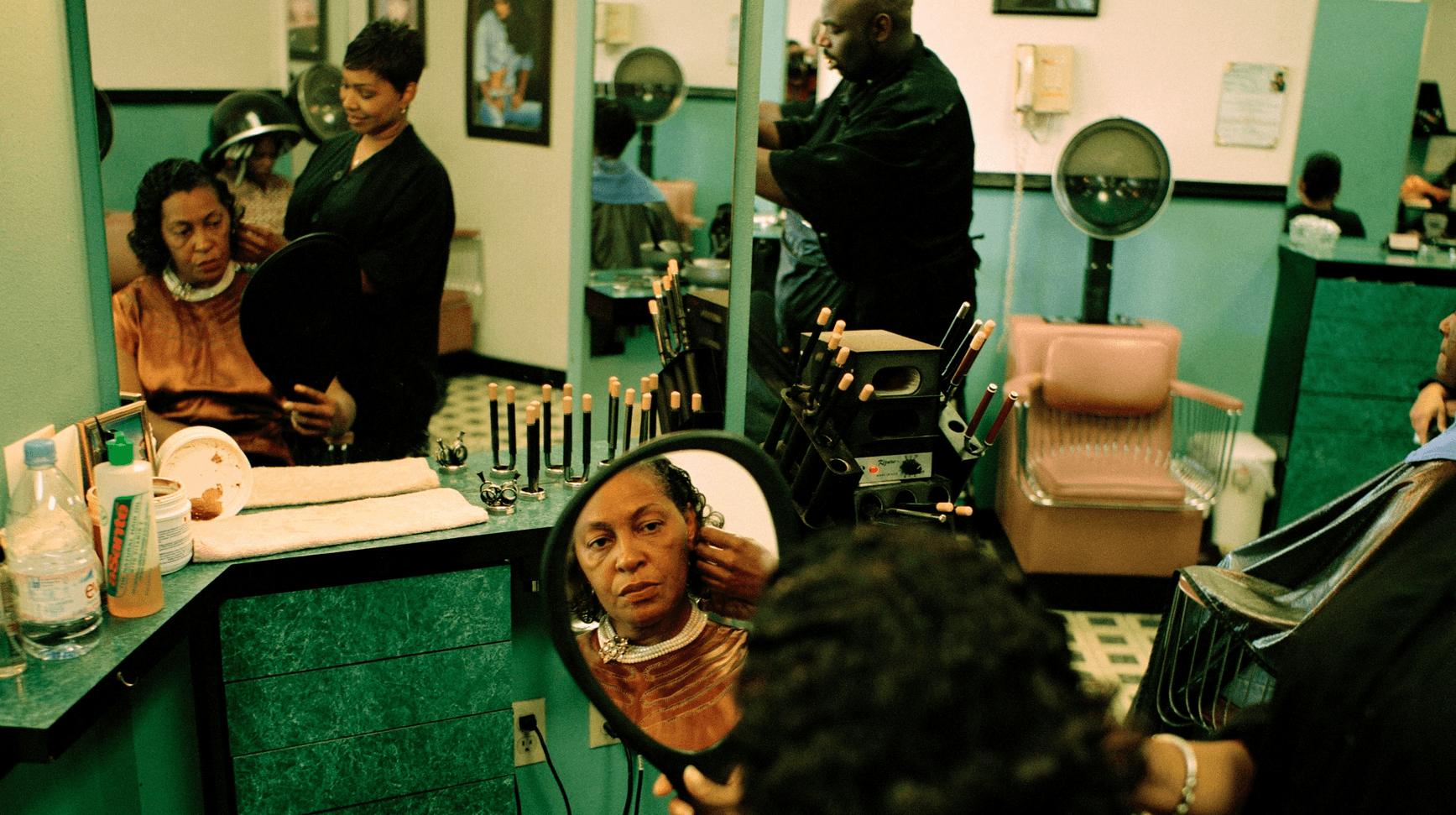
Home and Family. Photo by Philippe Cheng
Funds will continue to flow to large institutions that preserve the system, rather than to organizations, especially at the community level, that seek fundamental changes. The Chronicle of Philanthropy tells us bigger will continue to be better. The source of the smaller grants necessary for people of color and low-income communities to organize, to gain control over their lives, will continue to be limited to a few small- to middle-size foundations. Universities and nonprofits will continue to receive large grants, often in the name of serving these communities, despite evidence that they serve their own needs more. Grants for service—rather than for social change and empowerment—will continue to predominate, often absolving local, state, and the federal governments of their obligations to a social contract.
Another trend that is likely to continue is the tendency of foundations to become more operational, using their funds to set up new institutions that are responsible only to them. The Pew Charitable Trust’s establishment of the National Environmental Trust (NET) is a prime example of this. Focusing on environmental policy in Washington, D.C., the Trust has neither constituents nor members to whom it is responsible. A corporate lobbying group such as the Chemical Manufacturers Association is more responsible because it is held accountable to a constituency. The National Environmental Trust certainly does not consult with communities of color when crafting environmental positions or compromises on government policies, despite the fact that these communities are the most vulnerable to many of NET’s decisions.
Similarly, the racial and class breakdown of foundation boards and staff will prob- ably see only marginal change. These will continue to be predominately white and highly educated, coming from a professional, rather than an organizing background. In this connection, a black woman program officer recently observed that being a black Yale Ph.D. does not necessarily qualify her to deal with issues in poor communities of color. As Henry Louis Gates, Jr., quipped, “the unit on Blackness wasn’t going to be on the final [exam].” All of us must be clear on what we mean when we speak of greater diversity in the boards and staff of foundations.
The racial and class breakdown of foundation boards and staff will probably see only marginal change. They will continue to be predominately white and highly educated, coming from a professional, rather than an organizing background.
“Venture philanthropy” or “entrepreneurial philanthropy” is another trend likely to grow. The source of this new money is the venture capitalists, especially the techies who made killings in the stock market during the 1990s. Having made their millions or more at a young age, they now want to give back. What characterizes many of
these philanthropists is their belief that their business experiences are transferable to the world of social change.
They suggest that their skills and their money can “solve,” for example, the problems of decaying urban schools that have defied efforts by others for many decades. One individual, for example, gave $100 million to his alma mater in Mississippi to create a literacy institute. His goal was to ensure that, by the end of the third grade, every young person in the state would be able to read at grade level.
The desired outcome is admirable. But the likely outcome is a lot of funded research that will keep academics busy and have little impact on the needs of the children. Had he provided $5 million to local communities in Mississippi to help find ways to provide a good and equitable education, the children would be better off in a number of ways. And the entrepreneur would have an additional $95 million to spend on other philanthropic activities.
These venture capitalists also want to get involved in the social ventures they “invest” in through board participation and providing what they see as technical assistance. They too are not likely to help communities of color gain their voice in dealing with the issues that confront them. The model tends to be top down.
A continuing issue in both traditional and venture philanthropy will be that people of color and those with low incomes will continue to be regarded as “the problem,” as in, for instance, the Negro Problem. Philanthropy has rarely seen them as the basis for “solutions” to problems.
What Can Philanthropy Be?
I have already noted the structural nature of the problems of philanthropy that will make the future look more like the past: the homogeneity of boards and staff; the lack of public scrutiny; the sense that bigger is better; and the idea that money is all it takes to deal with the problems at hand. These problems often seem insurmountable. Change will only come when philanthropy revolutionizes its way of thinking.
- Small must be recognized as beautiful. The role of communities, especially in a globalized economy, must be accepted.
- Race and class must be addressed directly—not only as relations between individuals, as reflected in the How Race Is Lived in America 16-part series in the New York Times in 2000—but as a systemic fault line in American society.
- Power must be understood to be an inherent factor in the unequal relationship between the funder and the organizations and communities seeking support. What interests does philanthropy reflect? Which interests are consciously and subconsciously defended? These issues must be addressed openly.
- Power must be dispersed. Is philanthropy afraid to fund the dispersion of power? Is philanthropy concerned with democracy as a theory or as a practice?
- The processes of change must become the focus of our attention, commanding as much attention as the nature of the changes to be achieved.
Can philanthropy lead? Or will it continue to maintain the status quo? These are matters of considerable importance.
We often speak of solving “problems” when we are, in fact, focusing on symptoms. This confusion diverts attention from the ways change occurs and the options that are available to us or that need to be created to achieve a just, equitable, and environmentally sound society. Such a transformation is necessary if we are to consider what philanthropy can be.
A report of a meeting on the future of philanthropy published in the mid-1990s observed that, “many social problems like poverty might best be thought of as organic to capitalism and not subject to ‘cure.’” A careful reading of the report suggests that this statement was not challenged or perceived as a challenge to business as usual. If a social problem like poverty is “organic to capitalism,” then it is obvious that we must refocus our attention on the nature of capitalism. This carries with it a moral obligation. The real issue then becomes how to progress from the symptom to the vision, i.e., from a capitalist economic model that tolerates or creates poverty to inventing an economic model that values equity, justice, and the environment.
A Financial Times advertisement in The Wall Street Journal in March 2000 proposed that communism “didn’t work”; socialism, “nahh. Too much sharing involved”; fascism, “too many small moustaches”; capitalism, “seems to be working ....” Communism, socialism, fascism are not “isms.” They are “wasms,” it continues. This too is true of capitalism. Philanthropy could play a leading role in beginning the long process of defining a new economic model that builds upon the best of capitalism, socialism, and communism. The time to begin this is now. It could be a truly democratic process that brings together organizers, activists, thinkers, and others to work through a vision for change and the paths to achieve it.
Addressing directly the ways that social change occurs must become as essential a part of the philanthropic endeavor as the vision of change. Take, for example, the assertion in a Carnegie Corporation ad in the Chronicle of Philanthropy, “Social Change Begins With Scholarship,” which announced 16 fellowships to Carnegie Scholars. This reflects the top-down approach of much of foundation giving, which brings approval to the program officers who share common interests with university researchers. A study of such programs over the years would likely show minimal impact on social change.
In the next decade, philanthropy can begin to realize that the assets it holds—now around $450 billion—can become instruments of change. Gandhi spoke of the need to reduce the dissonance between creed and deed: a challenge that philanthropy must take seriously. Trying to reduce the dissonance between the way foundation assets are managed and the way grants are awarded can add value to grant making. A number of foundations are doing this mission-related investing today; they are aware that this approach is dissonance reduction—not elimination. The Jessie Smith Noyes Foundation and the Needmor Fund are two examples.
Mission-related investing can be particularly effective when a foundation’s power as a shareholder is used to support community-organizing efforts where corporations have been unresponsive to communities. In the mid-1990s, the South West Organizing Project (SWOP) in Albuquerque, New Mexico, a Noyes grantee, raised serious questions concerning Intel’s expansion there. Intel refused to meet with them. The Noyes Foundation offered to play a role in supporting SWOP’s community organizing by using the foundation’s role as an Intel shareholder. Working closely together, with SWOP always in the lead, Noyes pressed Intel to be accountable to the community; and SWOP pressed them for changes in their practices relating to pollution, jobs, and other issues. Noyes filed a shareholder resolution asking Intel to commit to sharing information with the community. It received over 8 percent of the shareholder vote, which is a good showing. Discussions continued for a year. Finally, Intel agreed to change its environmental, health, and safety policy.
A black woman program officer observed recently that being a black Yale Ph.D. does not necessarily qualify her to deal with issues in poor communities of color.
The world did not change, Intel’s behavior changed somewhat. And SWOP gained greater credibility within the power structure of the state. Noyes provided a grant to SWOP to buy Intel stock, so that they became shareholders as well as stakeholders. A foundation does not have to have large holdings in a company to make a difference. Noyes held only 100 shares of Intel stock at the time.
In Hawaii, native Hawaiian groups are beginning to see economic organizing as an important adjunct to more traditional forms of community and political organizing. The need for large institutional investors, including foundations, to assist them in this effort is clear, since they do not have access to resources themselves.
Foundations can also invest in communities using their assets as well as their grant dollars. The Needmor Fund has initially committed 1 percent of its assets to investments that will strengthen community control of their economic life.
Using their assets creatively, foundations could also improve the compensation packages of community organizers with very little risk to capital. Organizers’ low salaries make it difficult for them to save to buy a house or send their children to college. Foundations could guarantee loans at lower preferential rates than banks and traditional lenders through the development of an organized cooperative or some other instrument.
Similarly, in urban areas where housing costs are high, foundations could purchase, for example, an apartment building to rent units to community organizers at more reasonable rates than the market allows, and a profit could still be made. The opportunities to strengthen community organizing through the investment of assets, in addition to grant dollars, are limitless. Foundations need to commit themselves to the task, recognizing the importance of organizing to their work.
What Should Philanthropy Be?
Philanthropy should be a major player in fulfilling the democratic promise. It should assist in ameliorating problems that now exist, while seeking to help reform the social contract that now creates racism, inequity, environmental destruction, and the like. It must consult with the people most affected, learning to listen more and speak less.
There can be no democracy without private philanthropy. Governments can fund the arts and education, but they cannot fund the opposition for the obvious reason that those are the people who hold the government's feet to the fire. In this case the opposition is not the other political party, but exists in communities.
Someone has to keep making certain that governments remain honest. In a democracy, somebody has to keep score and keep governments at all levels accountable. Organizing, advocacy, and mobilization are ways to bridge the gap between what governments say they are doing in their constitutions, policies, and legislation, and what governments actually do and should do. Foundations can and must help fill that role, especially assisting communities of color and low-income communities to have their voices heard.
This “new” philanthropy will respect the concept of community. It will recognize that individuals in communities need to have control over their lives and their economies. Philanthropy cannot be a buffer zone for the rich and powerful.
Funds will continue to flow to large institutions that preserve the system, rather than to organizations, especially at the community level, that seek fundamental changes.
The recent surge of interest in globalization underlines the point. In most of philanthropy, the term “globalization” is used in terms of international grant making and activities in Washington and other world capitals. Communities are rarely discussed except as the object of globalization’s threats, and they are almost never discussed as a part of the solution. But communities have for a long time been fighting the processes of globalization—the loss of local control of their economies and the quality of their lives.
Base-building at the community level is an essential process if we are to keep the forces of globalization under some semblance of control. It is a slow but essential process whose progress is not easy to measure. But are the efforts at national and international levels likely to succeed without attention to the base?
A new philanthropy must learn to encourage and learn from its critics and their analyses in order to fulfill its obligations to society. A marketplace of ideas about philanthropy exists, but philanthropy’s money and power have had a chilling effect on it.
A new philanthropy will accept that creating real and lasting change will take time. Institutions in synergy with one another will need to be created and sustained. The short-term here may be a decade. Patience will be more than a virtue, it will be a necessity.
FOOTNOTES
1Robert A.G. Monks, The Emperor’s Nightingale: Restoring the Integrity of the Corporation in the Age of Shareholder Activism. Reading, Mass.: Addison-Wesley, 1998, p. 148.