

VOL. 10
Afro-descendant Struggles for Collective Rights in Latin America: Between Race and Culture
Juliet Hooker
In recent years Afro-descendant social movements have won important collective rights from the state in many Latin American countries. They have forced Latin American states and national publics to begin to acknowledge the persistence of racism in their respective societies. Taking advantage of recent democratization processes that opened up the political system in many countries in the region, Afro-descendants have waged increasingly visible and successful struggles for various kinds of collective rights to overcome the racial discrimination and social and political exclusion to which they have historically been subjected. In the 1980s and 1990s many Latin American states implemented new multicultural citizenship regimes, including: Argentina, Bolivia, Brazil, Chile, Colombia, Costa Rica, Ecuador, Guatemala, Honduras, Mexico, Nicaragua, Panama, Paraguay, Peru, and Venezuela. The features of these multicultural citizenship regimes vary from country to country, but generally include some combination of the following collective rights: formal recognition of the existence of ethnic/racial sub-groups, recognition of indigenous customary law as official public law, collective property rights (especially to land), guarantees of bilingual education, territorial autonomy or self-government, and rights to redress racial discrimination (such as affirmative action in education and employment). [1] As a result, Afro-descendants have been able to gain certain collective rights to land and culture, although generally to a lesser extent than indigenous people. In addition, in a few countries in the region, notably Brazil and Colombia, Afro-descendants have also won certain anti-racial discrimination rights. However, despite such important achievements, the basis of Afro-descendant collective rights remains a highly contested issue throughout Latin America. This essay will explore the challenges that Afro-descendants face when trying to claim collective rights in Latin America, focusing specifically on the kinds of collective rights—and modes of justification of such rights—open to Afro-descendant movements in Latin America today. [2]
Latin American Afro-descendants continue to face significant obstacles in their struggles for collective rights. Indeed, the significant variations in the levels of collective rights won by Afro-descendants across Latin America in recent years attest to the challenges they face when trying to claim such collective rights. One of the most significant hurdles they confront involves finding a compelling legitimating narrative about the need for and basis of Afro-descendant collective rights that will prove persuasive to often-skeptical national publics and states. A case in point occurred during a graduate course on Afro-descendant politics I taught at a regional university on Nicaragua’s Atlantic Coast in 2005. I asked the class (which included indigenous, Afro-descendant, and mestizo3 students) how Afro-descendants could best frame claims to communal land rights under a recently approved collective land rights law such that they would be accepted as legitimate by the rest of the country. After a moment of puzzled silence an indigenous student in the class replied that he could not answer the question because: ‘‘law 445 is an indigenous law.’’ He went on to explain that what he meant was that while Afro-descendants certainly deserved to have a decent standard of living and adequate political representation, they were not entitled to communal land rights; the question of how they could best frame claims to such rights was therefore moot. This kind of reasoning perfectly illustrates the fraught political context in which Afro-descendant social movements in Latin America carry out their struggles for equality and justice. It is a context in which the very basis of Afro-descendant collective rights is in question.
This reality raises important philosophical and political questions for Afro-descendant social movements in Latin America. Namely, how can Afro-descendants wage the struggle for equality? How should they frame their struggles for collective rights? Should Afro-descendants ground their claims to collective rights in arguments about the need to preserve a distinct Black culture or cultures, or should they base them instead on the need to overcome historic and present injustice? Alternatively, should they base their demands for collective rights on both kinds of normative claims? Will either of these narratives prove as persuasive to Latin American publics and elites as the notion of ‘‘indigenous rights’’? I explore these questions in the rest of this essay, first by sketching the types of rights gained by Latin American Afro-descendants to date, then by analyzing the kinds of normative bases of collective rights that could and have been utilized by Afro-descendant social movements in the region, and finally by briefly discussing some of the principal challenges that Afro-descendants continue to face in their struggles for collective rights in Latin America.
Collective Rights Gained by Afro-descendants in Latin America
The Economic Commission for Latin America and the Caribbean estimates that there are approximately 150 million people of African descent in Latin America, composing about 30% of the region’s total population and residing mostly in Brazil, Central America, and the northern coast of South America. [4] It is difficult to compile definitive statistics on the size of the Afro-descendant population in Latin America because many countries in the region still do not include questions about race and ethnicity in their national censuses. Panama, Peru, and Uruguay completely lack census data for their Afro-descendant populations, for example, while Costa Rica and Ecuador collected these statistics for the first time in 2000, Honduras in 2001, and Nicaragua in 2005. [5] Brazil is one of the few countries in the region that collects data on race in both its national census and household surveys. [6] Re-inserting questions about race and ethnicity in national censuses (many of which were removed in the late 19th or early 20th centuries) is in fact a major demand of Afro-descendant and indigenous movements today. [7] In addition, the question of how to classify mixed-race populations complicates the issue of how to determine the relative size of the Afro-descendant population in Latin America. [8] Nevertheless, Table 1 shows current estimates for the size of the Afro-descendent population in various countries in the region.

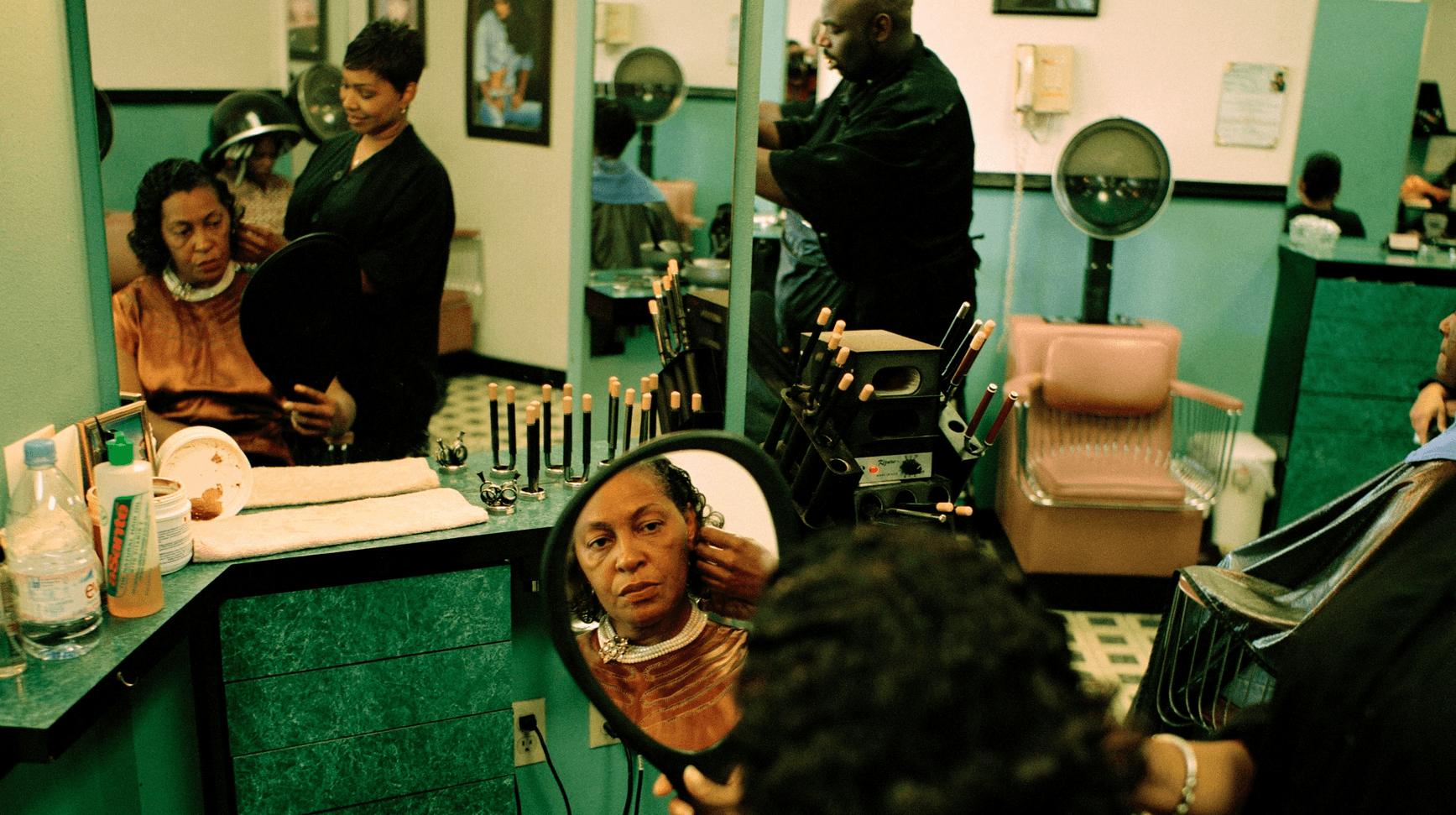
‘‘Intimacy’’ 2006 © Anya Dennis
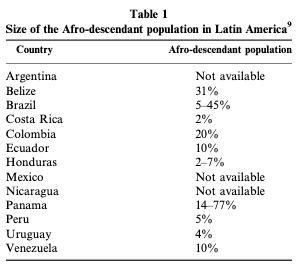
Table 1: Size of the Afro-descendant population in Latin America
Afro-descendants thus represent a sizable portion of Latin America’s population; they are also ‘‘far more likely than citizens of European origin to live in poverty, be illiterate, die at a younger age, reside in substandard housing, and suffer from police abuse.’’ [10] In Brazil, for example, the illiteracy rate was 20.8% among Blacks in 1998 as opposed to 8.4% among whites. This disparity is reflected in the fact that 67% of the illiterate population in Brazil was of African descent. Afro-Brazilians also fared poorly in terms of access to public services. According to the 1996 national household survey, for example, 73.6% of households headed by whites had access to sewage systems or septic tanks, while only 49.7% of families with a Black head of household had access to this service. Overall, then, less than half of households headed by a Black breadwinner had access to sewage systems or septic tanks. Inequalities in access to well-paid jobs, education, and adequate living conditions were also reflected in the differences in mortality rates of whites and Blacks. In the 1990s, for example, the Black infant mortality rate in Brazil was 71% higher than among white children, and the mortality rate of Black children less than 5 years old was 67% higher than for white children in the same age group. [11]
Racial discrimination is a major cause of these inequalities in the living conditions between white and Afro-descendant Latin Americans. Traditionally, many Latin American commentators and governments have argued that such disparities in socio- economic conditions among different racial groups reflect regional and class differences within countries, or are the result of historic exclusions during the colonial period. They have resisted attributing these disparities to active and continuing processes of racial discrimination against Afro-descendants. But new research clearly shows that Afro- descendants suffer racial discrimination. In Brazil, for example, there are significant income disparities associated with race; Black income (that of people who identify as ‘‘negros or pretos’’) is 40% that of whites, and the income of ‘‘pardos’’ or ‘‘browns’’ is 44% of white income. Not only do wage differentials between whites and non-whites persist even after controlling for education and experience, the income gap between whites and non-whites tends to widen as educational achievement increases, which points to active racial discrimination in the labor market as the cause of income disparities, not simply differences in educational achievement or work experience. [12] Moreover, Latin Americans are aware of the persistence of racism in their societies, although they tend to avoid assuming individual responsibility for racial discrimination. In a 2004 survey on racism and racial discrimination carried out in Ecuador, for example, 62% of Ecuadorians acknowledged that racism existed in their country, but only 10% of respondents considered themselves to be racist. The survey found that Afro-Ecuadorians were the most discriminated against, with 44% reporting having experienced racial discrimination in the past year, most often occurring on the street (63%), in their neighborhood (38%), aboard public transportation, i.e., buses (37%), and in government offices (36%). [13] Active processes of racial discrimination thus continue to exact considerable ‘‘costs of not being white’’ from Afro-descendant Latin Americans to this day.
This, then, is the social and political context within which Afro-descendant struggles for racial justice and equality are taking place: as a result of the activism of their respective Afro-descendant populations many Latin American countries are beginning to acknowledge the existence of racism in their societies; simultaneously, however, the basis of Afro-descendants’ claims to collective rights is still a highly contested issue across the region. [14] The results of the Ecuadorian public opinion survey on racism point to some of the reasons why this is the case. As noted above, while respondents acknowledged the existence of racism in their country, there was significant disagreement among them about what should be done to overcome it. A majority of the respondents (67%) said that the government should take positive measures to combat racial discrimination, for example. Of these 67% supported education about cultural and ethnic diversity to combat racism, while only 13% endorsed the creation of government offices to deal with racial discrimination, however, and even fewer (8%) backed the adoption of laws to penalize racism. Meanwhile, there was significant support for the implementation of measures to ensure Afro-Ecuadorians’ access to education (82%) and employment (73%). The kinds of collective rights that Afro-descendants have been able to gain in Latin America to date reflect these contradictory attitudes about racial discrimination and how best to overcome it.
What we find in Latin America is thus that Afro-descendants have gained collective rights in two different ways that have, in most cases, developed relatively independent of each other. In countries where they have been considered ethnic groups with distinct cultures, Afro-descendants (along with indigenous groups) have gained collective rights designed to ensure the preservation of those cultures. In countries where they have been seen mainly as racial groups suffering from racial discrimination, Afro-descendants have gained separate collective rights designed to combat racial discrimination. There are also a few countries in which Afro-descendants have been seen as both ethnic and racial groups and have therefore gained both kinds of collective rights. Table 2 shows the different kinds of collective rights won by Afro-descendants across Latin America in the past two decades.
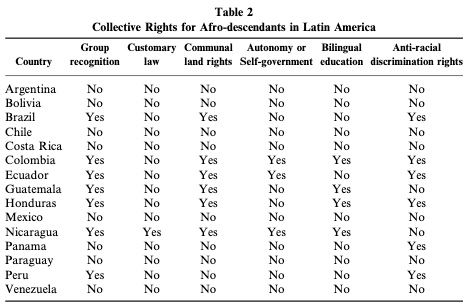
Table 2: Collective Rights for Afro-descendants in Latin America
The kinds of anti-racial discrimination rights adopted for Afro-descendants vary from country to country. They include a variety of measures, such as affirmative action in education and employment (Brazil), the creation of specific government bodies designed to either combat racial discrimination against Afro-descendants or to promote their rights (Brazil, Ecuador, Honduras, Peru), political representation rights (Colombia), and laws guaranteeing equal access to public establishments (Peru and Panama).
Normative Bases of Afro-descendant Collective Rights
While Latin American Afro-descendants have thus made many important gains in recent years, it is important to note that the kinds of collective rights they have gained vary significantly across countries and between different types of Afro-descendant groups. Additionally, the validity of the rights themselves remains a highly contested issue in many cases. The confusion and disagreement about Afro-descendant collective rights in Latin America is in part a result of the different kinds of Afro-descendant populations present in the region. In many cases these differences have determined both the kinds of social movements they have formed and the types of collective rights they have struggled for, as well the kinds of collective rights that states have been willing to grant them in turn.
Theorists of multiculturalism have put forward two different kinds of normative justifications for collective rights for minority groups. One type of argument is concerned with the rights of minority cultures within a multi-national state. The argument here is that the languages, cultures, and identities of minority groups in such a state will always be unfairly disadvantaged compared to those of the majority group, and therefore justice requires the adoption of permanent collective rights that will allow these minorities to preserve their cultures, such as rights to bilingual education and to the preservation of their cultural traditions and in some cases self-government in the territories in which they live. [15] The major beneficiaries of this type of collective rights have been national minorities such as the Quebecois in Canada and the Catalans and Basques in Spain, and indigenous groups in Europe, Australia, and the Americas. Another kind of argument for collective rights for minority groups is based on past injustice. In this case the argument is that minority groups that have suffered from past discrimination are entitled to certain temporary collective rights in the present in order to overcome its effects, such as affirmative action in employment and education and the creation of majority–minority electoral districts to ensure political representation. African–Americans in the U.S. have received such minority rights.
Afro-descendants in Latin America have made both of these kinds of arguments for collective rights. Meanwhile, the kinds of social movements they have developed have depended upon whether they have mobilized primarily as a racial or ethnic group or both, with ethnicity generally being understood to denote cultural difference and race phenotypical characteristics. [16] In general Afro-descendants who have organized as racial groups have struggled for equal rights and anti-racial discrimination measures, while those who have mobilized primarily in terms of an ethnic group identity different from the majority mestizo national identity of most Latin American countries have sought collective rights to land and culture. Finally, there are also Afro-descendants who claim both ethnic and racial group identities and who have mobilized in favor of both kinds of collective rights.
Afro-descendants have generally been seen by Latin American states as ‘‘racial’’ subjects without an ethnic identity distinct from the larger mestizo culture, not as ‘‘ethnic’’ groups with separate cultures and ways of life. Yet Latin American Afro-descendants stand in an ambiguous position vis-à-vis the intersection of race and ethnicity. [17] Whether they have framed their struggles in terms of group identities conceived in ethnic or racial terms (or both) seems to follow a spatial logic to some extent. Rural Afro-descendants, for example, often conceive of their collective identities in ethnic terms and emphasize the need for collective rights to land and culture, while urban Afro-descendants have generally organized in terms of a racial group identity, and have focused more on anti-racial discrimination rights. As a result, in many countries in the region the struggles of urban and rural Afro-descendants have taken place fairly disconnected from each other.
For the purposes of this essay I will classify Latin American Afro-descendants into four principal types or groups. [18] The first group are what we might call Afro-mestizo people, who are the descendants of slaves brought during the colonial period who over time integrated into the lower socio-economic levels of colonial society and later the dominant mestizo cultures and national identities of most Latin American countries. While their phenotypical differences from the national population suggest that they are subject to racial discrimination (given the close association between social class and skin color in Latin America), in most cases they have not developed a separate racial/cultural group identity nor made demands for collective rights. Afro-mestizos, who can be either urban or rural, probably represent the largest proportion of Afro-descendants in the region. A second group of Afro-Latin Americans are also the descendants of slaves brought during the colonial period, who—in contrast to Afro-mestizos—have developed a strong racial group identity and have struggled for collective rights against racial discrimination. They tend to be overwhelmingly urban. The movimento negro in Brazil is an example of this kind of Afro-descendant group. A third group of Afro-descendants in Latin America are the descendants of ‘‘maroon’’ communities whose ancestors managed to escape from (or otherwise avoid) slavery to establish communities outside colonial society. These Afro-descendant groups developed separate racial/cultural collective identities distinct from those of the dominant mestizo majority, and forged a relationship to land or territory in the colonial period before the establishment of state sovereignty over the areas they occupied. They have historically struggled for collective rights, in particular in defense of communal lands or territory. Quilombos in Brazil, Creoles in Nicaragua, and Garifuna in Honduras, Nicaragua, and Guatemala, are examples of this type of Afro-descendant group. Finally, throughout Central America, we find a fourth group of Afro-Latin Americans who are the descendants of West Indian immigrants who arrived as laborers in the enclave economies that existed in the late 19th and 20th centuries along the Carib- bean coasts of the isthmus. They have organized as a racial/cultural group and struggled for equal civil rights, anti-racial discrimination measures, as well as special collective rights, such as rights to bilingual education and political representation rights.
The kinds of collective rights gained by Afro-descendants across Latin America reflect this complexity. In some countries where Afro-descendant maroon communities are present, for example, such as Guatemala, Honduras, and Nicaragua, they have gained collective rights to land and culture. In countries where Afro-descendants are not recognized as either ethnic or racial groups they have obtained neither collective rights to land and culture nor anti-racial discrimination rights. This is the case in Venezuela and Mexico. Finally, in a third set of cases, where they have mobilized and been recognized as both ethnic and racial groups, Afro-descendants have simultaneously gained some collective rights to land and culture as well as rights designed to overcome racial discrimination. This has been the pattern in Brazil, Colombia, and Ecuador.
Despite such gains, however, one of the principal problems that Afro-descendants confront in their struggles for collective rights in Latin America is the lack of an equally compelling—from the perspective of political elites and national publics—narrative about the basis of such rights as the region’s indigenous groups have found in the notion of indigenous rights. Consider, for instance, the following statement by an indigenous leader in Peru, critiquing the placement of both indigenous and Afro-descendant concerns within the same government office: ‘‘We, the Amazonian peoples, are a nation, we have identity, we have culture. The Andean peoples have been a nation, have had identity, have had language and culture. The Black peoples are not a people, do not have identity, do not have language [and culture].’’ [19] As with the comment by the indigenous student in Nicaragua claiming that Afro-descendants were not entitled to communal land rights, the statement by the Peruvian indigenous leader raises important questions about the challenges confronting Afro-descendants in their struggles for collective rights in Latin America. What kind of strategy should Afro-descendants pursue as they mobilize in favor of collective rights? That is, should Latin American Afro-descendants mobilize in terms of a Black racial or ethnic group identity, or both? What are the advantages and obstacles to utilizing either or both of the two dominant normative justifications for collective rights?
Obstacles to Afro-descendants’ Collective Rights Claims
Latin American Afro-descendants face significant challenges when trying to make either argument in favor of collective rights, i.e., that they are needed to preserve a distinct cultural identity or to overcome past and present injustice and discrimination. To begin with, there are important obstacles to making the first type of claim to collective rights. That is, to basing their demands for collective rights on an equally strong claim to Black culture similar to indigenous narratives about indigenous culture. Such a strategy would likely prove difficult for Afro-descendants to pursue for a variety of reasons. One obstacle is that the cultures they have developed tend to be seen either as insufficiently distinct from those of the majority to warrant state protection, i.e., the identification of national Brazilian culture with Afro-Brazilian cultural forms, for instance. There is also the problem that the identities and cultures they have developed are sometimes seen as inauthentic or derivative, because they have been developed in response to processes of discrimination and colonization. This is the case with Afro-descendant Creoles in Nicaragua, for example, who adopted many cultural and linguistic practices from British and U.S. imperial powers that are different from those of the rest of mestizo Nicaragua; as a result their cultural group identity is often perceived as inauthentic and less worthy of state protection. [20] There is moreover the additional problem that this strategy would only be open to a small subset of Afro-descendants, and would seem to exclude the majority of urban Afro-descendants whose cultural identities are very similar to the rest of the national population. There is also the danger that such claims to cultural distinctiveness risk reifying essentialist conceptions of Black culture and identity rooted in African survivals (an issue that has been the topic of heated debate among scholars of African Diaspora studies). The formulation of arguments for collective rights grounded solely in the distinctiveness of Afro-descendant cultures thus poses important challenges for Afro-descendant movements struggling for equality in Latin America.
If the first type of normative justification for collective rights—that they are necessary in order to preserve a distinct cultural identity—seems to pose significant challenges for Latin American Afro-descendants, the second kind of normative basis for collective rights—that they are needed to right past wrongs, in this case slavery and ensuing racial discrimination—seems to pose fewer problems. Collective rights grounded in the need to overcome the racial disparities resulting from slavery and racial discrimination could thus provide the kind of compelling justification for Afro-descendant collective rights that the idea of preserving indigenous culture has provided for indigenous groups in Latin America.
The idea that states need to compensate for past wrongs has gained greater visibility in recent years in Latin America, partly as a result of the implementation of reparations for state human rights abuses following the return to democracy in various countries in the region, and also due to the success of Afro-Brazilian activists utilizing such arguments in gaining important collective rights designed to overcome the effects of racial discrimina- tion. The basic idea behind policies designed to redress past wrongs is that: ‘‘A just society, so far as possible and permissible, right the wrongs of its own past injustices, particularly when their continuing ill effects upon the descendants of those wronged are plain for all to see.’’ [21] The aim of such policies is thus to repair past injustices and improve the current conditions of the victims of those injustices.
In the case of Latin American Afro-descendants, such arguments can serve as the normative basis of collective rights because the injustices committed against them— enslavement and de facto racial discrimination—were collective, and therefore require collective remedies. That is, following emancipation from slavery, Latin American Afro- descendants continued to suffer from discrimination because of their race or skin color; individual members of this group were disadvantaged because of their membership in the group and therefore the injustice was experienced as a collective wrong that affected the whole group. Policies designed to compensate for past injustice often span both symbolic and/or material forms of redress. They often involve material forms of redress, in some cases monetary compensation in the form of victim funds, but also the creation of policies and institutions designed to correct inequalities between the majority and the victimized group (i.e., access to education, housing, employment, etc.). In addition, they also often involve symbolic actions, such as official apologies, public recognition, the creation of memorials or museums, and changes in school curriculums, etc. This kind of normative justification of collective rights would thus enable Latin American Afro-descendants to gain both symbolic and material forms of redress designed to repair the wrongs perpetrated upon the group as a whole by slavery and racial discrimination. Specifically, it would provide a compelling justification for collective rights designed to overcome existing racial disparities between Afro-descendants and dominant groups, which has been a key goal of Afro-descendant movements in the region.
Afro-descendants’ adoption of this strategy to ground their claims to collective rights also faces significant political obstacles, however. One such hurdle is the reluctance of Latin American political elites and national publics to accept collective responsibility for racial discrimination. In the case of righting past wrongs against Latin American Afro-descendants there is an important paradox with regards to this issue. On the one hand, now that the existence of racism against Afro-descendants is beginning to be acknowledged in many countries in the region there is also a growing sense among citizens that the state should take positive steps to end discrimination and overcome those racial disparities that have resulted from it. On the other hand, however, as illustrated by the Ecuadorian public opinion survey on racism cited earlier, most citizens do not believe that they themselves are racist or that they are responsible for racial discrimination.
The reluctance of Latin American elites and publics to accept collective responsibility for racial disparities is symptomatic of a broader failure to see de facto histories of racial discrimination that began with slavery as the cause of contemporary inequalities. Their resistance to making this kind of causal connection is rooted in a variety of factors, such as the early abolition of slavery in most of Latin America and the absence in the region of the kind of de jure segregation that existed in the U.S. or South Africa. [22] The relative absence of such elements of institutionalized white supremacy has allowed Latin American elites to deny the existence of racial discrimination in the region, and to attribute racial disparities to social class rather than race. The official promulgation of myths of racial democracy in many countries in the region also meant that Afro-descendant inequality was not acknowledged as a problem, which in turn led to the cause of such disparities not even becoming a topic of national debate.
In Brazil, for example, where Afro-Brazilian activists have been at the forefront of using the strategy of basing claims to Afro-descendant collective rights in the idea of compensation for past injustices, it was not until recently that the state officially recognized the direct causal connection between slavery and de facto racial discrimination and contemporary racial disparities. It was during the run-up to the Third World Conference Against Racism held in Durban, South Africa in 2001, for example, that: ‘‘For the first time in history . . . Brazil, recognized the inseparable links between colonialism and slavery and their consequences today. [For Afro-Brazilian activists] It is significantly important to unite the debate on affirmative action and reparations with their historical references.’’ [23] This is a critical issue because in order for arguments about the need to repair past injustices to serve as a compelling narrative for Afro-descendant collective rights it is absolutely crucial that all citizens accept the connection between past wrongs and present harms. A case in point is the way Afro-Brazilian activists have consistently sought to ground their claims to collective rights, particularly affirmative action policies, in:
the constitutional principle of equality...which mandates compensation for the past discrimination that created current racial inequalities. . . . The idea is to implement the constitutional principle of equality by paying . . . ‘‘historical debts’’ owed by the Brazilian State to social minorities, in particular African Brazilians . . . . The general idea of public policy as compensation improving the living conditions of a historically discriminated population underlies the Brazilian notion of affirmative action. [24]
Even in Brazil, however, where there is a long history of using the idea of compensation for past injustice to ground Afro-descendant collective rights claims, there is still significant resistance to drawing a direct causal link between current racial inequalities and slavery and de facto racial discrimination, as the continuing controversy over the adoption of affirmative action policies illustrates. The extent to which Latin American political elites and publics will prove receptive to Afro-descendant claims for collective rights grounded in the need to redress past injustice and present discrimination, especially insofar as they continue to avoid any sense of collective responsibility for these harms, thus remains an important obstacle to Afro-descendant struggles for equality and justice.
Another potential dilemma that Latin American Afro-descendant social movements face is that the adoption of separate modes of justifying collective rights might produce divisions between Afro-descendant communities with divergent socio-historical trajectories, such as between urban and rural Afro-descendants, for example. As noted earlier, in a number of Latin American countries, including Brazil, Colombia, Ecuador, Honduras, and Nicaragua, rural Black populations have struggled for rights to communal land, control over natural resources, territorial or political autonomy, and cultural recognition similar to those sought by indigenous groups. Many of these rural Afro-descendant communities, though not all, are the descendants of runaway slaves. Unlike most urban Afro-descendant populations, rural Afro-descendant communities are generally in a position to make claims to collective rights based on the need to protect a distinct cultural identity, much like indigenous groups. [25] This strategy is less feasible in the case of urban Afro-descendants, however, who tend to be seen as culturally similar to the national population. There is thus the danger that the differences in the kinds of collective rights sought by urban and rural Afro-descendants, and in the modes of framing their claims to such rights, will lead to conflict among them. In Brazil it seems as if this has not been the case. [26] In other countries, however, such as Honduras, there seems to be a potential divide within the Garifuna (who identify as both Afro-descendant and indigenous) between organizations that deploy the language of indigenous rights, which grounds collective rights on the need to preserve culture and communal lands, and those that use the language of reparations for slavery and racial discrimination to base their demands for such rights. [27] Another important danger is that states will narrowly interpret the rights claims of rural Afro-descendants to include only those communities that can provide strict ethno-historical ‘‘proof’’ of their status as maroon communities, thereby creating arbitrary and untenable divisions between rural Afro-descendants occupying similar socio-historical positions. [28] The varying ability of differently situated Afro-descendant communities to make claims to collective rights could thus have potentially divisive consequences for Afro-descendant social movements in Latin America.
A final challenge confronted by Latin American Afro-descendants in their struggles for justice and equality is the obstacle posed by the lack of identification of a significant portion of the population of African descent in the region—many of those I have identified as Afro-mestizos—with a Black racial group identity. The reasons for this are complex. Scholars of racial politics in Latin America have pointed to the development of national ideologies of mestizaje (racial mixing) that obscured or actively denied the existence of racism, as one of the factors that has hindered racial group identification and political mobilization among Afro-descendants in Latin America. These myths of ‘‘racial democracy’’ not only portrayed countries in the region as racially mixed to such a degree that it was impossible to distinguish between different racial groups, they also encouraged identification with an over-arching national identity rather than specific racial group identities. [29] Other scholars have pointed to the role played by political institutions in shaping patterns of racial group identification among Latin American Afro-descendants. They have noted that in contrast to the United States and South Africa, Latin American states did not develop legally enforced racial discrimination, which in those countries had the unintended consequence of reinforcing a collective racial group identity among subordinated racial groups that in turn became the basis for resistance to white supremacy. [30] Indeed, in Latin America supposedly apolitical state institutions, such as census bureaus, played key roles in shaping the political behavior of Afro-descendants by removing questions about race and ethnicity from the census in keeping with the tenets of national ideologies of mestizaje that claimed that such group identities no longer existed. [31] In addition, the correlation between class and skin color throughout the region, coupled with the continued stigmatization and devaluation of Blackness, discourages many Latin American Afro-descendants from identifying with a Black racial group identity today.
Despite the important victories that Afro-descendants have achieved in recent years, the lack of identification of a significant portion of the African-descended population in Latin America with a Black racial group identity thus constitutes an important challenge for Afro-descendant social movements, as it raises important questions about the scope of collective rights targeted at Afro-descendants. One of the principal critiques raised by opponents of certain kinds of collective rights for Afro-descendants, for example, is whether special collective rights for minority groups are appropriate in countries where such groups constitute a majority of the population. In Brazil, for instance, critics of the new affirmative action policies championed by the Black movement point to the large numbers of Brazilians who identify as mestiços as reasons not to adopt the ‘‘somewhat uniform and limited’’ notions of Black identity said to be favored by the Black movement, as this ‘‘would leave out large numbers of Afro-Brazilians and alienate a good number of potential supporters among non-Blacks.’’ [32] It is important to note that this type of critique does not dispute the justice of Afro-descendant claims to collective rights. It does, how- ever, underscore a continuing challenge faced by Afro-descendant social movements in their struggles for justice: on the one hand Afro-descendants are often not seen as culturally distinct enough to merit certain kinds of collective rights, while on the other hand attempts to delineate the specific experiences of racial discrimination and social and political exclusion that are the basis of such rights are also seen as divisive or exclusionary.
When assessing the current outlook of Afro-descendant social movements in Latin America, two principal conclusions can thus be arrived at: first, in recent decades Afro-descendant social movements in Latin America have made important gains in terms of collective rights, and second, it is also the case that Afro-descendants continue to face important challenges in their struggles for justice and equality. One of the most important challenges these movements presently face is in finding a legitimating narrative for collective rights that can prove as compelling to Latin American political elites and publics as the notion of indigenous rights. I suggest that Afro-descendant social movements in Latin America can, and indeed need to, base their claims to justice on both types of normative justifications of collective rights discussed in this essay—i.e., to repair past injustice/present inequality and to preserve a distinct cultural identity—especially given the complexities of their positioning vis-à-vis the intersection of race and ethnicity. Indeed, there is no reason these different modes of framing demands for collective rights should be seen as incompatible, nor should Latin American Afro-descendants have to choose between them, especially given the multiple and complex identities they possess. In sum, while Afro-descendant social movements continue to face important challenges in their struggles for justice in Latin America, it is also important to note that the gains they have made in recent years have already provoked the kinds of national debates about the nature and causes of racial discrimination and inequality that are necessary preconditions for progress towards racial justice in these societies.
WORKS CITED
1. This list is a modified and expanded version of the features of Latin America’s new multicultural model of constitutionalism identified by Donna Lee Van Cott. See Donna Lee Van Cott, ‘‘Latin America: Constitutional Reform and Ethnic Right,’’ Parliamentary Affairs 53(1) (2000), 41–45.
2. For a discussion of the reasons that to date indigenous groups have had greater success winning collective rights from the state than Afro-descendant movements see Juliet Hooker, ‘‘Indigenous Inclusion/Black Exclusion: Race, Ethnicity and Multicultural Citizenship in Latin America,’’ Journal of Latin American Studies 37(2) (2005), 14–39.
3. The contemporary descendants of Spanish, indigenous, and African mixing processes during the colonial period; they are the majority of the country’s population.
4. Martín Hopenhayn, and Alvaro Bello, Discriminación Étnico Racial y Xenofobia En América Latina y el Caribe (Santiago, Chile: División de Desarollo Social de la Comisión Económica de las Naciones Unidas para América Latina (CEPAL/ECLAC), 2001), 5.
5. The results of the race=ethnicity question included in Nicaragua’s 2005 census have not yet been released by the National Institute of Statistics, however.
6. See Edward E. Telles, ‘‘Race Report 2007: Incorporating Race and Ethnicity into the U.N. Millennium Development Goals’’ (Washington, DC: Inter-American Dialogue, 2007), 1.
7. See for example the ‘‘Todos Contamos’’ initiative funded by the World Bank and the Inter-American Development Bank (IDB) to assist Afro-descendant and indigenous activists in Latin America in getting national statistics bureaus in the region to include questions about race and ethnicity in the census.
8. In many countries, for instance, there is only a small percentage of the Afro-descendant population that self-identifies as Black or negro. This raises the question of whether estimates should include only the former or also those who would be phenotypically identified as such, i.e. Afro-mestizos, hence the range in the estimates of the size of the Afro-descendant populations of Brazil and Panama in Table 1, for instance.
9. ‘‘Race Report 2003: Afro-descendants in Latin America: How Many?’’ (Washington, DC: Inter- American Dialogue, 2003).
10. Telles, ‘‘Race Report 2007,’’ 1.
11. Lucila Bandeira Beato, ‘‘Inequality and Human Rights of African Descendants in Brazil,’’ Journal of Black Studies 34(6) (2004): 750.
12. Nelson do Valle Silva, ‘‘A Research Note on the Cost of Not Being White in Brazil,’’ Studies in Comparative International Development 35(2) (Summer 2000): 21.
13. ‘‘Día Internacional Contra el Racismo,’’ El Mercurio, March 21, 2005. http://www.elmercurio.com.ec=. Last accessed 8 June 2007.
14. On the history of Afro-descendants across Latin America, see George Reid Andrews, Afro-Latin America, 1800–2000 (New York: Oxford University Press, 2004).
15. See Will Kymlicka, Multicultural Citizenship: A Liberal Theory of Minority Rights (Oxford, UK: Oxford University Press, 1995).
16. This is a descriptive statement. I am not suggesting that this is (or should be) the way these categories should be understood, nor am I suggesting that the clear-cut distinction that is often presumed to exist between the two is in fact accurate or useful. Indeed, one of the most interesting aspects of Afro-descendant (and indigenous) politics in Latin America is the overlap between race and culture. For more on this issue, see Juliet Hooker, Race and the Politics of Solidarity (New York: Oxford University Press, 2008).
17. See Peter Wade, Race and Ethnicity in Latin America (London: Pluto Press, 1997).
18. An earlier version of this typology was first developed in Juliet Hooker and Edmund T. Gordon, ‘‘The State of Black Land Rights in Central America,’’ Paper presented at the XXV International Congress of the Latin American Studies Association, Las Vegas, NV, 7–9 October, 2004.
19. Cited in María Elena García, Making Indigenous Citizens: Identities, Education, and Multicultural Development in Peru (Stanford, CA: Stanford University Press, 2005), 171.
20. See Edmund T. Gordon, Disparate Diasporas: Identity and Politics in an African Nicaraguan Community, 1st ed. (Austin: University of Texas Press, 1998).
21. Thomas McCarthy, ‘‘Coming to Terms with Our Past, Part II: On the Morality and Politics of Reparations for Slavery,’’ Political Theory 32(6) (2004): 753.
22. Many Latin American countries abolished slavery when they gained independence from Spain in the 1820s (Central America, Chile, and Mexico), or shortly thereafter in the 1850s (Argentina, Bolivia, Colombia, Ecuador, Peru, and Venezuela). Brazil is the notable exception in this regard, not having abolished slavery until 1888. Following independence there was a general absence of legally codified racial discrimination in Latin America. The situation of West Indian immigrants to Central America in the late nineteenth and early twentieth centuries is thus anomalous, as the U.S. companies that imported these laborers did establish racial segregation in the economic enclave zones in which they operated in Central America. Additionally, many West Indian immigrants and their descendants were legally prohibited from gaining citizenship (with all its accompanying legal rights) for many decades after their arrival in various Central American countries. On this topic see, for instance, Aviva Chomsky, West Indian Workers and the United Fruit Company in Costa Rica, 1870–1940 (Baton Rouge: Louisiana State University Press, 1996).
23. Sérgio Da Silva Martins, Carlos Alberto Medeiros, and Elisa Larkin Nascimento, ‘‘Paving Paradise: The Road from ‘Racial Democracy’ to Affirmative Action in Brazil,’’ Journal of Black Studies 34(6) (2004): 803.
24. Ibid., 811–812.
25. See Hooker, ‘‘Indigenous Inclusion/Black Exclusion: Race, Ethnicity and Multicultural Citizenship in Latin America.’’
26. See Luiz Fernando do Rosário Linhares, ‘‘Kilombos of Brazil: Identity and Land Entitlement,’’ Journal of Black Studies 34(6) (2004), 817–837.
27. See Mark Anderson, ‘‘When Afro Becomes (Like) Indigenous: Garifuna and Afro-Indigenous Politics in Honduras,’’ Journal of Latin American and Caribbean Anthropology 12(2) (November 2007): 403.
28. On this problem in Brazil and Honduras, respectively, see: Linhares, ‘‘Kilombos of Brazil: Identity and Land Entitlement,’’ and Eva T. Thorne, ‘‘Land Rights and Garífuna Identity,’’ NACLA Report on the Americas 38(2) (2004), 21–25, 37.
29. See, for example: Michael Hanchard, Orpheus and Power: The Movimento Negro of Rio de Janeiro and São Paulo, Brazil, 1945–1988 (Princeton, NJ: Princeton University Press, 1994); Thomas Skidmore, Black into White: Race and Nationality in Brazilian Thought, 2nd ed. (Durham, NC: Duke University Press, 1993); Winthrop R. Wright, Cafe ́ Con Leche: Race, Class, and National Image in Venezuela (Austin, University of Texas Press, 1990).
30. See Anthony W. Marx, Making Race and Nation: A Comparison of South Africa, the United States, and Brazil (Cambridge, UK: Cambridge University Press, 1998).
31. Melissa Nobles, Shades of Citizenship: Race and the Census in Modern Politics (Stanford, CA: Stanford University Press, 2000).
32. Livio Sansone, ‘‘Anti-Racism in Brazil,’’ NACLA Report on the Americas 38(2) (September–October 2004): 30–31.
Past Editions


1.
Afro-descendant Struggles for Collective Rights in Latin America: Between Race and Culture
Juliet Hooker
2.
Book Review: Contentious Curricula: Afrocentrism and Creationism in American Public Schools by Amy J. Binder
Jane Anna Gordon
3.
Book Review: Crossing Waters, Crossing Worlds: The African Diaspora in Indian Country edited by Tiya Miles and Sharon Holland Durham
LaRose Davis
4.
Book Review: Private Lives, Proper Relations: Regulating Black Intimacy by Candice M. Jenkins
Susana M. Morris
5.
Book Review: Your Average Nigga: Performing Race Literacy and Masculinity by Vershawn Ashanti Young
Kristen Hodge
6.
Call For Papers: Rudolph Fisher, Luminary of the Harlem Renaissance
SOULS
10.
Multiethnic Nations and Cultural Citizenship: Proposals from the Afro-Descendant Movement in Ecuador
Jhon Antón Sánchez
11.
Should Babylon Release The Cure?: True Reflections on Freedom, Art, Prison, and the “Reggae-Star Rapist”
Baz Dreisinger
12.
The Black Movement in Panamá: A Historical and Political Interpretation, 1994–2004
George Priestley & Alberto Barrow
13.
The Liberation Imperative of Black Genocide: Blueprints from the African Diaspora in the Americas
João H. Costa Vargas