

VOL. 11
Towards a Pragmatic Black Politics?
Fredrick Harris
The election of Senator Barack Obama as the 44th president of the United States has changed the contours of African-American Politics for years if not decades to come. His election, in many ways, symbolizes the maturation of black politics; from the protest tradition through the process of incorporation as players in the political system to the possible beginnings of a process of normalization. As a style of politics rooted in protest and the quest for dignity and full citizenship, is black politics turning a corner and entering a new phase that spells the demise of its existence in the American political landscape? Will black politics become like the politics of other ethnic groups, such as the Irish and the Italians, in which individuals from the group benefited from ethnic voting patterns and inter- and intra-group connections as a stepping stone up the political ladder without making direct policy demands on behalf of their kin? Is it possible that black politics will vanish into the vast ocean of mainstream American politics?
Or have blacks become more pragmatic about electoral politics, demanding less in terms of policies that target black communities and seeing themselves more as individuals and Americans than part of a stigmatized racial group whose economic and political fates are bound with ‘‘the black community’’? For the practice and substance of black politics, these are questions for African Americans to consider. What is the meaning of a campaign that received strong support from black communities, but played down the existence of racial inequality in American society and made no direct promises of public policy that would assist in eradicating those inequalities?
Symbolism and Universalism
Many commentators and analysts asked whether the Obama campaign’s approach to wooing black support was more about symbols than substance. Certainly, the 2008 campaign cycle was not the first time that a Democratic Party nominee for president had used symbols rather than policy positions to gain the support of black voters. Indeed, some would argue that the Democratic Party’s attempt during the Clinton campaigns of the 1990s to distance itself from issues that were in the mind of white voters associated with blacks—crime, welfare, and affirmative action—was important to the party’s success. And many consider President Clinton’s ‘‘three-strikes-you’re-out’’ Crime Bill and his signing of the Welfare Reform Bill before the 1996 election as a betrayal to his loyal black constituents. Nevertheless, President Clinton was able to maintain the confidence of black voters by appointing African-Americans to visible positions in his administration and through his extraordinary ability to emotionally connect to black audiences.
Critics have also argued that symbolism over substance characterized aspects of Senator Obama’s relationship to black voters during the campaign while others argued that Obama was deploying a wink-and-nod approach in gaining support from black voters. There was little difference in the policy positions of the two leading candidates during the Democratic Party primaries, which partly explains why black opinion polls showed that likely black voters were split between Senator Hillary Clinton and Senator Obama before the Iowa Caucus. Indeed, the left-of-center domestic policy positions of former Senator John Edwards were closer to the preferences of black voters than the two leading Democratic candidates.
Many black opinion-makers felt that if Obama advocated policies that would explicitly address issues facing black communities his campaign would have been derailed by his rivals in the primary and general election. Obama’s ‘‘race-neutral’’ approach is a campaign strategy that minority candidates have been using since the 1980s. Fearful that white voters would be turned off by policy positions that steered too closely to black interests, black candidates running before majority or near-majority white constituencies have to adopt campaign strategies that deemphasize their race. These strategies deemphasize or neglect discussions about racism but take up the banner of racial unity and public policies that appeal to all citizens as a way to allay the concerns of white voters. While this can be a winnable strategy for black candidates running in state-wide and national campaigns, it often leaves issues that are specific to the concerns of black voters off the public agenda.
Senator Obama noted during the campaign that his positions on health care, the economy, and education appealed to all Americans, not just to African Americans. Echoing themes of the need for personal responsibility among blacks that first emerged in presidential politics during the Reagan era, Senator Obama delivered speeches before majority black audiences about the need for personal responsibility and tolerance but in those very same speeches offered little in the way of policy initiatives that address the needs of marginal black communities. Though black voters enthusiastically supported the Obama campaign, black voters did not hear much about how the candidate would deal with the HIV-AIDS epidemic that still disproportionably affect their communities, the astronomical high rates of black youth unemployment, racial disparities in health care, subprime and predatory lending in black neighborhoods, racism in the criminal justice system, the displacement of low- and middle-income blacks in gentrified neighborhoods, or poverty, which plagues a quarter of the black population.
Obama and Shifts in Black Political Attitudes?
Does Obama’s solid support among African Americans signal a shift in black political attitudes from a more liberal to a more moderate or pragmatic perspective that acknowledges the existence of racial inequality and racism in society, but sees individual solutions as a cure rather than government intervention? And is a sense of group solidarity, or what political scientist Michael Dawson refers to as ‘‘linked fate,’’ diminishing among African Americans? What does a sense of solidarity mean when half of the black population thinks that blacks should get away from thinking of themselves as part of a racial group while the other half thinks that black solidarity is important?
Columbia University’s Center on African-American Politics and Society (CAAPS) and the ABC News Polling Unit conducted a national survey of blacks, whites, and Hispanics by telephone from September 11–14, 2008 that asked questions about the Obama cam- paign and feelings about racial group solidarity. The CAAPS/ABC News Black Politics Survey comprises a national random sample that includes 1,941 adults. Among the 1,941 respondents, the survey comprises an over sample of African Americans (n 1⁄4 1032) and Hispanics (n 1⁄4 315). The survey was conducted in association with USA Today. The results from the full survey have a 2-point margin of error.
If we look beyond the symbols of racial solidarity and gauge how black Americans feel about what are the best strategies for group success, black Americans are divided. And Obama’s success as a candidate, as well as the messages of personal responsibility that Obama delivered before majority black audiences, were well received by African Americans. While some pundits argued that talking to black audiences about taking responsibility for their actions represented an attempt to shore up support from white working-class voters, who are more likely to believe that many domestic government programs favor blacks, most black voters did not perceive Obama’s speeches that way.
The CAAPS/ABC News survey asked the following: ‘‘Obama has made some speeches calling on black Americans to take responsibility for their actions and pull themselves up in society. Do you think he’s made those comments more to appeal to blacks, or more to appeal to whites.’’ A little more than half of blacks—52%—believed that those messages were targeted exclusively to the black community while only 12% believed the messages were targeted for whites. A quarter of blacks—25%—believed that the messages were targeted equally for blacks and for whites. Clearly, a majority of blacks thought that the messages of personal responsibility from Obama were not an attempt to score points with white voters and an additional quarter thought that Obama’s message served dual purposes, as a way to communicate to both blacks and whites. This interpretation of Obama’s intention in speaking about blacks’ personal responsibility is also reflected in the response to a question about whether Obama was addressing issues of special concern to blacks or avoiding discussing black issues.
During the campaign Obama did not address issues traditionally associated with the policy priorities of black communities. Obama noted early in the campaign that he was concerned about universal policy issues such as health care and education, initiatives that would benefit all Americans rather than policies specifically targeted toward blacks and other minorities. When the survey asked, ‘‘Do you think that as a candidate Obama has been mostly addressing issues of special concern to African-Americans or mostly avoiding those issues,’’ about 7 of 10 blacks (71%) thought that Obama addressed issues of special to concern to African Americans compared to 4 in 10 Latinos (43%) and 3 in 10 whites (32%) (Figure 1).
More Latinos and whites were more likely than blacks to think that Obama was avoiding issues of special concern to blacks than black respondents. Of the 39% of whites who thought that Obama was avoiding the discussion of black issues, a majority (58%) attributed the avoidance not to whether they thought those issues would be unpopular with white voters but to Obama’s aim of trying to transcend race. Only 31 percent of whites thought that Obama was avoid- ing speaking about black issues because doing so would be unpopular with whites.
Black and White voters in particular looked through different lenses when evaluating whether Obama discussed issues of special concern to blacks. It is likely that blacks perceived universal policy issues and the call by Obama for more personal responsibility as speaking directly to the special concerns of African-Americans. Whites, on the other hand, may evaluate Obama’s discussions about blacks’ personal responsibility in non-policy terms and regard his emphasis on universal policies as efforts to ‘‘reach beyond race.’’ It appears that blacks and whites have been attaching different meanings to Obama’s speeches and comments on the need of blacks to take personal responsibility.
But despite blacks feeling that Obama spoke about the special concerns of blacks during the campaign and the campaign’s deracialized political strategy, most blacks reported that they have personally experienced racial discrimination and a plurality feel that racial equality in the United States will not be achieved any time soon. When asked ‘‘Have you personally felt that you were being discriminated against because of your race, about three-quarters of blacks reported that they had while nearly a quarter—23%—reported that they have never experienced racial discrimination. Of those that reported experiencing racial discrimination, 21% reported that it happened often, 38% agreed that discrimination happened occasionally, and 17% stated that they rarely experienced racial discrimination. As we will see later when we take a closer look at black attitudes toward strategies for group progress, the frequency of perceived discrimination among blacks has a strong influence on determining which course of action is good for the group.
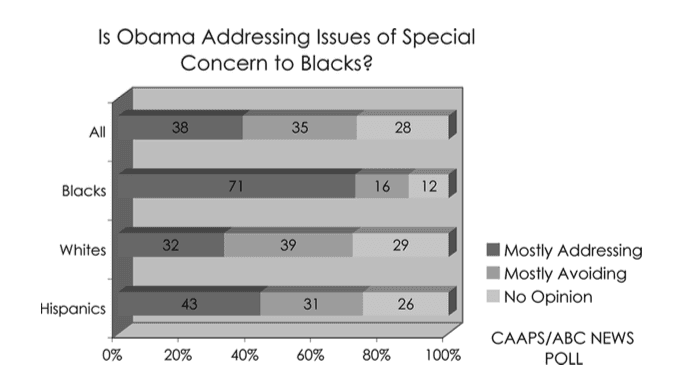
Figure 1. Perceptions of Obama's concern about black issues.
The CAAPS=ABC News Black Politics Survey also asked the following: ‘‘Do you think blacks have achieved racial equality, will soon achieve racial equality, will not achieve racial equality in your life time, or will never achieve racial equality?’’ (Figure 2). The results from black respondents indicate that despite the progress that the country has made in wake of the Obama candidacy, African Americans are considerably less likely than whites and Latinos to see racial equality being accomplished in their lifetimes. Only 11% of blacks reported that the nation has achieved racial equality com- pared to 39% of whites and 25% of Hispanics. A larger percentage of blacks felt optimistic about the prospects of the country achieving racial equality in the immediate future. Forty-one percent of blacks compared to 36% of whites and 41% of Hispanics think that racial equality in the United States will happen soon. However, a substantial core of the black population is skeptical about the prospects of the country achieving racial equality—44% believe that racial equality will not be achieved in their lifetimes or will never be achieved. A smaller proportion of whites (20%) and Hispanics (25%) are as pessitimistic about the prospects of the nation achieving racial equality compared to blacks.
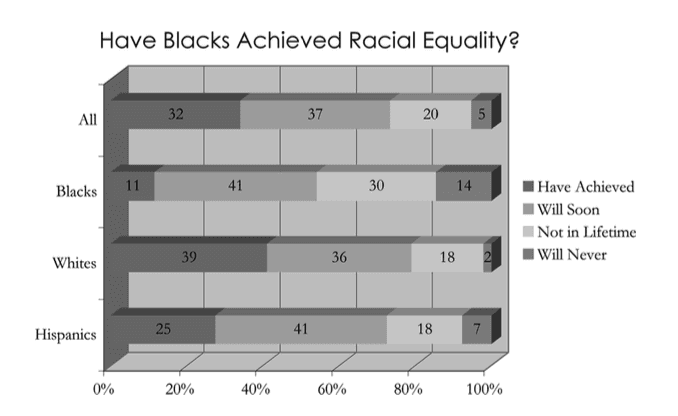
Figure 2. Perception about racial equality.
Two Black Americas, One Candidate
Though Barack Obama received universal support from African- Americans, across social class and political ideology, African Americans are divided over what should be the best strategies for improving the status of blacks as a group. These strategies involve protest over mainstream approaches, whether blacks should think of themselves as individuals or as part of a group, whether blacks should play down their racial identity in order to advance in American society, and whether blacks see themselves primarily as blacks or as Americans. These questions are part of the subtext of Obama’s use of a deracialized political strategy that includes the candidate’s emphasis on Americans getting beyond racial, ethnic, and religious divisions.
When asked the standard survey question measuring a sense of shared fate with other blacks (Do you think what happens generally to black people in this country will have something to do with what happens in your life?), 64% of blacks share a sense of linked fate with other blacks compared to 32% who expressed that they do not share a sense of fate with other blacks. One of the most important factors that distinguish those who feel that they have a shared fate and those who do not is perceived experience with racial discrimination. Blacks who report that they are frequently discriminated against are more likely to express stronger feelings of shared fate with other blacks (74% to 23%) than blacks that report never having been discriminated against (48% to 47%).
However, despite the recognition in the general population among a majority of African Americans that blacks share a similar fate in American society, African Americans have divergent views about how to achieve group success. For instance, the CAAPS/ABC News Black Politics Survey asked if black respondents agreed or disagreed with the following: ‘‘Blacks should stop thinking of themselves as a group and think more of themselves as individuals.’’ Those agreeing with the statement would be less supportive of racial-group solidarity. An affirmative response would also reflect a perspective that is more in line with a core value in American society—the virtue of individualism—and reflects the viewpoint blacks should become more assimilated into American society. On this question blacks are nearly evenly divided—49% think that blacks should stop thinking of themselves as a group while 48% disagree. There are small educational differences in the black population who responded to this question, suggesting that class matters less in how black communities think about whether blacks should think of themselves as part of a group or as individuals. However, one factor that does matter is, again, perceived racial discrimination. Only 36% of blacks that say they are often discriminated against agree that blacks should think of themselves as individuals; 60% of blacks that often experience racism disagree. But for those blacks who reported never experiencing racial discrimination, 66% believe that blacks should think of themselves as individuals compared to the 30% that disagree with the statement.
Not only does half of the black population express support for blacks thinking more of themselves as individuals, nearly half of the black population feels a greater national loyalty than racial group loyalty. Respondents were asked: ‘‘In your own personal identity do you think of yourself as black first, as American first, or what?’’ Reflecting the divisions in attitudes toward blacks thinking of themselves more as individuals, 45% reported thinking of themselves as black first while 46% think of themselves as American first. About 5% of the respondents report thinking of themselves as equally black and American. Like the other indicators measuring attitudes toward group strategies for success, there is virtually little variation in response to this question by social class. Once again, perceptions of racial discrimination are one of the main factors that separate those who exhibit stronger racial group loyalties than national loyalties.
Turning to a question that reflects support for a ‘‘deracialized’’ strategy for black progress, the CAAPS=ABC News poll asked: ‘‘Do you think that blacks have to play down their racial identity to get ahead in American society, or do you think blacks can express their racial identity and still get ahead?’’ Again, as a matter of group strategy for mobility, black Americans are divided. Nearly half—49%— think that blacks have to play down their racial identity to get ahead while 46% believe that blacks can express their racial identity. Thus, for those blacks who believe that it is important for blacks to not emphasize their racial identity in order to get ahead, the Obama campaign’s deracialized political strategy would not have presented any contradictions or concerns to them.
Additionally, blacks are also divided over whether protest is an effective tool for group progress. The CAAPS/ABC News Survey asked black respondents whether they agreed or disagreed with the following statement: ‘‘Black people would improve their position if they spent less time protesting and more time working within the system.’’ A slight majority of blacks—51%—agreed that blacks would improve their position in society if they spent less time protesting while 43% disagreed. Those blacks reporting never experiencing racial discrimination were more likely, by 10 percentage points, to believe that blacks would progress if they worked more within the system (60%).
Conclusion
These results indicate that there are fundamental differences within black communities about what are the best strategies for group progress. The Obama candidacy has either heightened these differences or benefited from these shifts in more moderate, pragmatic public opinion in black communities. Given the debates over the past decade about the role of personal responsibility in black America—first initiated during the 1980s by black and white conservatives and more recently by Bill Cosby—it should not come as a surprise that African-Americans are divided over whether society is to blame or if blacks—as individuals making bad choices—are to blame for the social ills facing black communities. It will be interest- ing to see if the deracialized campaign strategy will be the same approach that President Obama adopts as a governing strategy concerning domestic social policy. While the absence of discussions among presidential Democratic candidates in recent years on how to combat poverty and racial inequality would have raised eyebrows among black political elites in the recent past, the turn in the discourse towards a politics of respectability and away from government’s responsibility in assisting the poor has, in subtle and at times not so subtle ways, helped to elect the nation’s first president of African descent. Welcome to the new black politics.
Past Editions




1.
Barack Obama: Coalitions of a Purple Mandate
Stanlie M. James
4.
Race, Post-Black Politics, and the Democratic Presidential Candidacy of Barack Obama
Carly Fraser
5.
Racializing Obama: The Enigma of Post-Black Politics and Leadership
Manning Marable
6.
The Race Problematic, the Narrative of Martin Luther King Jr., and the Election of Barack Obama
Rickey Hill
7.
Towards a Pragmatic Black Politics?
Fredrick Harris