

VOL. 21
Afro-Descendant Lesbians Strengthen Their Identity
Norma R. Guillard-Limonta
My discovery of Alice Walker’s book In Search of Our Mothers Gardens1 where she reflects beautifully about the lives of Black women in the southern United States, including her own mother, brought me memories of my grandmothers, the matriarchs who had nine and eleven children respectively, raising them as single mothers and forced to face many similar situations. Their gardens evoked, not only the great hardships they experienced during their lives, but also the knowledge of how to Resist, inherited from their ancestors over many generations. Both of my grandmothers were spiritistas.
One of Walker’s principal reflections is recognizing and sharing with the readers these women’s capacity for Resistance, highlighting the remarkable abilities they developed in order to be able to cope with difficulties, sometimes in very simple ways and emphasizing the fact that Black women have always had to Resist over their whole lives and at all times; and continue to do so today. For this we have been called saints, crazy women, or subjects of pity as we carry the weight of the world.
Alice also says that Black women, are “the mule of the world” because we have been burdened with the responsibilities that the rest of the world refuses to carry. According to Alice, we have also been branded “matriarchs”, “superwomen”, “bitches”, “diabolic” as well as “women who castrate” and “bad mothers.”2
Sometime later, while reading an article written by Jurema Werneck “Our Steps Have Come from Far Away” where she talks about Black women’s movements and political strategies to counter sexism and racism, we understand the need to deal with this issue far beyond the garden of our grandmothers and their women ancestors. In the article, Werneck suggests that we should reach into the traditions and the sacred myths of the African Diaspora since, “throughout the history of world, female figures perform as models of the creation and re-creation of black femininity”, which in the 70’s came back as the ideological foundations of numerous anti-racist movements, and especially, the feminist anti-racism of Black women and their organizations.3
Our ancestors are Yamay,a, Ochum, Chango,, Oba, and Ogum, who speak of the way we are today because of Yoruba traditions.
These are the ancient goddesses who we recognize and pay homage to in each one of our encounters with our Afro-descendant Women’s Network of the Caribbean and Latin America, which has been in existence for over twenty years; consistently increasing our sphere of influence. The Cuban chapter has been in existence for 5 years.
Cuba, for its part, has been creating several spaces to raise awareness, give visibility and then recognize the roles played by Black women and Afrodescendant people. Among Black Cuban women, historian Daisy Rubiera Castillo stands out with her book “Reyita”, where she went into the garden of her mother to bring us back a wealth of stories and experiences lived by her mother, who was born the free daughter of an enslaved woman4.
Although there had been several spaces for debate over the previous ten years, they had yet to call themselves “Afrofeminist”, although they have began to dust off the brave images of Black women that can teach us so much today.
Working to make the topic of Black Cuban feminist lesbians more visible and get them more involved is an on-going process. We are intending to make these first attempts through study of materials by other Afro-Caribbean feminists, such as the works of Ochy Curiel and Yuderkis Espinosa.
During our participation in conferences and encounters with Cheryl Grills5, the former president of The Association of Black Psychologists of the United Sates, we reflected on the following: “The chains were unlocked from our hands and feet, but those of the hearts and brains are still deeply rooted, and we have to fight to eliminate them. This is only achieved by designing a solid program of individual and collective support for Black women and their families so as to take them back to their roots, identities, cultures and uproot the many feelings of handicap and self-limitation which are still in their minds and which, unfortunately, have been passed down through generations from so many centuries of humiliation and sufferings.” We need to advance a process of mental emancipation and decolonization.
Historian Daisy Rubiera, recently gave a presentation at the Christian Center for Reflection and Dialog Conference “The Nation we Imagine: New Cartography of the Cuban Reality.” Her paper was titled “Afro-feminism and Cuban Afro-feminist Discourse.”6 Dealing with the topic of Afrofeminism and Afrofeminist discourse in Cuba inside the academic field is a challenge because the attention given to the study of the feminist movement in our country has, historically, been focused on the leading roles played by white women from the bourgeoisie, middle and lower classes. We have begun to ask ourselves, what it will be like to begin approaching it from the viewpoint of lesbian Afrodescendant women to enrich their identities.
Without a doubt, it is a harder task, but this article is the beginning of a process of thinking, rethinking and enriching our identity.
Women, feminism and other attempts
Our sister Alice Walker coined the interesting word “womanism” or “mujerismo” in order to avoid using the word feminism because of the relationship this concept has had since the beginning with mainly white women. It was the way she found to make a call to people to take into account other realities and other women’s histories, mainly those of Black women, whose situations have set the basis for the emergence of another kind of feminism now called Afrofeminism or Black feminism.
People started to speak of feminism during the XVIII and XIX centuries linked to The French Revolution as well as to modernity. It also took hold during the rise of anthropological thought with the participation of women in many fields of education and culture and their ability to move freely in public spaces.
By the end of the XVIII century, feminist theory was widely disseminated. Women who struggled and played leading roles in the French Revolution published texts that had wide repercussions for their time. We should not forget how hard it was for them to defend the rights of women. One of them, Olimpie de Gouges, was killed. Another one was Mary Wallstonegraft, a single mother, who was also attacked. Many of them went on hunger strikes when their clubs were closed and their basic rights were violated7.
None of these actions made them stop. Consequently, the Suffragist Movement spread throughout the world and other voices emerged. Among them were the voices of Seneca Falls in the US and much later with Betty Friedan. These ideas and influences emerged in Cuba as well through Ana Betancourt, Emilia Casanova, Juana Borrego, Gertrudis Gomez de Avellaneda, Camila Henriquez Uren~a, Aurelia Castillo, Mari Blanca Aloma, among others. Of course, there were others who joined this movement but whose role is rarely mentioned, due to invisibility issues at the time, such as AfroCuban woman Maria Damasa Jova. The experiences of Black and mixed-race women were invisibilized, in spite of historic roles and actions such as founding Minerva Magazine to defend their rights in the late nineteenth and early twentieth centuries.
Subsequent generations of Cuban women faced similar processes during their struggles for women’s equality in the construction of the Cuban social system. The experiences gained throughout the struggles showed the clear need of specific actions and this is precisely what Federation of Cuban Women (FMC) was set up to confront.
It is worth recognizing that a group of actions, with a gender perspective, were carried out and promoted in numerous visible spaces by the Cuban feminist group called MAGIN, which was a group of women in media who encouraged the communications field in Cuba to start to view their work from a gender perspective. Within this group, The Center for the Study of Women at Havana University, stands out for its organization of biennial academic events to discuss women’s issues and topics. The other group that stands out is the National Union of Jurists because of its participation in gender and communication debates, sponsored by the Cuban Women’s Federation (FMC).
They all found and created spaces to discuss feminism. During these encounters, the topics of patriarchy, subordination of women, and sex and gender roles were dealt with. The Second Sex makes a reflection on what being a woman has meant and what their limitations and duties are. It acknowledges that several kinds of feminism are about a way of life that is always renewing itself. It is also a trend which is in constant evolution and leads to different lines of thought, and continues today.
In the process of thought, several approaches were identified, such as feminism of equality which is a remarkable trend for its contribution to the concept of the sexual division in the labor market that makes inequality between the sexes more visible. Then, there is the feminist approach that stresses the importance of the recognition of the women’s bodies and the need for women to fight for their autonomy. The search for a new approach in the sexual revolution is valued, as well as the need to give less importance to the absolute power of the penis that perpetuates patriarchy so that we can, not only identify what is actually pleasant for us as women, but also, demand our sexual rights.
The other process of thought is when someone speaks of gender as a static category, it can exclude lesbian Black, Latin and poor women. Feminism needs to be more comprehensive, inclusive and collective. Afro-feminism is based on all these approaches. Many feminists have chosen lesbianism as a political behavior, or celibacy as a way to oppose to sexist subordination8.
To understand the process of recognition that lesbian identity goes through from the viewpoint of Afro-descendant women, we have had to analyze all the struggles in which feminists have been involved for so many years to be recognized as social agents with rights.
In this article, we have included some paragraphs with important updated opinions given by leading Afro-feminists, such as Alice Walker, bell hooks, Audre Lorde, Ochy Curiel, Suell Carneiro, among others, all of which help us enrich our analysis, and Cuba is still working on these approaches.
The evolution of afro feminism in Cuba
Even before the term Afro feminism was used, in the 90s, I started to work on the visibility of the women’s images in the mass media. I conducted workshops on gender and publicity at the advertising agency where I used to work.
The Federation of Cuban Women (FMC) and the Cuban Association of Communicators (ACCS) had disagreements with some advertising agencies because they continued to create communication products using the historical stereotypes of women as sexual objects to promote tourism in Cuba.
As an executive member of the agency where I worked, along with my working team members, I took part in many events where the importance of including a feminist perspective to create communications products were included.
We presented topics of gender and publicity to several advertising agencies. Even though we were not always able to achieve the expected results to change the creative specialists’ viewpoints toward this issue, we felt it was the beginning of a different approach to this topic. An example of this was the debate on the Mulata Rum label – a battle not won yet.
In addition, when we analyzed the mass media, we noticed how hard it is for Black women to play leading roles on television. Many Black actresses have refused television acting jobs because so often the only roles are historical films on slavery. Even though we have not been able to achieve results on the level of values of Afro women, we should appreciate and recognize how many efforts were made in the 90 s by The Cuban Association of Communicators (MAGIN) where the spaces of The Caribbean Festival of Fire in Santiago de Cuba, and others, were used to debate the issues of the images of Black woman in the mass media. I also appreciate the process of growth of this topic because it gave us possibilities for national and international exchanges9.
I had the possibility to become a board members of The Cuban Society of Psychologists, and from this space, opened a section for researchers devoted to working on issues of sexual and religious identities, issues of diversity and how imagery is used in the mass media. We named this working group “SERES.”
Through this space and with more authority, we created a multi-disciplinary team to deal with some of the issues of racial discrimination with a feminist lens. Members of this team included historians, sociologists, Africanists, dramatists, filmmakers and educators. We have all nourished ourselves from our shared knowledge and we have also committed ourselves to conduct workshops and training courses in order to take these experiences to the community.
Our participation in the conferences on racial issues with “Negritud” (Black consciousness) and the Cuban Union of Writers and Artists (UNEAC) has been very useful. We conducted workshops for psychologists, psychology students and members of the hip-hop community, so that they could analyze the need of raising awareness through the lyrics of their songs, which are sometimes violent and homophobic; we encouraged them to include feminist approaches in the lyrics of their songs.
We helped theater groups from Havana and Santiago de Cuba to use, in educative ways, racial and feminist topics in the content of their plays.
The debates on the documentaries presented by the members of The Section of Researchers to the students and professors of the school of psychology were very impressive. They understood the need to raise people’s awareness about Afrodescendant people, since key moments in our history, reality, and struggles, including the difficulties faced by the Independent Party of Color, are still not well known.
The advances that The Section of Researchers has achieved, has spread into other areas of feminism; hence, our involvement and support for the creation of a space for lesbians and bisexual women in The National Center for Sexual Education (CENESEX). Eventually, we joined their team of activism for Sexual Diversity. Once there, we started our encounters with the members of The Section of Identity from The Cuban Society of Psychology (SERES) as well as with members of The Section of Sexual Diversity from The Multi-Disciplinary of Studies of Sexuality (SOCUMES).
The encounters between these two societies were very important. Several psychologists and philosophers participated in training spaces for lesbians and bisexual women on topics on gender and identity linked to gender violence, self-esteem, love between romantic partners, homo-parental families, healthy partnerships, and of course, the topic of feminism and its history. During these encounters, the participants shared stories of prejudices, stereotypes and other difficulties they have experienced. Among them, experiences of sexual and racial discrimination.
The space for lesbians and bisexual women was opened in 2005 and the participation of Black women was significant, including participation by knowledgeable experts in the work done by Black Panthers to address discrimination that helped us go deeper into some areas of thought. At the beginning, there were some conflicts because some of the presentations were not well received, especially, those presented by the Afrodescendant lesbians due to, according to their critics, their “male-like” behaviors.” It was necessary to work more on the issue of homophobia and stereotypes.
We started the first outlines on the approaches and recognition of Afro feminism without knowing everything about it. In Cuba, this is an on-going process.
During this last phase in 2010 (when the Cuban economic model was going through a lot of changes), interesting spaces for specialists and academicians in gender with precise approaches on feminist debates were opened. However, the essential aspects of Afro-feminism were not raised and in order to compensate for this, another new gathering space was opened to work on this issue called “AfroCubanas.” There is also a book with the same name, a compilation of essays written by Afro descended women academicians, but they do not deal with the topics of Afro lesbians.
Enriching the identity of the afro descendent lesbians
During the first steps that we took, we could see how difficult it is for the dominating identities to understand the realities of the excluded identities and how uncomfortable they feel in relation to their notions of “normality.”
We do not always realize that we create inequality among women in ways that correspond to hegemonic patterns and this can make the process of interacting with each other difficult. We must confront the various kinds of discrimination that women, Black women, and lesbian women live with and sometimes very masculine women under heteronormative rules that intersect with our various identities against the dominant identities.
Ana Cristina Conceicao in one of her lectures, states that masculinity has been a characteristic associated with Black lesbians, but if the woman is heterosexual, she is associated with a kind of supernatural sexuality, and thus, the association with a Black woman is objectified in various ways by the social imaginary10.
We have initiated steps to enrich the identities of Cuban lesbians of African descent and for that we have used the experiences of some Afrofeminist activists and academicians that have been working on this topic for two years. There is not a straight route to achieve it, but willingness to use a variety of ideologies and perspectives to evaluate experiences and find new ways of understanding in order to add them to our experiences.
In an interview of Ochy Curiel conducted by Sally Bursh about logistical and cultural identity that paved the way to build a movement of Afrodescendant women in the Americas, we can see how she emphasizes the importance of institutionalizing a self-determination11. The support received from international funding agencies and NGOs led to more work on this, advancing the recognition of Afrodescendant people.
This has not been our experience in Cuba. The issues of Afro descended people are not yet included in the international cooperation projects. Race is still a largely invisible topic which emerges spontaneously in relation to social developments, not yet as a movement. Starting in 2014, we became closer to the Network of Afro Latin American and Afro Caribbean Women and in the Diaspora (PMAAD), creating a Cuban chapter.
This recent relationship to the PMAAD Network has allowed us to learn more about how the main problems of Afro descended people in Latin America and the Caribbean islands are being dealt with, as well as recognizing our own reality in order to work on issues more appropriately.
Our recent participation in The Summit of the Afro Descended Women Leaders from Latin America, which was held in June 2015, put us in in a very interesting situation because the motto was “Recognition, Justice and Development.” There we took part in the Political Platform debate designed to support the International Decade of the Afro descended people (20152024), where the participants confirmed that racism still fundamentally affects women’s lives today.
The economic situation in Cuba has become more difficult and many Afro descended women have had to opt for jobs such as street vending small items, working as parking lot attendants, among other such labors. There are very few Black women who have been able to find more lucrative jobs, such as renting rooms, driving taxi, or opening private restaurants or cafeterias. Some women have even returned to domestic labor again because of the benefits of being paid in hard currency, although we are struggling against this through the grassroots networks to advance affirmative action and working on how to help them become independent businesswomen, although we still have much to do. Interestingly, there have been successful businesswomen who are Afrodescendant lesbians.
Because of these realities, the well known Afrofeminist Suell Carneiro made a call for people to think about the need to feminize the anti-racist struggle and Blacken the feminist struggle12. People should learn how to conduct deeper analysis since not all Black people are affected by racism and sexism in the same ways.
We, Black women, have to work very intensely on our own self-recognition and find ways to drive our realities toward bigger challenges.
To support this evolution, the Network searched for alliances with the Cuban Federation of Women (FMC) and The National Network of Lesbians and Bisexuals (RSC), which is a social and community network associated with The National Center for Sexual Education (CENESEX) and, within these spaces, we also wanted to put into practice a better approach to Afro feminism.
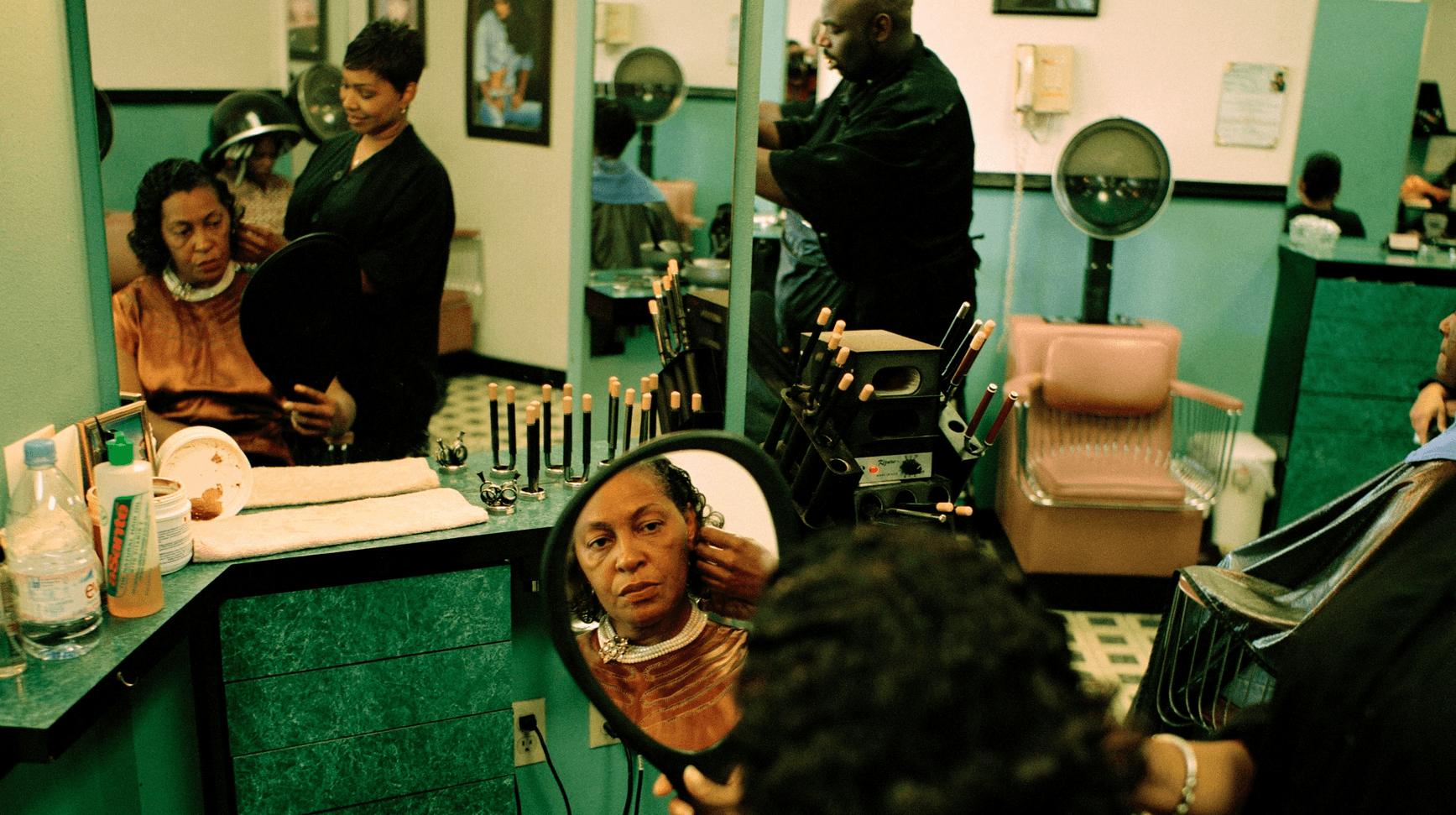
In search of steps for self-growth, the Afro networks made a call to begin to conduct workshops to work on gender issues and self-esteem in vulnerable neighborhoods where there is a large number of Afro descended women. The work should be done based on the feminist Bell Hook’s experiences. Hooks wrote the article “Straightening our hair” where she writes about the interdependence between hair and self-esteem and how the personality may be affected when we feel rejected and are not satisfied with some parts of our bodies13. This is a challenging issue within our social imaginary, because of esthetic oppression of the Eurocentric culture of beauty, exerted upon People of Color since we are very young.
Not only has hair, as part of the body, been the archetype of inferiority for Black people, but also the way that historically we have been represented, preventing us from developing a proud identity of a Black person despite the fact that we have made great contributions to the wars of independence and to the history of our country in many ways.
We want to break out from under the ideas of mainstream culture of what being a Black woman means: dirty, ugly, amoral, as well as people who do not analyze ideas deeply enough. Most Black people come from poor families and marginal neighborhoods, which has had an impact on the persistence of some of the stereotypes that see us as different, less literate, and available to do low paying jobs related to submission and obedience. We are thought to be sexual objects, with the potential to be prostitutes, good at sex, and this is even more evident if the person is a lesbian. We have worked very hard in the spaces of debate to change these ideas, above all, among lesbians.
Ochy Curiel points out that patterns of consciousness about the image of lesbians is a complex process due to the fact that they do not fit within the framework of the binary identities that society defines as feminine or masculine14. This way, Curiel takes on the opinions of those who think that being lesbian is only about having sexual intercourse among women, but it is more than that; it is a political position in the face of compulsory heterosexuality. It is about refusing the sexual, emotional and symbolic dependence on men15.
This is why Audre Lord proposed some steps and makes the following reflections … in the name of silence, each of us, as women, deflect our look away from our own fear of contempt, censorship, destruction, condemnation, challenge and recognition16. We must work on overcoming fear and increasing visibility.
Working on visibility is one of the steps that must be taken, so now we work with a group of specialists that have written articles about women-to-men transvestitism and have created spaces to share their experiences where the Afro descended lesbians have been included.
Practice has shown that lesbians are less prone than heterosexual women to defend their rights and the protection of justice against violence, harassment and discrimination because some official institutions do not support them. Their sexual orientation influences the actions they are willing to take to confront these challenges. Some steps are already being taken, though.
In search of necessary changes, in Cuba, we are now taking advantage of the document approved by RMAAD Women’s Network which has a dialectic and inclusive purpose. The organization takes into account the specific characteristics of each country and will include the proposals based on local agendas to create strong alliances among the diverse networks, so we will begin working on two of such demands.
In this respect, the proposal to analyze our Cuban agenda will include demands 1 and 15. Proposal 1: put emphasis on the struggle against racism this is the responsibility of everyone, adopt measures of affirmative action and reparations to abolish this tragedy of humankind, guaranteeing full enjoyment of human rights of Afro descended women and men, including the Afro descended lesbians. Revert and change discriminatory situations. Design and apply national legislation to penalize racism and racial discrimination. Guarantee public policies and programs to combat racism and discrimination. Promote gender and generational equity with respect to nationalities, disability and sexual orientation. Ratify the international conventions related to the struggle against racism, racial discrimination and intolerance.
Proposal 2: work on paragraph 15 related to mass media where positive images of Afro descended women should be employed, whether or not they are lesbians, by launching mass media educational campaigns to raise people’s awareness about the history and culture of Afro descended people, the importance of building an integrated society and the respect for all people. Other proposals include putting an end to the use of racist and discriminatory terminologies against Afro descended people, eliminating the use of stereotyped images of Afro descended women and men in mass media, on the internet or any other means of communication, cultivate community demands that contribute to strengthen a pride of identity, launching campaigns to raise people’s awareness as well as designing training courses that can reach out, not only to all the people, but also those that can be used by specific institutions. Create an observatory to collect data on all kinds of negative manifestations of prejudice and racism, confront them, and find solutions.
Although we are still a small number of people without a strong movement of Afro descended women, we are working on these issues and changing our reality. Slowly, we are creating conditions for our voices to be heard.
There are now various diverse projects and initiatives including “Negra Tomasa”, “Permission to love ourselves”, “Somosmuchom,as”, “Afro-Cuban Aliance”, “Aliance for Racial Unity”, “Queer Cinema Club”, “Clandestina”, “Afro Club”, “TXT” and “Seres” and all in agreement on working in alliance with each other until we build a strong network and achieve the goal of integrating our efforts.
Conclusion
Although, today, we still cannot speak of a large Afrodescendant movement in Cuba because we are still in the process of organizing thoughts and ideologies on this issue, we can clearly say that we face divergent realities based on the color of our skin, and worse when linked to the identity of lesbianism. In spite of the programs for equity and rights that we have in our system, in the social imaginary, prejudices still exist and are deeply rooted in people’s hearts and minds. So, it is necessary to design programs on the individual, family and collective levels to eliminate prejudices and stereotypes that pass down from generation to generation.
To begin the process of recognizing lesbian identity from a Black perspective, we have had to analyze all the struggles in which the feminists have been involved for so many years to be recognized as a human with rights. We have had to search for the studies done by leading Black feminists and lesbians like Alice Walker, bell hooks, Audre Lorde, Ochy Curiel, and others, so we can draw upon them as our guides to begin this process.
Today we know that racism is based on exclusion and exploitation that denies people the right to be full human beings. This is not an issue of subjectivity; it is strongly objective because our image, as the culture of our ancestors, does not have a space in the representation of the nation to which we legally belong. We also know that because of this, we are stuck on the lower rungs as individuals.
We continue to address these issues by searching for and supporting collective projects to work on cultural issues, identity and the self-recognition to be Afrodescendant people, instead of going into something deeper such as studying the structures of racism.
Lastly, one of the most important steps that should be taken to enrich the identity of the Afro descended lesbians is breaking the silence, as Audre Lorde exhorts each one of us to do. We, as women, must shift our gaze away from our fear of contempt, censorship, condemnation, challenges and work toward a necessary visibility, working toward a mental and collective emancipation. Liberating our minds, decolonizing them, but also needing the support of governmental policies.
The Cuban Afro-descended Women’s Network could be a vehicle to work on the process of developing visibility in alliances with other spaces, as part of a true sisterhood.
WORKS CITED
1. Alice Walker, In Search of the Our Mother’s Gardens. The Creativity of Black Women in the South, by Alice (Phoenix, Orlon Books, 2005), 231.
2. Ibid.
3. Jurema Werneckl, “Our Steps Have Come from Far Away,” in Jurema Werneckl, Maisa Mendoca and Evelyn C. White, editors, O libro da Saude das mulheres negras: nossos passos vem de longe. (Rio de Jameiro Pallas / Crila, 2000), 62–67.
4. Rubiera Castillo, Daisy Martiatu Terry, Ines Ma. “Afro Cuban Women, History and Cultural Practices” (Ciencias Sociales, 2001).
5. Cheryl Grills. Toweds. African Conference, Slavery, Colonialism, Discrimination, Racism and Psychology. Congreso Hominis. (Havana 2013).
6. Rubiera Castillo, Daisy Martiatu Terry, Ines Ma.
7. Nuria Valera. Feminism for Beginners. (B. Barcelona, 2005).
8. Ochy Curiel. “Essential identities or the construction of political identities”. The dilemma of the black feminists. Third Forum. (Rio de Janeiro 2003).
9. “Use of the Afro Caribbean Woman in Publicity”. Reflections of identity. Presentation in 2000 Caribbean. (Santiago de Cuba).
10. Corneiro Santos, Ana Cristina. Dos Santos Luz, Robenilton. “Black lesbians: Crisis of Representation based on multiplicity of identities” IV Equatorial Meeting of Anthropology and XIII Meeting of Anthropologists from northeast, August 4–7 Fortaleza-CE, 2013.
11. Sally Burch. Interview of Ochy Curiel about building political citizenship. “Latin America in movement”. Magazine ALAI, 2011.
12. Carneiro Suell. Blackening feminism. The situation of the black woman in Latin America from a gender perspective. International Seminar on Racism, xenophobia and gender organized by Lola Press (Durban, South Africa 2001) http//wwwlolapress.org/artspanish7carns16htm.
13. Bell Hooks. “Straightening our Hair”. Criteria, Cuban Gazette, January-February 2005, number 1, pages 70–73 (English translation. Desiderio Navarro)
14. Ochy Curiel.
15. Ibid.
16. Audre Lorde. Translated into Castilian under the title: “Sister Outsider”. Horas y Horas, 2002. Translator Maria Carniero Fernandez. ISBN: 84-87715-93-1.
Past Editions
1.
Afro-Descendant Lesbians Strengthen Their Identity
Norma R. Guillard-Limonta
2.
Black is Beautiful: Photographs on the Hip Hop and Natural Hair Movements in Cuba Today
Amberly Alene Eillis-Rodriguez
3.
Black Man
Nancy Morejon
4.
Black, Radical, and Campesino in Revolutionary Cuba
Sara Kozameh
5.
Digna Castañeda’s Shield
Nancy Morejon
6.
Editor’s Note: Black Cuban Revolutionaries, Socialism, and the Afterlife of Slavery
Lisa Brock
7.
El Comandante Victor Dreke: The Making of a Cuban Revolutionary
Lisa Brock
8.
Notes on Repatriation
Esmeralda Guerra Collantes
9.
The Red Barrial Afrodescendiente: A Cuban Experiment in Black Community Empowerment
Geoffroy de Laforcade & Devyn Springer
10.
Who Are the Black Revolutionaries?: Resistance in Cuba and the State Boundaries that Endure
Danielle Pilar Clealand