

VOL. 10
Book Review: Chicago's New Negroes: Modernity, the Great Migration and Black Urban Life by Davarian Baldwin
Treva B. Lindsey
Davarian Baldwin
Chapel Hill:The University of North
Carolina Press (2007)
ISBN 1397808078
365 pp., Hardbound, $59.95;
Paperback, $22.50.
In Chicago’s New Negroes, Davarian Baldwin posits a multidimensional relationship between mass consumer culture and African-American intellectual life in the early twentieth century. Building upon recent scholarship that revises the idea of the ‘‘New Negro’’ as deriving from the literary and visual artists and intellectuals of the Harlem Renaissance, Baldwin situates Chicago at the center of a ‘‘much larger New Negro sociocultural transformation marked by race, class, and cultural contestations’’ (5). He identifies Chicago as the ‘‘Mecca’’ of Northern urban freedom for Blacks and displaces Harlem as Black America’s cultural capital. Furthermore, Baldwin depicts Chicago, and particularly the city’s ‘‘Blackbelt,’’ as a distinct Black public sphere in which competing ideas about Black bodies, public and private behavior, institutions, expressive and physical cultures, labor practices, and leisure activities flourished. Though presented as an intellectual history, Baldwin carefully addresses multiple issues such as Black modernity, intra-racial gender and class politics, Black socialization, Black art and expression as politics, and Black aspirations during the first third of the twentieth century.
Each chapter of Chicago’s New Negroes interrogates a Black cultural development that evolved in Chicago during the New Negro era. From the scopic to sonic, Baldwin analyzes divergent opinions regarding African-American social, cultural, economic, and political life in this Black metropolis. The recurring analytical lenses are the diverse ideas, expectations, desires, anxieties, and fears that shaped the Black public sphere of the mass consumer marketplace. Baldwin’s central argument emphasizes that sites for creativity and knowledge production among Blacks expanded into sports culture, beauty culture, theaters, race film production, and the recording industry. Consequently, Black intellectual life underwent a vigorous transformation that was inextricably linked to the marketplace and a diversification of ideas about Black modernity. The Great Migration emerges not simply as a movement of Blacks from the rural south to urban, northern cities, but as a context in which competing notions between old and new Black settlers of Chicago resulted in multiple formulations of African-American identity, dissent, and representations in the New Negro era.
Baldwin mounts convincing and thought-provoking arguments in each of the chapters about how Black settlers sought to define themselves in the Black public sphere of the mass consumer marketplace. The chapters ‘‘Making Do: Beauty, Enterprise, and the ‘Makeover’ of Race Womanhood’’ and ‘‘The Sporting Life: Recreation, Self-Reliance, and Competing Visions of Race Manhood,’’ expertly illustrate his well-defined contribution to a growing body of African-American intellectual and cultural scholarship examining non-traditional sites of Black knowledge production. Beauty culture and sports culture are relatively recent additions to discourses in African-American intellectual and cultural history. In his intervention, Baldwin insightfully exposes the complexities and myriad implications of Blacks being participants, innovators, and ‘‘celebrities’’ in beauty and sports culture.
Similar to his discussions on Chicago theaters, ‘‘the Stroll’’ in Chicago, race films, and the birth of gospel music, the chapters focusing on beauty culture and commercialized physical culture depict an urban landscape in which the politics of gender, class, respectability, and dissent were created, transformed, and challenged by an increasingly diversified Black populous. Baldwin disrupts ‘‘either-or’’ conceptualizations of Chicago’s Black community to reveal a marketplace where multiple positionalities inscribed the perspectives, strivings, and leisure activities of the city’s African-American population. Race pride also surfaced as a contested terrain. Chicago’s New Negroes uncovers numerous historical perspectives on what role the Black public sphere played in bolstering race pride among African Americans. Through a detailed analysis of the relationship between race enterprise and the Black marketplace’s intellectual life, Baldwin portrays commercialized Black cultural developments as sites of ‘‘struggle over contested ideas about race, class, uplift, ownership, freedom, and representation’’ (94).
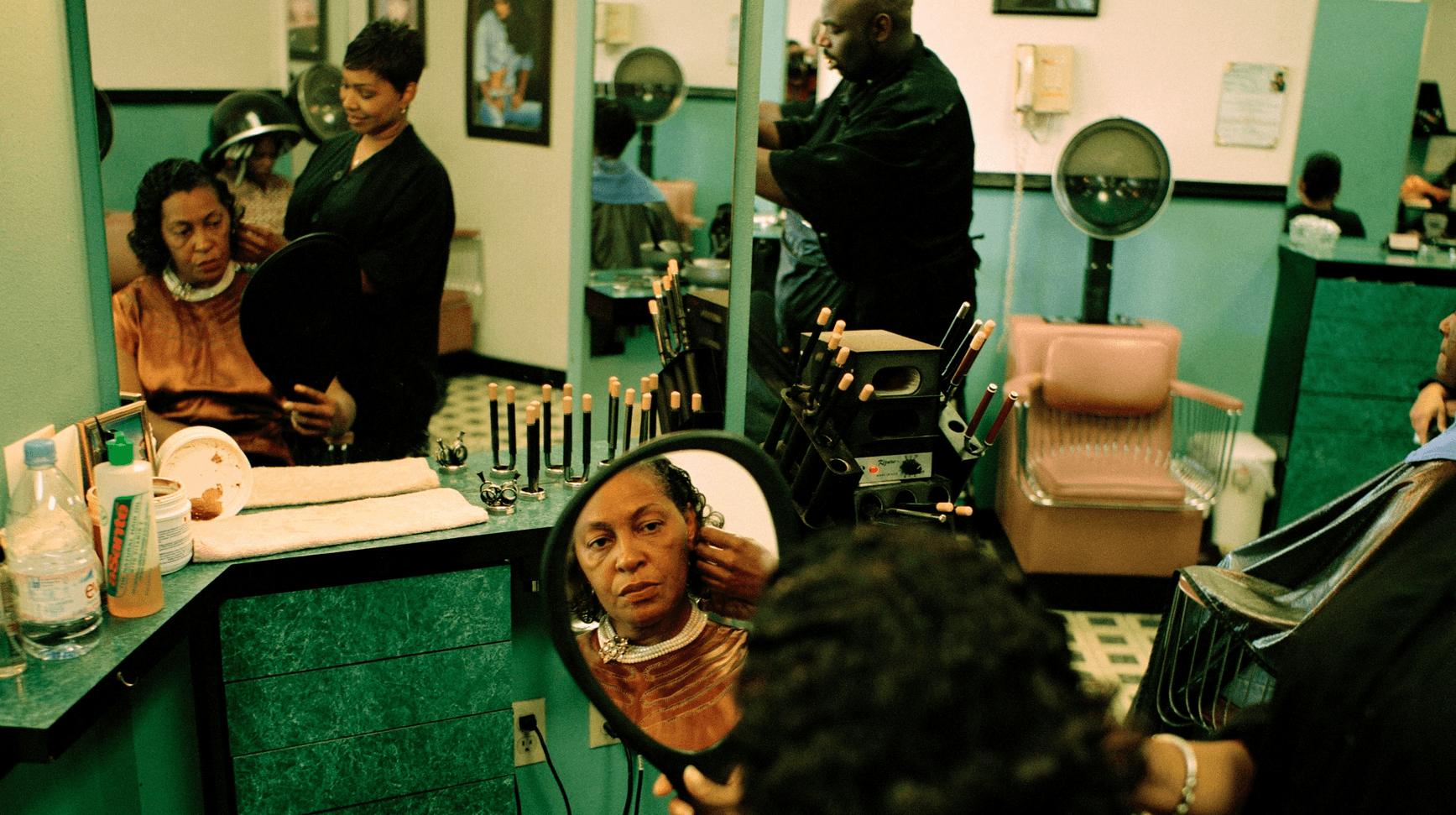
Another engaging component of this urban, intellectual, and cultural history is its use of gender as a primary category of analysis. Baldwin moves beyond simply describing the actions of Black men and women in Chicago; he uses the words of people such as famed beauty culturist and entrepreneur Madame C.J. Walker and boxing celebrity Jack Johnson as well as those of everyday Black Chicagoans to illuminate how ideas about race manhood and womanhood formed through the mass consumer marketplace. In the chapter ‘‘Making Do,’’ Black beauty culture is not viewed solely in the context of white emulation, but as an attempt by work- ing-class Black women to fashion a modern womanhood. Responses to Jack Johnson’s victory over legendary heavy- weight boxing champion Jim Jeffries frame Baldwin’s approach to revealing the mass consumer market as a site for Blacks to test the boundaries of white supremacy, gender expectations, and race consciousness through cultural expression. The innovations of Blacks in Chicago through race films, gospel music, and Black theaters challenged existing ideas about African Americans as well as existing notions of Black masculinity and femininity. Black modernity encompassed negotiations and reformulations of both racial and gender constructions of African-American identity.
In the epilogue, Baldwin states that, ‘‘the powers of consumer tastes in this particular moment were able to overturn, or at least challenge, community gatekeepers to see different ways of being ‘black’ that set the stage for mass action and a second national reconstruction.’’ (241) This well-articulated claim is thoroughly substantiated in the six preceding chapters of Chicago’s New Negroes. This monograph unveils a somewhat familiar, though refreshingly new New Negro world. The utility of Baldwin’s work reaches far beyond his purported intention of contributing to African-American intellectual history. Chicago’s New Negroes significantly enhances studies in Black modernism, urban history, women’s history, cultural studies, and Black political history. By focusing on the innovations, politics, and aspirations of Blacks in Chicago during the New Negro period, Baldwin compels scholars and students of American studies to rethink important historical questions about the African-American experience during the early twentieth century. From a contemporary standpoint, this book also reinforces our ability to both interrogate and understand Black knowledge produced outside of formal institutions.
Past Editions


1.
A Community of Destiny: New Configurations of Racial Politics in Brazil
Luiza Bairros
2.
Book Review: Buried in the Bitter Waters: The Hidden History of Racial Cleansing in America by Elliot Jaspin
Tara Bynum
3.
Book Review: Chicago's New Negroes: Modernity, the Great Migration and Black Urban Life by Davarian Baldwin
Treva B. Lindsey
4.
Book Review: Many Minds, One Heart: SNCC's Dream for a New America by Wesley C. Hogan
Edward Mills
5.
Book Review: Race, Rock, and Elvis by Michael T. Bertrand
Joe Street
6.
Commentary: On Black Leadership, Black Politics, and the U.S. Immigration Debate
Mark Swayer
7.
Diary of a Journey to Nairobi: Impressions from the Brazilian Black Movement of the City and People Who Hosted the World Social Forum VII
Gevanilda Santos, Galauciane Aparecida de Souza & Suelma Ines Alves de Deus
8.
DuBois's Revenge: Reinterrogating American Democratic Theory…Or Why We Need a Revolutionary Black Research Agenda in the 21st Century
Bill Strickland
10.
Symposium Introduction: The Paradox of Black Political Leadership
David Covin
11.
System Values and African–American Leadership
Robert C. Smith
13.
The Limits of Black Pragmatism: The Rise and Fall of David Dinkins, 1989–1993
Ryan Reft
14.
The Praxis of Black Leadership in the Twenty-First Century
David Covin